


kippen
to tip / topple
To bring something into a slanted position, or for it to be brought into one, so that it falls over or its contents are poured out.
EXAMPLE
Pass auf, dass du das Glas nicht kippst!
Be careful not to tip the glass!
to tip / to topple
Loading your saved state.
to tip / topple
To bring something into a slanted position, or for it to be brought into one, so that it falls over or its contents are poured out.
Pass auf, dass du das Glas nicht kippst!
Be careful not to tip the glass!

to turn
Describes a sudden, usually negative change in a situation, mood, or opinion.
Die gute Stimmung auf der Party kippte, als der Streit begann.
The good mood at the party turned when the argument began.
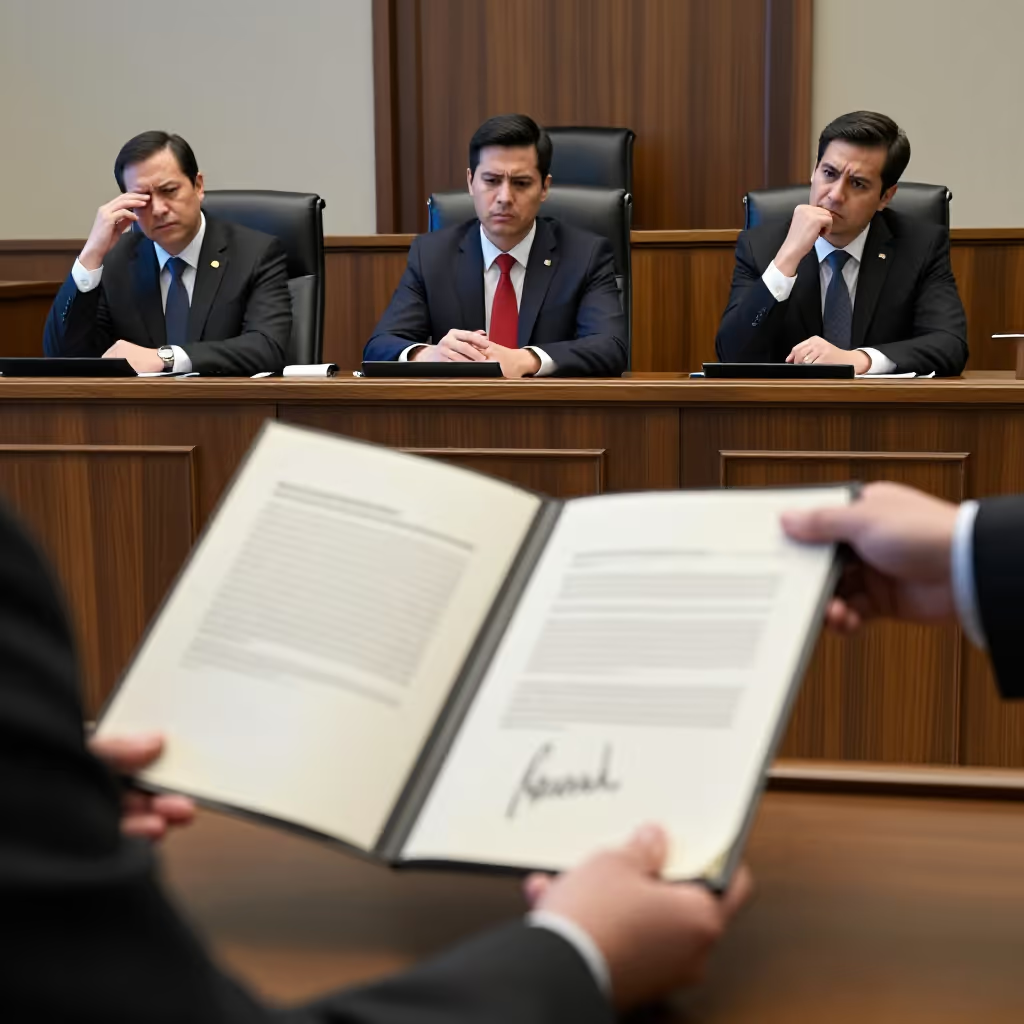
to overturn
To declare a law, plan, or decision invalid or stop it.
Das Gericht hat den umstrittenen Bebauungsplan gekippt.
The court overturned the controversial development plan.

to knock back
Colloquial for drinking quickly, especially alcoholic drinks.
Er hat an dem Abend drei Bier hintereinander gekippt.
He knocked back three beers in a row that evening.
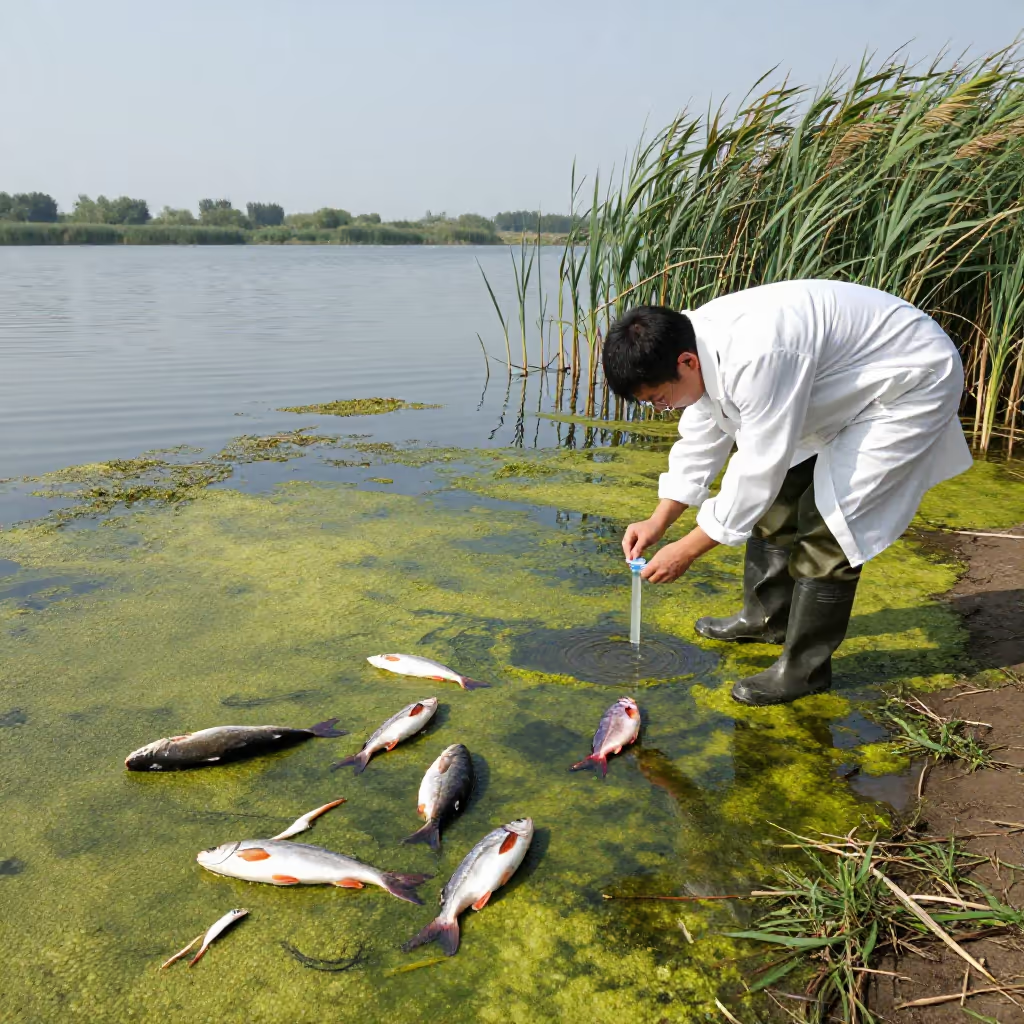
to collapse ecologically
Describes the state of a body of water whose ecological balance collapses, often because of a lack of oxygen, leading to the death of living organisms.
Im Sommer ist der kleine Teich im Park gekippt.
In the summer, the small pond in the park collapsed ecologically.
The perfect tense of 'kippen' (to tip/topple) is formed with 'haben' when it describes an active action. It is formed with 'sein' when it expresses an uncontrolled change of state, for example with a mood or a body of water.
Er hat das Wasser aus dem Eimer gekippt.
He tipped the water out of the bucket.
'Kippen' (to tip/topple) can be used with or without an accusative object. With an object, it means that someone actively knocks something over. Without an object, it means that something loses its balance and falls over by itself.
Der Wind hat meinen Stuhl gekippt.
The wind tipped over my chair.
In the figurative sense, 'kippen' (to turn) describes how a situation, an opinion, or the mood suddenly and unexpectedly becomes negative. It is often used for abstract things.
Zuerst waren alle für den Plan, doch dann kippte die Meinung der Mehrheit.
At first everyone was in favor of the plan, but then the majority opinion turned.
In news reports or political discussions, 'kippen' (to overturn) often means that a court or government stops a law, plan, or regulation or declares it invalid.
Das oberste Gericht hat das umstrittene Gesetz gestern gekippt.
The supreme court overturned the controversial law yesterday.
In colloquial language, 'kippen' (to knock back) means to drink a beverage, usually alcohol, quickly. This usage is very informal and has a slightly negative connotation.
Er hat auf der Party ein Bier nach dem anderen gekippt.
At the party, he knocked back one beer after another.
to drink
„Trinken“ neutrally refers to consuming an alcoholic drink and says nothing about the speed. In this usage, „Kippen“ is colloquial and typically means drinking an alcoholic beverage hastily. Use „trinken“ in general and „kippen“ when the haste is meant to be emphasized.
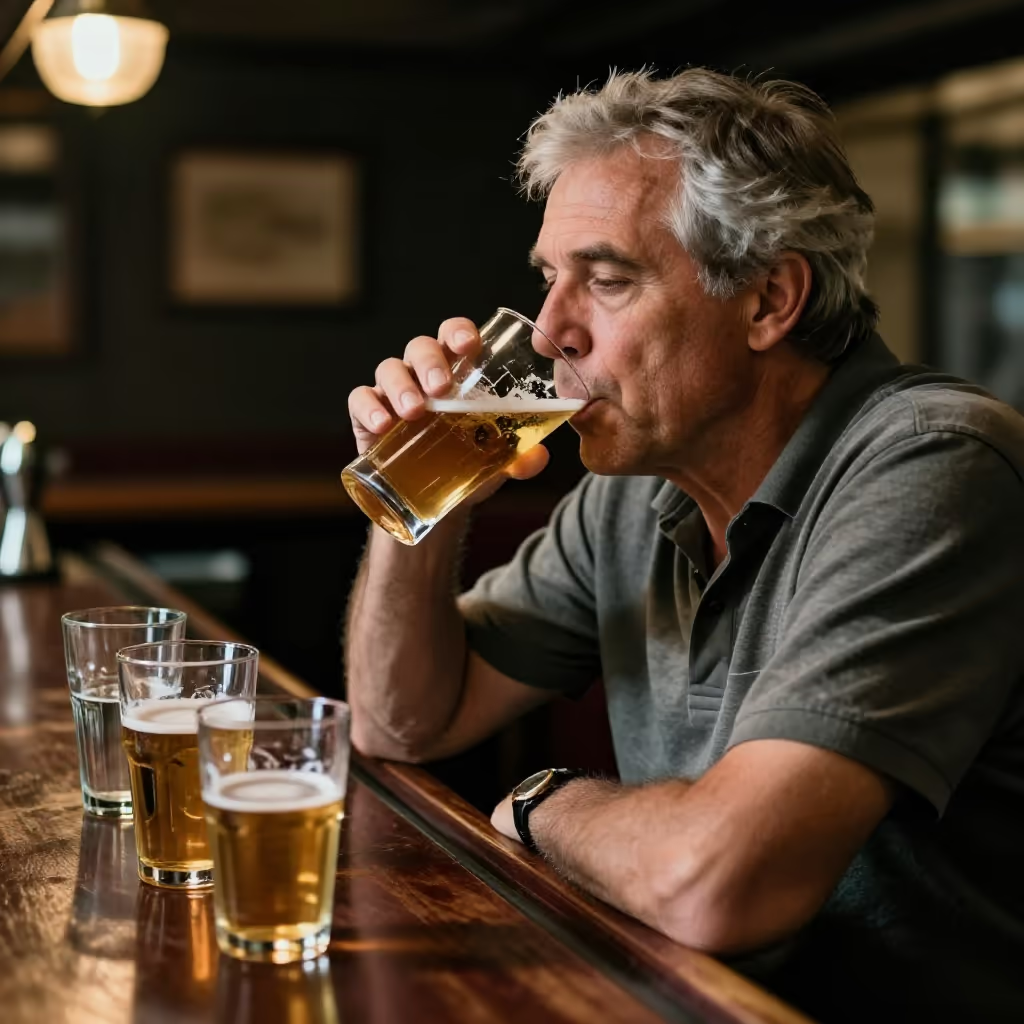
Er kippte sein Bier schnell hinunter, weil der Bus schon wartete.
He quickly knocked back his beer because the bus was already waiting.
Er trank sein Bier nach der Arbeit ganz in Ruhe.
He took his time drinking his beer after work.