

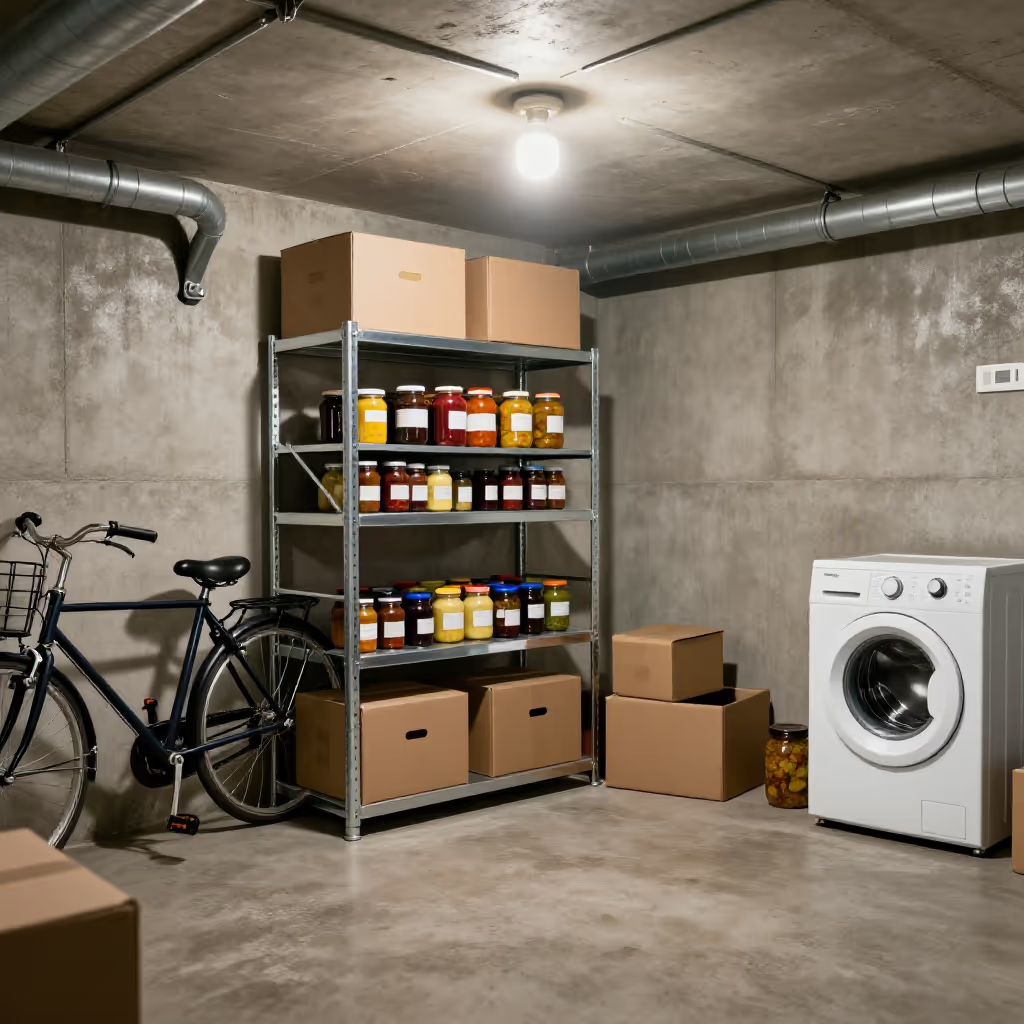
der Keller
basement / cellar
The lowest part of a building, usually located below ground level, often used for storage.
EXAMPLE
Wir lagern unsere Winterreifen im Keller.
We store our winter tires in the basement.
basement
Loading your saved state.
basement / cellar
The lowest part of a building, usually located below ground level, often used for storage.
Wir lagern unsere Winterreifen im Keller.
We store our winter tires in the basement.

to be at rock bottom
Colloquial for a state in which something is at a very low level, e.g. mood, performance, or a value.
Nach der dritten Niederlage in Folge war die Moral der Mannschaft komplett im Keller.
After the third defeat in a row, the team's morale was completely at rock bottom.

to plummet
Colloquial for a sharp drop or fall in prices, temperatures, or mood.
Als die schlechten Nachrichten bekannt wurden, sind die Aktienkurse sofort in den Keller gegangen.
When the bad news became known, stock prices immediately plummeted.
Pay attention to the case after the preposition 'in': 'im Keller' (in the basement, dative) describes a place, while 'in den Keller' (into the basement, accusative) expresses movement there.
Die Waschmaschine steht im Keller.
The washing machine is in the basement.
Things are often stored in the basement. Typical verbs are 'lagern' (to store), 'aufbewahren' (to keep/store), or 'abstellen' (to put/set down). Common nouns are 'Weinkeller' (wine cellar), 'Heizungskeller' (boiler room), or 'Waschkeller' (laundry room).
Viele Leute lagern alte Möbel im Keller.
Many people store old furniture in the basement.
The idiom 'im Keller sein' (to be at rock bottom) is colloquial and means that something is at a very low level. The subject is usually something abstract like 'die Stimmung' (the mood), 'die Moral' (morale), or 'die Motivation' (motivation).
Nach der Absage war seine Laune den ganzen Tag im Keller.
After the cancellation, his mood was at rock bottom all day.
The colloquial phrase 'in den Keller gehen' (to plummet) describes a rapid drop. It is often used for 'Preise' (prices), 'Aktienkurse' (stock prices), or 'Temperaturen' (temperatures).
Über Nacht sind die Temperaturen in den Keller gegangen.
Overnight, the temperatures plummeted.
basement / lower level
Keller and Untergeschoss can both refer to the lower part of a building. Untergeschoss neutrally designates an entire floor below the ground floor, including rooms used for ordinary purposes. Keller often refers to the rooms located there and is especially associated with storage or similar uses.
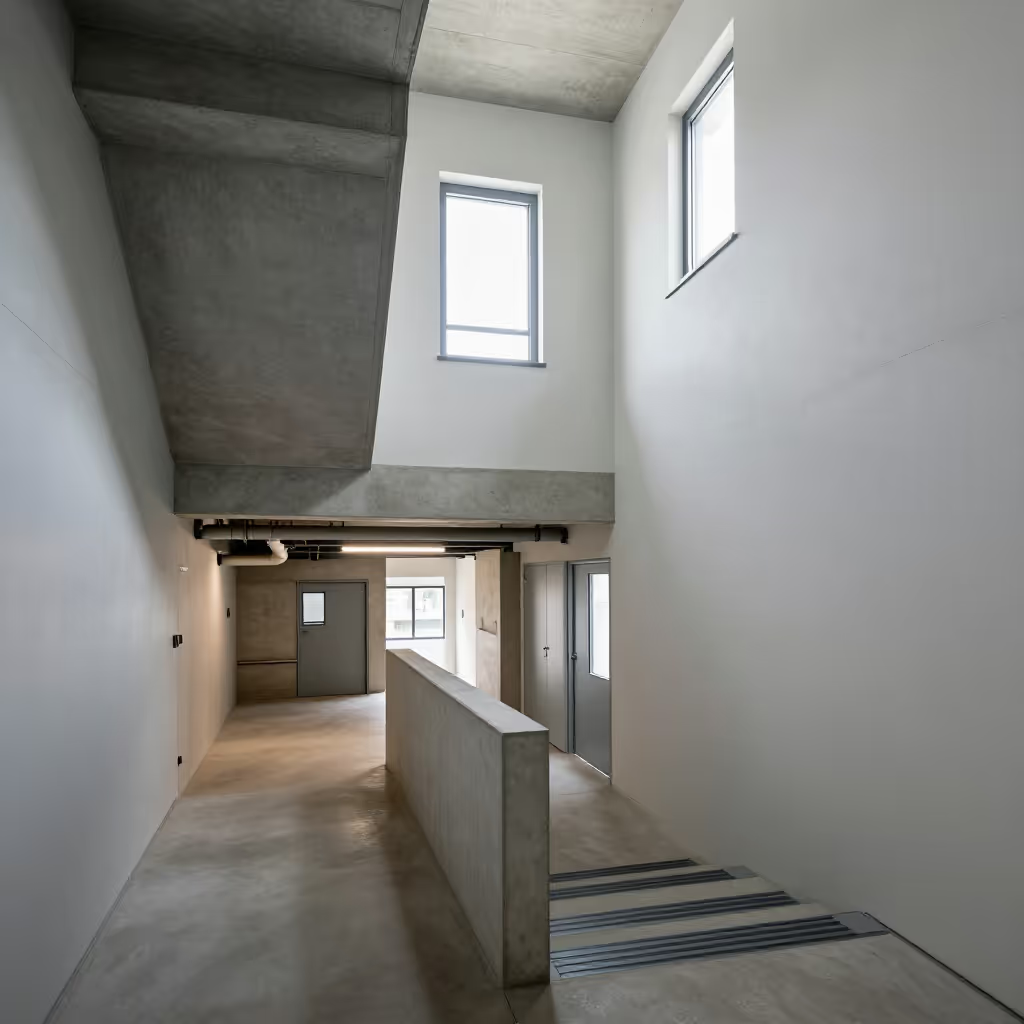
Die alten Akten lagern in einem trockenen Raum im Keller.
The old files are stored in a dry room in the basement.
Das neue Archiv belegt das gesamte Untergeschoss des Gebäudes.
The new archive occupies the entire lower level of the building.