

kentern
to capsize
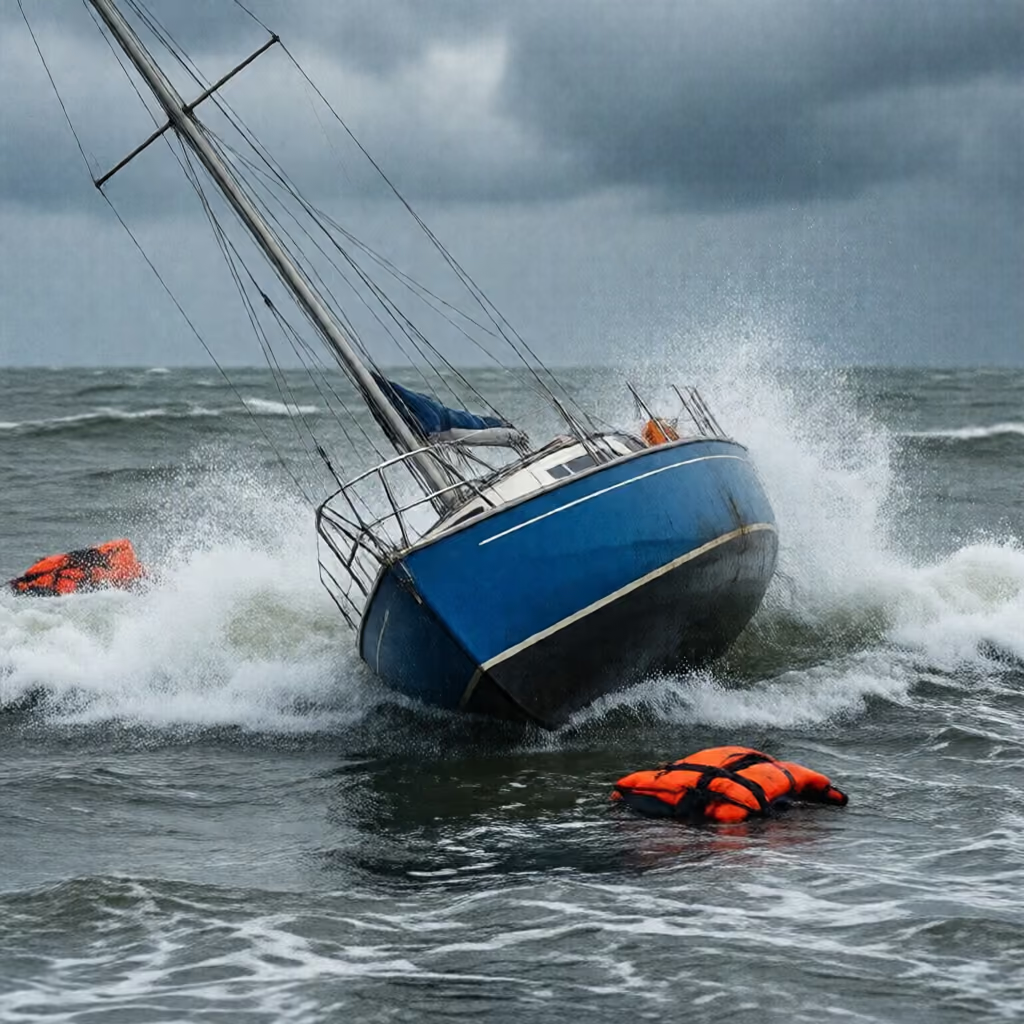
When a boat or ship capsizes, it turns over so that its side or underside faces upward, and it usually fills with water.
Das kleine Segelboot ist bei starkem Wellengang gekentert.
The small sailboat capsized in heavy waves.
to capsize
kentern – kenterte – hat gekentert
Loading your saved state.

to capsize
When a boat or ship capsizes, it turns over so that its side or underside faces upward, and it usually fills with water.
Das kleine Segelboot ist bei starkem Wellengang gekentert.
The small sailboat capsized in heavy waves.
| ich | kentere kentre |
|---|---|
| du | kenterst |
| er/sie/es | kentert |
| wir | kentern |
| ihr | kentert |
| sie | kentern |
| ich | kenterte |
|---|---|
| du | kentertest |
| er/sie/es | kenterte |
| wir | kenterten |
| ihr | kentertet |
| sie | kenterten |
| ich | habe gekentert |
|---|---|
| du | hast gekentert |
| er/sie/es | hat gekentert |
| wir | haben gekentert |
| ihr | habt gekentert |
| sie | haben gekentert |
| du | kentere! kenter!, kentre! |
|---|---|
| ihr | kentert! |
| Sie | kentern Sie! |
| ich | hatte gekentert |
|---|---|
| du | hattest gekentert |
| er/sie/es | hatte gekentert |
| wir | hatten gekentert |
| ihr | hattet gekentert |
| sie | hatten gekentert |
| ich | werde kentern |
|---|---|
| du | wirst kentern |
| er/sie/es | wird kentern |
| wir | werden kentern |
| ihr | werdet kentern |
| sie | werden kentern |
| ich | kentere kentre |
|---|---|
| du | kenterst |
| er/sie/es | kentere kentre |
| wir | kentern |
| ihr | kentert |
| sie | kentern |
Used for reported speech.
| ich | kenterte |
|---|---|
| du | kentertest |
| er/sie/es | kenterte |
| wir | kenterten |
| ihr | kentertet |
| sie | kenterten |
Used for wishes and “would”.
| infinitive | kentern |
|---|---|
| with zu | zu kentern |
| present participle | kenternd |
| past participle | gekentert |
'Kentern' (to capsize) is normally used without an accusative object: the boat or ship is the subject and capsizes on its own. In the perfect tense, the verb is used with 'sein' and forms 'ist gekentert' (has capsized).
Das Kajak ist kurz vor dem Ufer gekentert.
The kayak capsized shortly before reaching the shore.
'Kentern' (to capsize) is often used with information about the conditions on the water, for example 'bei starkem Wellengang' (in heavy waves), 'in einem Sturm' (in a storm), or 'wegen hoher Wellen' (because of high waves).
Das Fischerboot ist wegen der hohen Wellen gekentert.
The fishing boat capsized because of the high waves.
The subjects of 'kentern' (to capsize) are usually small or medium-sized watercraft, especially boats, canoes, kayaks, and ships. The context often mentions rescue efforts or people in the water.
Nachdem das Segelboot gekentert war, alarmierte die Mannschaft die Seenotrettung.
After the sailboat had capsized, the crew alerted the sea rescue service.