

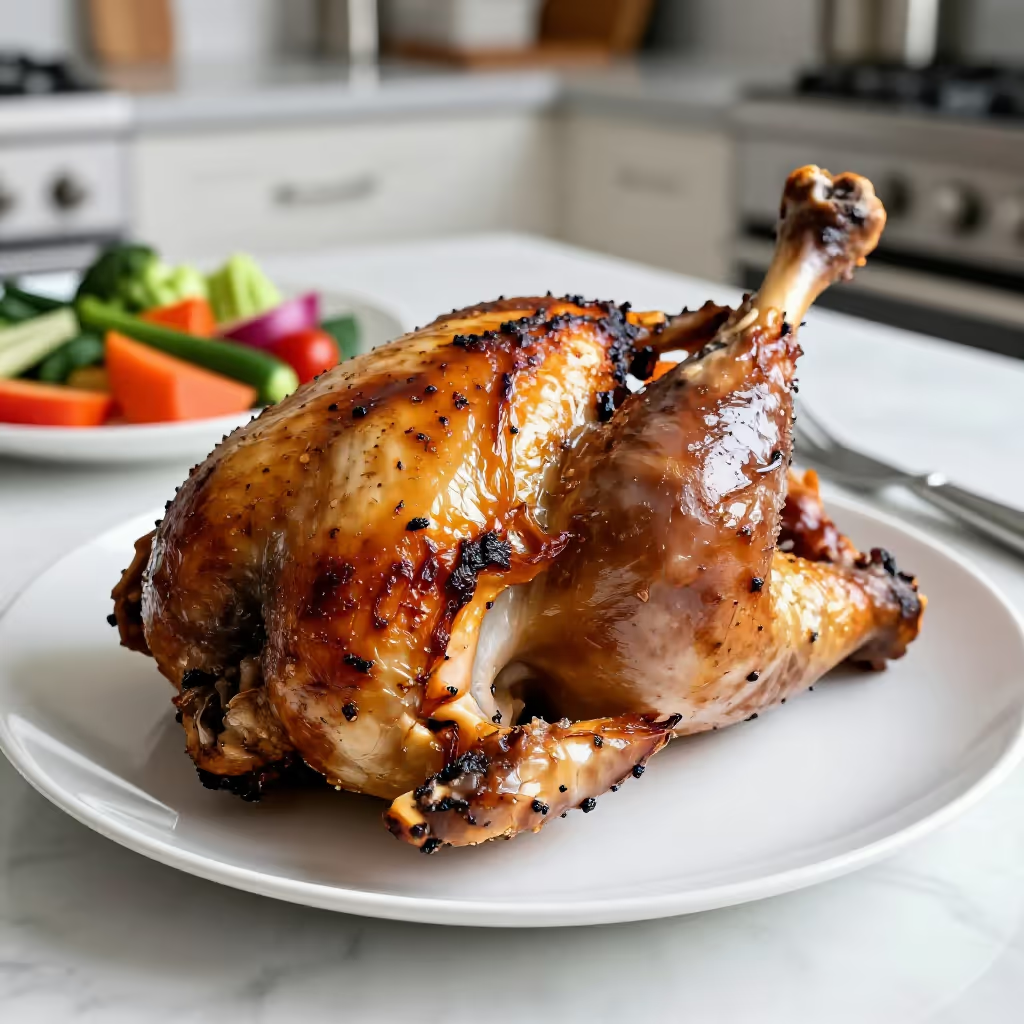
die Keule
leg
The thigh of a slaughtered animal, especially poultry, lamb, or game, as a piece of meat.
EXAMPLE
Zu Weihnachten gibt es bei uns traditionell eine Gänsekeule.
At Christmas, we traditionally have a goose leg.
leg / club
Loading your saved state.
leg
The thigh of a slaughtered animal, especially poultry, lamb, or game, as a piece of meat.
Zu Weihnachten gibt es bei uns traditionell eine Gänsekeule.
At Christmas, we traditionally have a goose leg.

club
A heavy wooden or metal stick that is thicker at the end and is used as a weapon or tool.
Im Museum war ein Steinzeitmensch mit einer Keule in der Hand ausgestellt.
In the museum, a Stone Age person was displayed with a club in his hand.

heavy-handed measure
A drastic, often exaggerated measure or a very strong argument used to achieve a goal or convince someone.
Gegen das Unkraut im Garten hat er gleich die chemische Keule eingesetzt.
Against the weeds in the garden, he immediately used the chemical hammer.
You can easily recognize the meaning from the context: in the kitchen it is about meat (m01), in history about a weapon (m02), and in discussions about an exaggerated measure (m03).
Für das Festessen habe ich eine Lammkeule gekauft.
I bought a leg of lamb for the festive meal.
As a cut of meat, 'Keule' (leg) is almost always combined with the name of the animal. Typical examples are 'Gänsekeule' (goose leg), 'Hähnchenkeule' (chicken leg), 'Putenkeule' (turkey leg), or 'Lammkeule' (leg of lamb).
Im Restaurant bestellte er eine knusprige Entenkeule mit Rotkohl.
In the restaurant, he ordered a crispy duck leg with red cabbage.
In the figurative meaning, 'Keule' (club/heavy-handed measure) is often combined into a new word. The first word describes the type of drastic measure, e.g. 'die Chemiekeule' (strong chemicals/chemical hammer) or 'die Moralkeule' (strong moral accusation/morality club).
Manche Leute greifen bei jeder Kleinigkeit sofort zur Gesetzeskeule.
Some people immediately reach for the legal hammer over every little thing.
The use of 'Keule' (club/heavy-handed measure) in the figurative sense is always negative or critical. It expresses that a measure is perceived as exaggerated, unfair, or too aggressive.
Sein Chef hat die Kündigungs-Keule geschwungen, um die Mitarbeiter einzuschüchtern.
His boss swung the dismissal hammer to intimidate the employees.
mallet / leg / clapper
Schlegel and Keule can both refer to the piece of meat from the thigh of a slaughtered animal. The exact usage depends on the region and the type of meat; in addition, Keule may refer more often to the entire upper-leg section, while Schlegel may refer to a more specific cut. When in doubt, use the local butcher’s term.
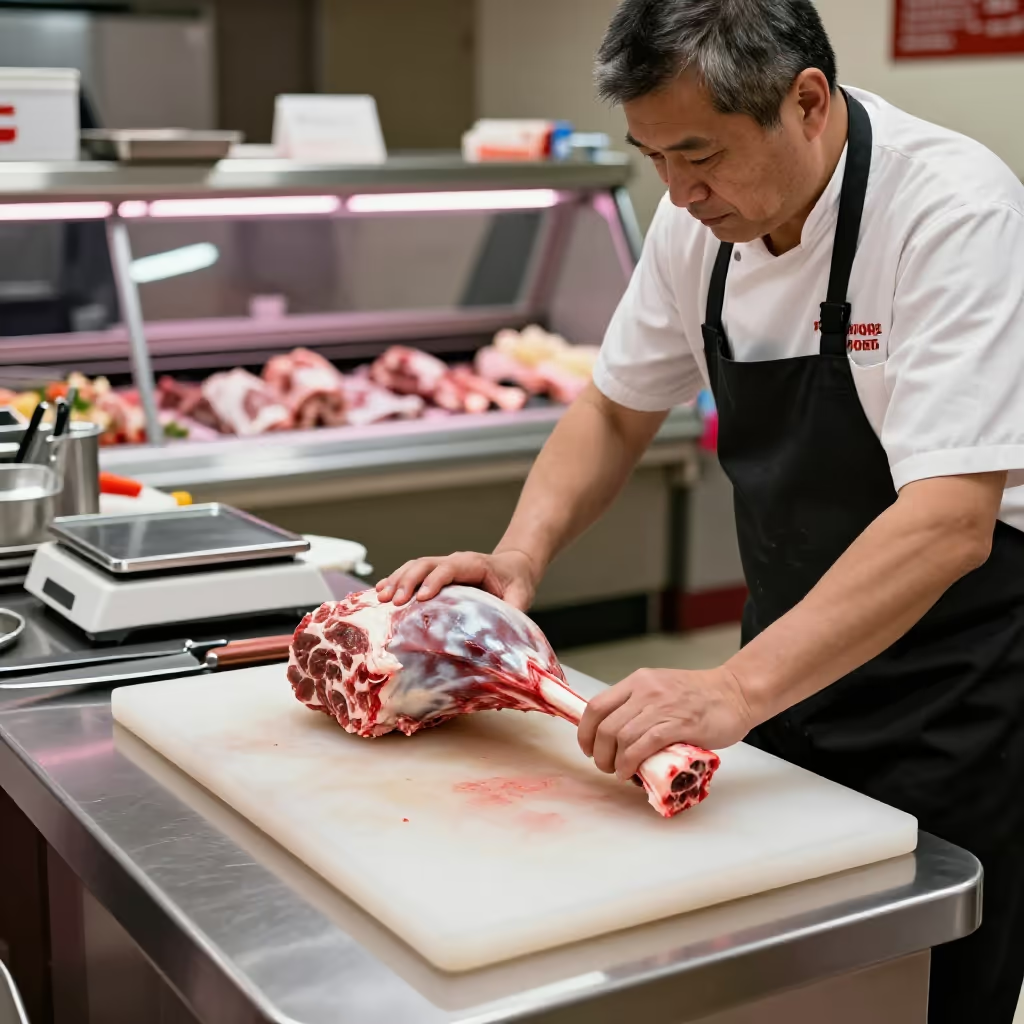
Der Metzger bot für das Fest die ganze Keule vom Lamm an.
The butcher offered the whole leg of lamb for the celebration.
Der Metzger schnitt für das Fest einen kleineren Schlegel vom Lamm ab.
The butcher cut off a smaller leg of lamb for the celebration.