

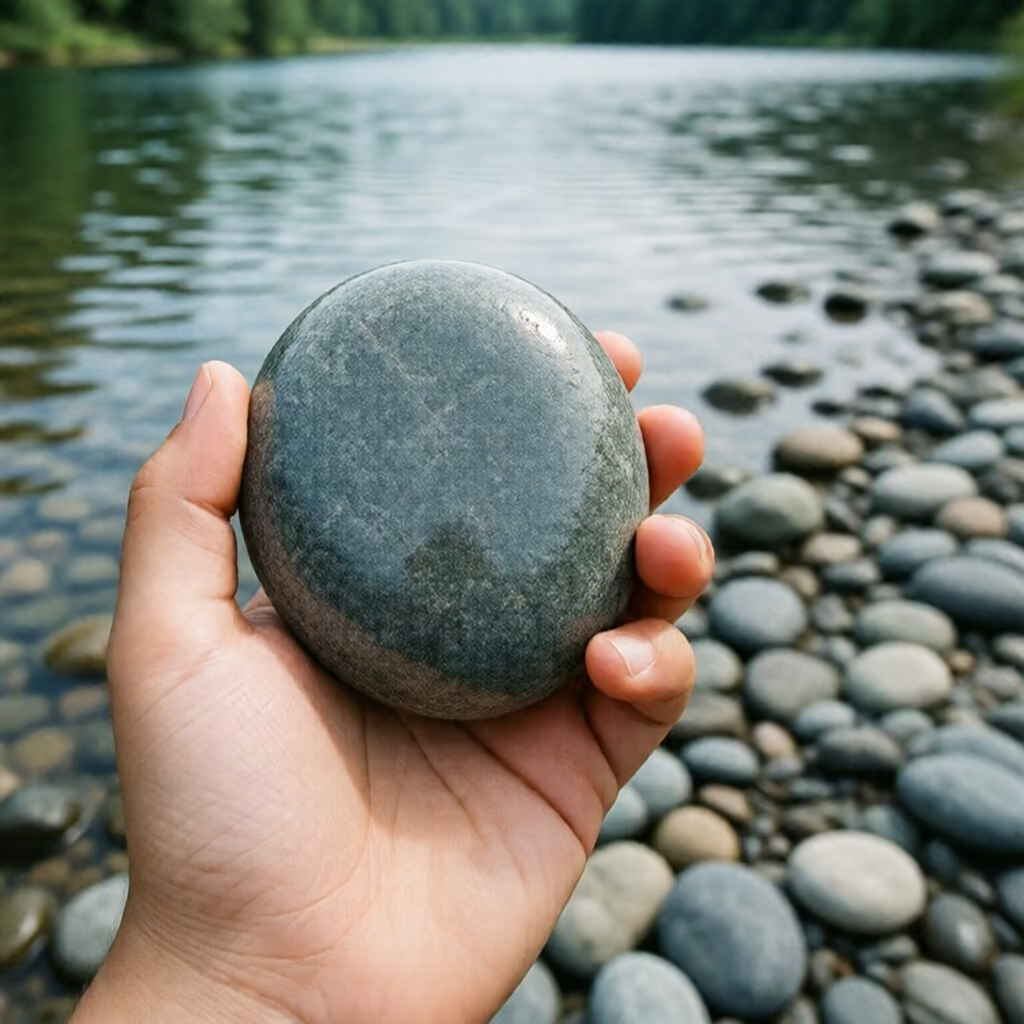
der Kieselstein
pebble
A small, usually roundish stone that has been smoothed by water or natural erosion.
EXAMPLE
Am Ufer hob das Kind einen glänzenden Kieselstein auf.
By the shore, the child picked up a shiny pebble.
pebble
der Kieselstein, die Kieselsteine
Loading your saved state.
pebble
A small, usually roundish stone that has been smoothed by water or natural erosion.
Am Ufer hob das Kind einen glänzenden Kieselstein auf.
By the shore, the child picked up a shiny pebble.
| gender | masculine der |
|---|---|
| plural | die Kieselsteine |
| genitive | des Kieselsteines |
| singular | plural | |
|---|---|---|
| nominative | der Kieselstein | die Kieselsteine |
| accusative | den Kieselstein | die Kieselsteine |
| dative | dem Kieselstein | den Kieselsteinen |
| genitive | des Kieselsteines des Kieselsteins | der Kieselsteine |
The article changes with the case; it is shown in colour.
'Kieselstein' (pebble) is made up of 'Kiesel' (small, usually roundish stone) and 'Stein' (stone). The first part refers to a small, usually roundish stone; 'Stein' makes the basic meaning clear as well.
Am Strand fand sie einen besonders schönen Kieselstein.
At the beach, she found a particularly beautiful pebble.
Common verbs used with 'Kieselstein' (pebble) include 'aufheben' (to pick up), 'sammeln' (to collect), and 'ins Wasser werfen' (to throw into the water). The descriptions 'glatt' (smooth), 'rund' (round), and 'glänzend' (shiny) are also often used with it.
Die Kinder sammelten bunte Kieselsteine und warfen sie ins Wasser.
The children collected colorful pebbles and threw them into the water.
'Kieselstein' (pebble) is especially often used in connection with rivers, lakes, beaches, and paths. The context frequently describes the surface, shape, or collecting of such stones.
Unter der Brücke lag der Weg voller glatter Kieselsteine.
Under the bridge, the path was covered with smooth pebbles.