

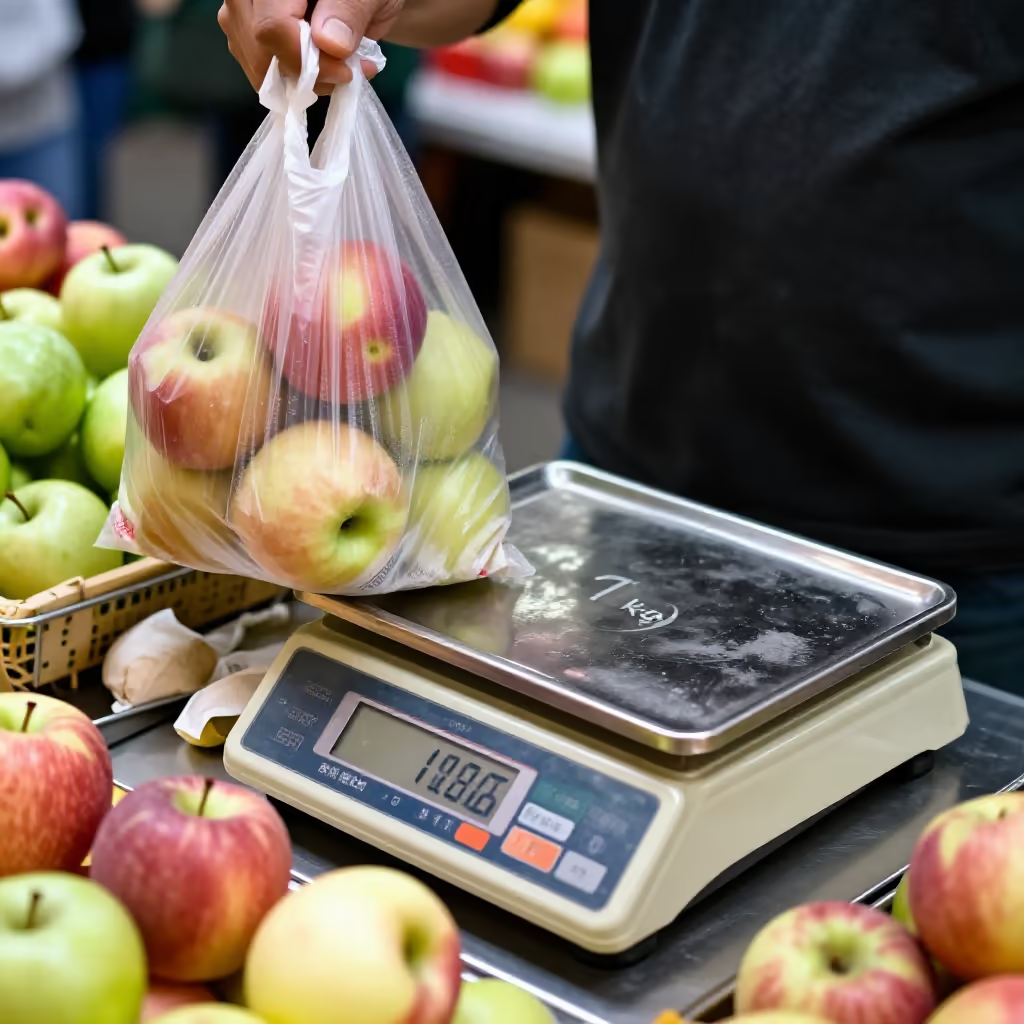
das Kilogramm
kilogram
A unit of measurement for mass equal to 1000 grams. It is the base unit of mass in the International System of Units (SI).
EXAMPLE
Die Hantel wiegt zehn Kilogramm.
The dumbbell weighs ten kilograms.
kilogram
Loading your saved state.
kilogram
A unit of measurement for mass equal to 1000 grams. It is the base unit of mass in the International System of Units (SI).
Die Hantel wiegt zehn Kilogramm.
The dumbbell weighs ten kilograms.
The word consists of the prefix 'Kilo-' (kilo-), which means 'tausend' (thousand), and the base word 'Gramm' (gram). So one kilogram is literally one thousand grams.
Ein Liter Wasser wiegt ungefähr ein Kilogramm.
One liter of water weighs about one kilogram.
When a number greater than one comes before 'Kilogramm' (kilogram), the unit is not put into the plural in German. You say 'zwei Kilogramm' (two kilograms), not 'zwei Kilogramme'. This rule applies to most units of measurement.
Ich kaufe bitte fünf Kilogramm Kartoffeln.
I'd like to buy five kilograms of potatoes, please.
In writing, especially on price tags, in recipes, or in scientific texts, 'Kilogramm' (kilogram) is almost always abbreviated as 'kg'.
Bitte 1 kg Äpfel und 500 g Erdbeeren.
Please, 1 kg of apples and 500 g of strawberries.