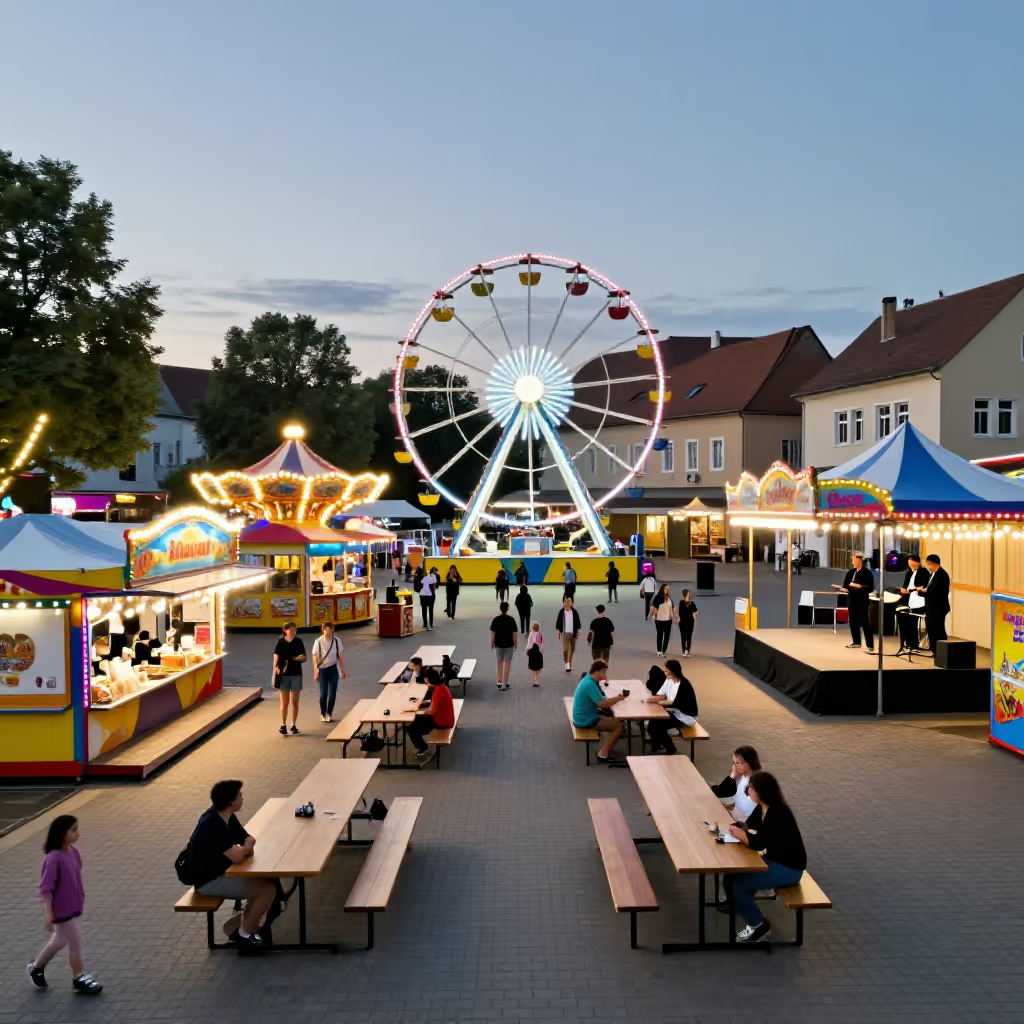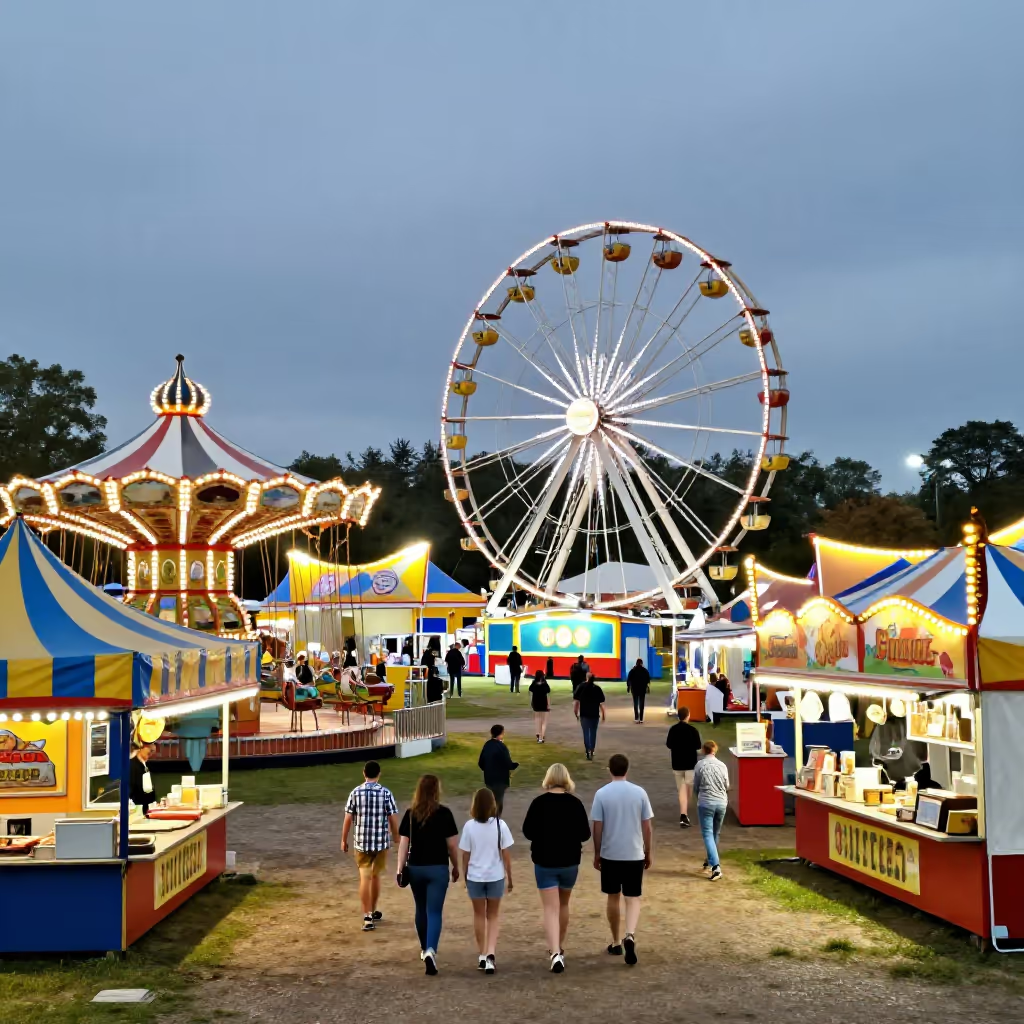
A public fair with rides such as carousels and Ferris wheels, shooting galleries, and food stalls, usually held once a year.
example
Am Wochenende gehen wir mit den Kindern auf die Kirmes und essen Zuckerwatte.
At the weekend, we're going to the fair with the children and eating cotton candy.
Usage tips
Origin of the word
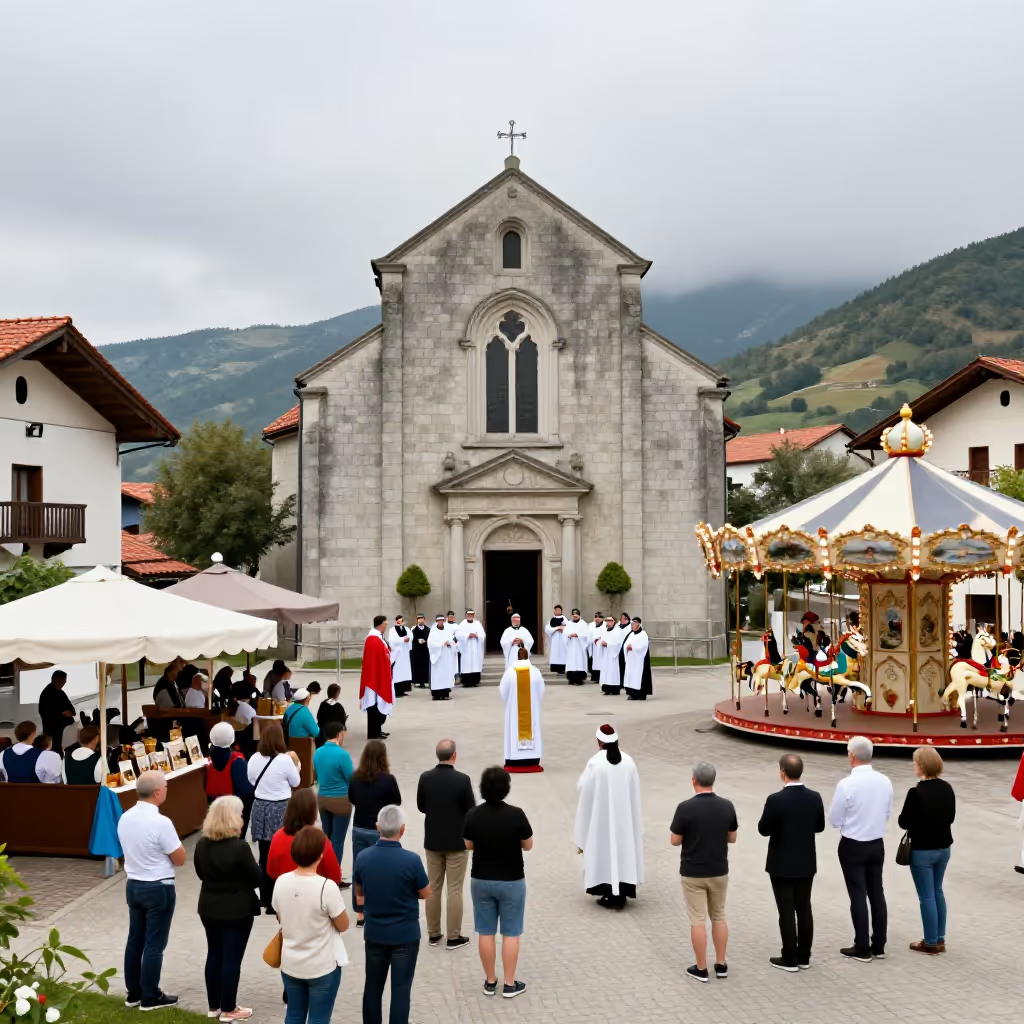
The word 'Kirmes' is a shortened form of 'Kirchweihmesse' (church consecration mass). This explains its original meaning as a festival for the consecration of a church and its connection to a fair.
EXAMPLE
Früher war die Kirmes ein rein religiöses Fest.
In the past, the fair was a purely religious festival.
Correct preposition
The preposition 'auf' is used. For direction, you use the accusative ('auf die Kirmes gehen' — to go to the fair); for location, the dative ('auf der Kirmes sein' — to be at the fair).
EXAMPLE
Freust du dich auch schon darauf, auf die Kirmes zu gehen?
Are you already looking forward to going to the fair too?
Typical collocations
With 'Kirmes' as a public fair, typical associations are 'Fahrgeschäfte' (rides), 'Zuckerwatte' (cotton candy), 'gebrannte Mandeln' (candied almonds), a 'Riesenrad' (Ferris wheel), or a 'Schießbude' (shooting gallery).
EXAMPLE
Meine kleine Schwester wollte unbedingt mit dem Karussell auf der Kirmes fahren.
My little sister really wanted to ride the carousel at the fair.
Regional usage
The term 'Kirmes' is especially common in western and central Germany. In other German-speaking regions, other terms are often used for similar public fairs.
EXAMPLE
In unserem rheinischen Dorf ist die Kirmes das größte Ereignis des Jahres.
In our village in the Rhineland, the fair is the biggest event of the year.
Compare with
near_synonym · confusable
Kirmes vs Dom
cathedral / fair
'der Dom' and 'die Kirmes' can both mean a fair with rides and stalls. However, this meaning of 'Dom' is regional and especially known in northern Germany, for example in 'der Hamburger Dom' (the Hamburg fair). 'Kirmes' is more widely understood and fits many annual fairs, often also with a church-related origin. Learners may confuse the words because 'Dom' usually means a large church. If you are not talking about a specific regional fair, 'Kirmes' is often clearer.
Kirmes
Bei meinen Eltern im Dorf beginnt morgen die Kirmes mit Musik und Karussells.
In my parents' village, the fair starts tomorrow with music and carousels.
Dom
Am Wochenende gehen wir auf den Dom und fahren mit dem Riesenrad.
At the weekend, we're going to the fair and riding the Ferris wheel.