

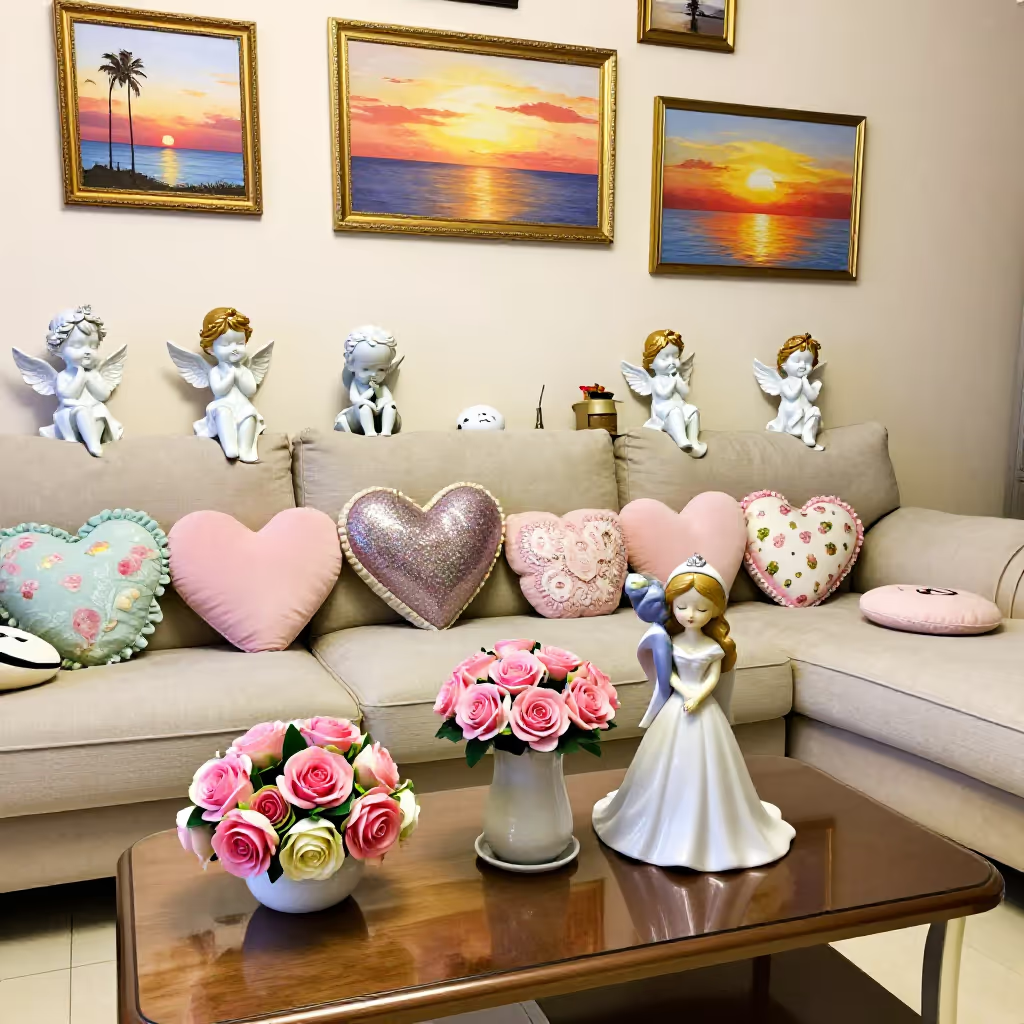
Something perceived as tasteless, overly sentimental, or artistically inferior. It often aims at simple emotions and feels inauthentic.
example
Die Postkarte mit dem Sonnenuntergang und den glitzernden Delfinen war unglaublich kitschig.
The postcard with the sunset and the glittering dolphins was incredibly kitschy.
Usage tips
Word family
The adjective 'kitschig' (kitschy) is derived from the noun 'der Kitsch' (kitsch). The ending '-ig' is often used to form an adjective from a noun.
EXAMPLE
Sein Wohnzimmer ist voller Kitsch.
His living room is full of kitsch.
Typical collocations
The word is often used to describe things with exaggerated emotions. Typical examples are: 'ein kitschiger Liebesfilm' (a kitschy romantic film), 'eine kitschige Dekoration' (a kitschy decoration), or 'ein kitschiges Geschenk' (a kitschy gift).
EXAMPLE
Ich mag keine kitschigen Liebesromane.
I don't like kitschy romance novels.
Subjective judgment
'Kitschig' (kitschy) is a subjective judgment and expresses a personal opinion about taste. What one person finds kitschy, another person may see as beautiful or romantic.
EXAMPLE
Er findet die Gartenzwerge süß, aber ich finde sie total kitschig.
He thinks the garden gnomes are cute, but I find them totally kitschy.
Compare with
near_synonym · confusable
kitschig vs billig
cheap
'billig' and 'kitschig' can both sound negative when you are talking about taste or quality. 'billig' then means that something seems poorly made, inferior, or lowbrow. 'kitschig' mainly means that something seems overly sentimental, tasteless, or fake, for example with decoration, music, or films. The words can be confused because kitschy things can often also seem cheap. But 'billig' evaluates quality or level more, while 'kitschig' evaluates style and effect more.
kitschig
Im Wohnzimmer hängt ein kitschiges Bild mit rosa Sonnenuntergang.
There is a kitschy picture with a pink sunset hanging in the living room.
billig
Die Ausrede klang billig, und niemand glaubte ihm.
The excuse sounded cheap, and no one believed him.