

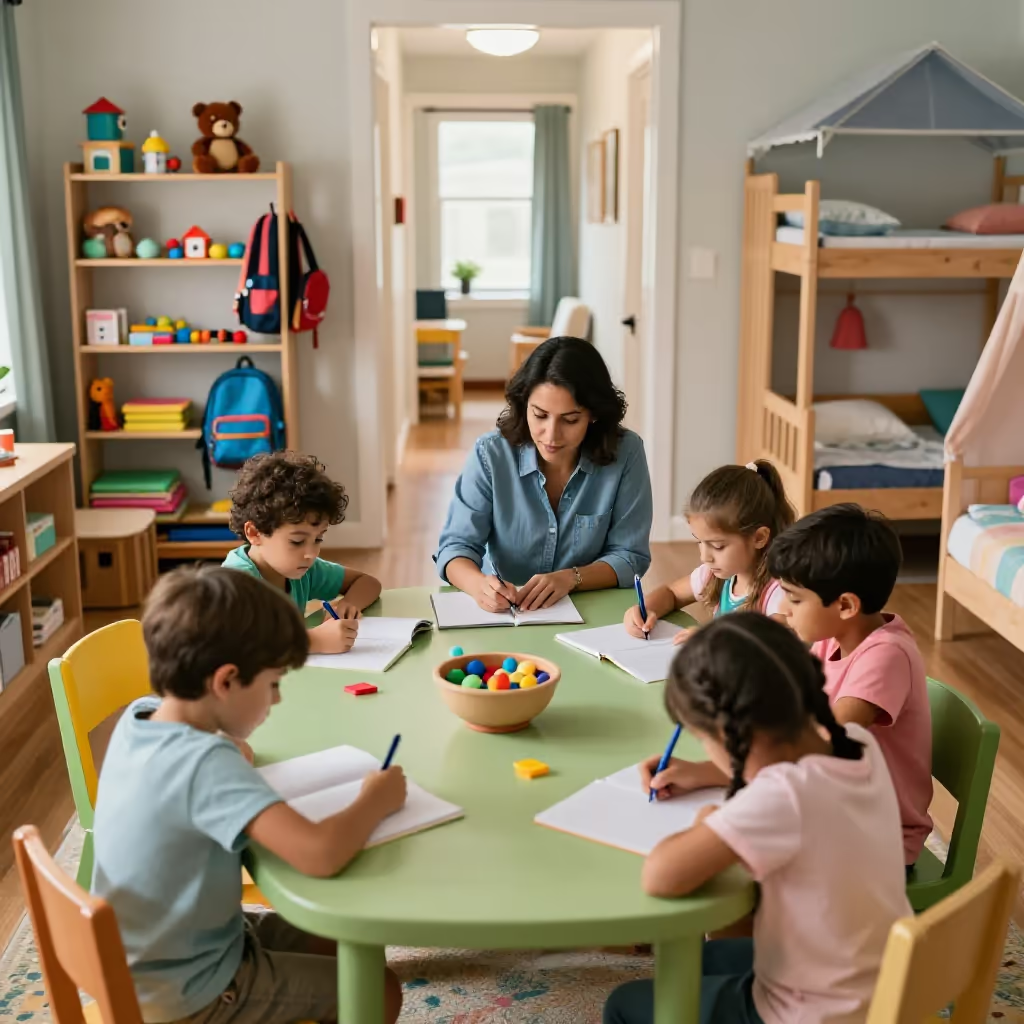
An institution where children and teenagers live when, for various reasons, they cannot grow up with their families. There, they are cared for and looked after by trained professionals.
example
Nach dem Tod ihrer Eltern kamen die Geschwister in ein Kinderheim.
After their parents died, the siblings were placed in a children's home.
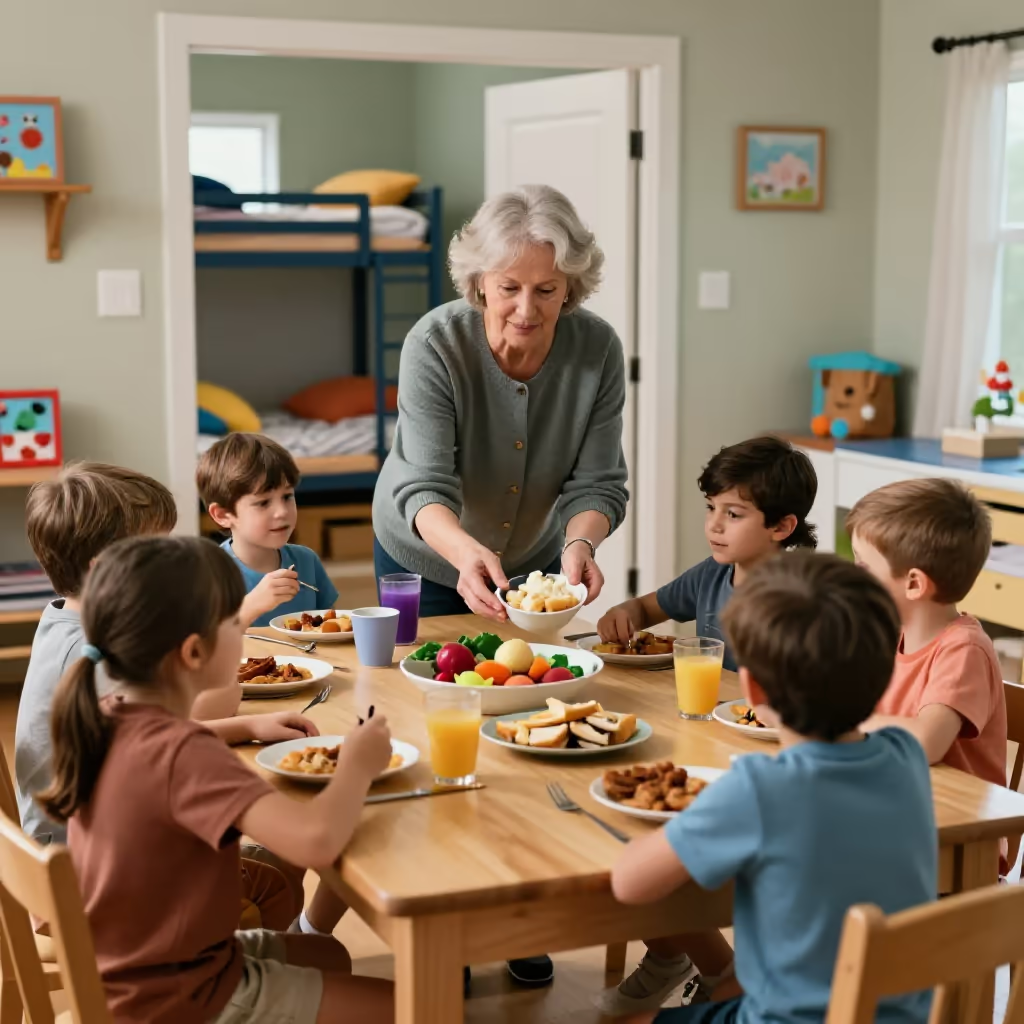
Usage tips
Word composition
The word is made up of 'Kinder' (children, plural of 'Kind') and 'Heim' (home). So it literally describes a home for children.
EXAMPLE
Er hat einen großen Teil seiner Jugend in einem Kinderheim verbracht.
He spent a large part of his youth in a children's home.
Staying and movement
Pay attention to the preposition 'in' and the correct case: movement toward the place is expressed with 'ins Kinderheim' (into the children's home, accusative), while staying there is described with 'im Kinderheim' (in the children's home, dative).
EXAMPLE
Das Kind wurde in ein Kinderheim gebracht.
The child was brought to a children's home.
Typical verbs
Common verbs used with 'Kinderheim' (children's home) are 'aufwachsen' (to grow up), 'leben' (to live), 'wohnen' (to live/reside), 'kommen' (to come), and 'bringen' (to bring).
EXAMPLE
Manche Kinder wachsen in einem Kinderheim auf.
Some children grow up in a children's home.
Compare with
near_synonym · confusable
Kinderheim vs Heim
home / institution
'das Heim' and 'das Kinderheim' can both refer to a supervised institution. 'das Heim' is general and can stand for different groups. 'das Kinderheim' is a specific type of 'Heim': children or teenagers who cannot grow up with their families live there. Learners may confuse the words because 'Kinderheim' contains the word 'Heim'. If it should be clear that children are meant, 'Kinderheim' is the precise choice.
Kinderheim
Sie besucht ein Kinderheim, weil sie dort ehrenamtlich helfen möchte.
She is visiting a children's home because she wants to help there as a volunteer.
Heim
Du kannst dem Heim alte Kleidung und Spielsachen spenden.