

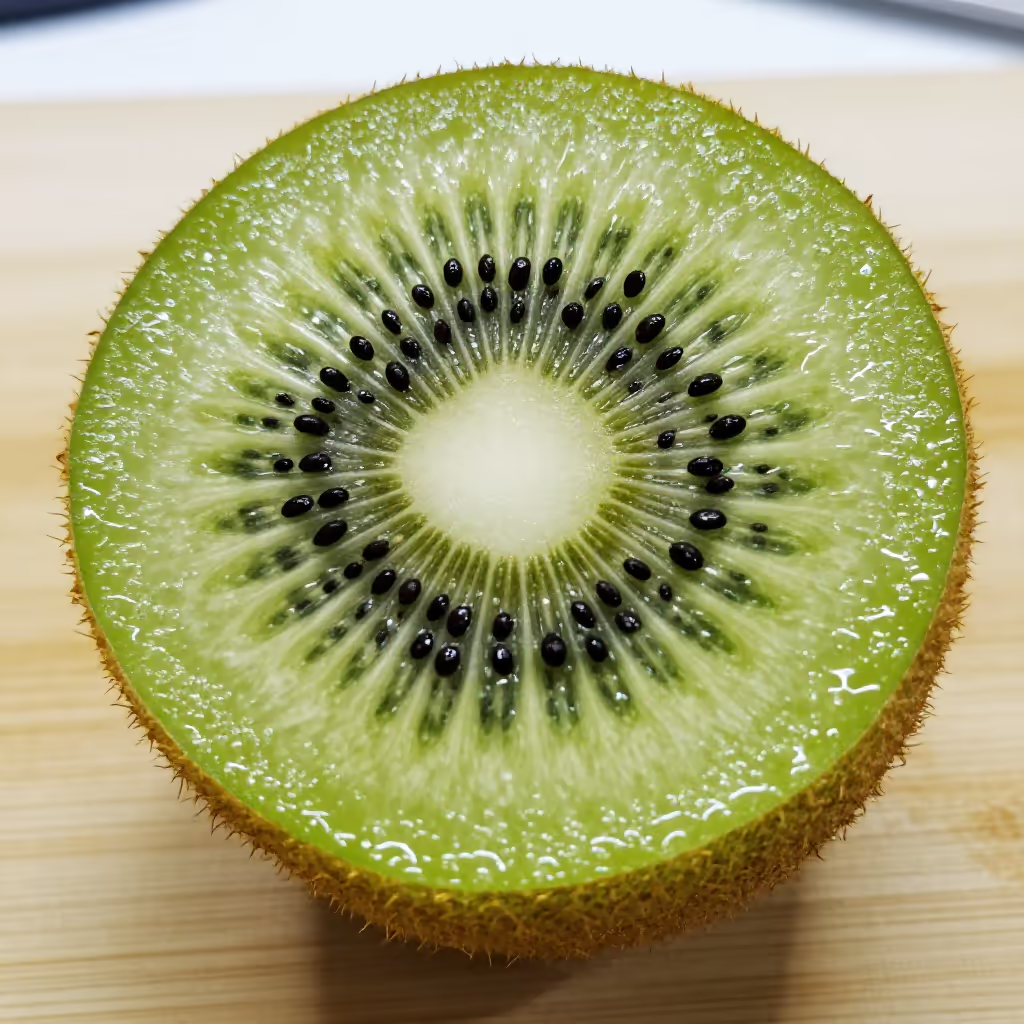
die Kiwi
kiwi
A small, oval fruit with a brown, hairy skin and green flesh with small black seeds.
EXAMPLE
Zum Frühstück esse ich oft Joghurt mit einer aufgeschnittenen Kiwi.
For breakfast I often eat yogurt with a sliced kiwi.
kiwi
Loading your saved state.
kiwi
A small, oval fruit with a brown, hairy skin and green flesh with small black seeds.
Zum Frühstück esse ich oft Joghurt mit einer aufgeschnittenen Kiwi.
For breakfast I often eat yogurt with a sliced kiwi.

Kiwi
A colloquial term for a woman or girl from New Zealand.
Meine neue Mitbewohnerin ist eine Kiwi und erzählt oft von ihrer Heimat.
My new roommate is a Kiwi and often tells stories about her home country.
The context makes the meaning clear. If it is about eating, cooking, shopping, or fruit, the fruit is meant. If it is about nationalities, travel, or people, it refers to a person from New Zealand.
Ich habe heute auf dem Markt süße Kiwis gekauft.
I bought sweet kiwis at the market today.
When it is about the fruit, 'Kiwi' (kiwi) is often used with verbs such as 'essen' (to eat), 'schälen' (to peel), 'aufschneiden' (to cut open/slice), or 'kaufen' (to buy).
Für den Obstsalat müssen wir die Kiwis noch schälen und schneiden.
For the fruit salad, we still need to peel and cut the kiwis.
The term 'Kiwi' for a person from New Zealand is colloquial. In formal or official texts, 'Neuseeländer' (New Zealander, male) or 'Neuseeländerin' (New Zealander, female) is used instead.
Im Urlaub haben wir eine Gruppe netter Kiwis kennengelernt.
On vacation, we met a group of nice Kiwis.
When 'Kiwi' refers to a person, the article depends on the person's gender: 'der Kiwi' for a man and 'die Kiwi' for a woman. The fruit is always feminine ('die Kiwi').
Der Kiwi, den ich getroffen habe, arbeitet als Lehrer.
The Kiwi I met works as a teacher.