

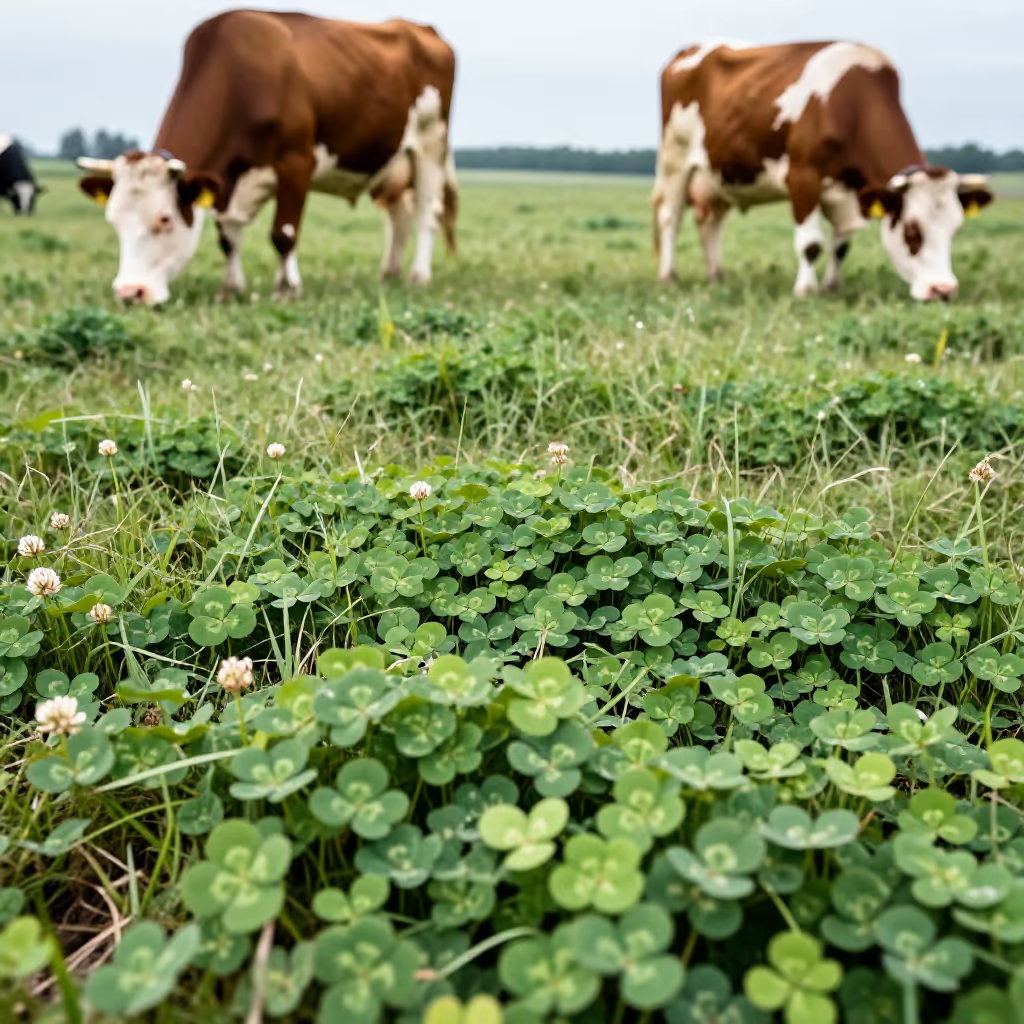
der Klee
clover
A widespread fodder plant with mostly three-part leaves.
EXAMPLE
Die Kühe weiden auf einer Wiese voller saftigem Klee.
The cows are grazing in a meadow full of juicy clover.
clover
Loading your saved state.
clover
A widespread fodder plant with mostly three-part leaves.
Die Kühe weiden auf einer Wiese voller saftigem Klee.
The cows are grazing in a meadow full of juicy clover.
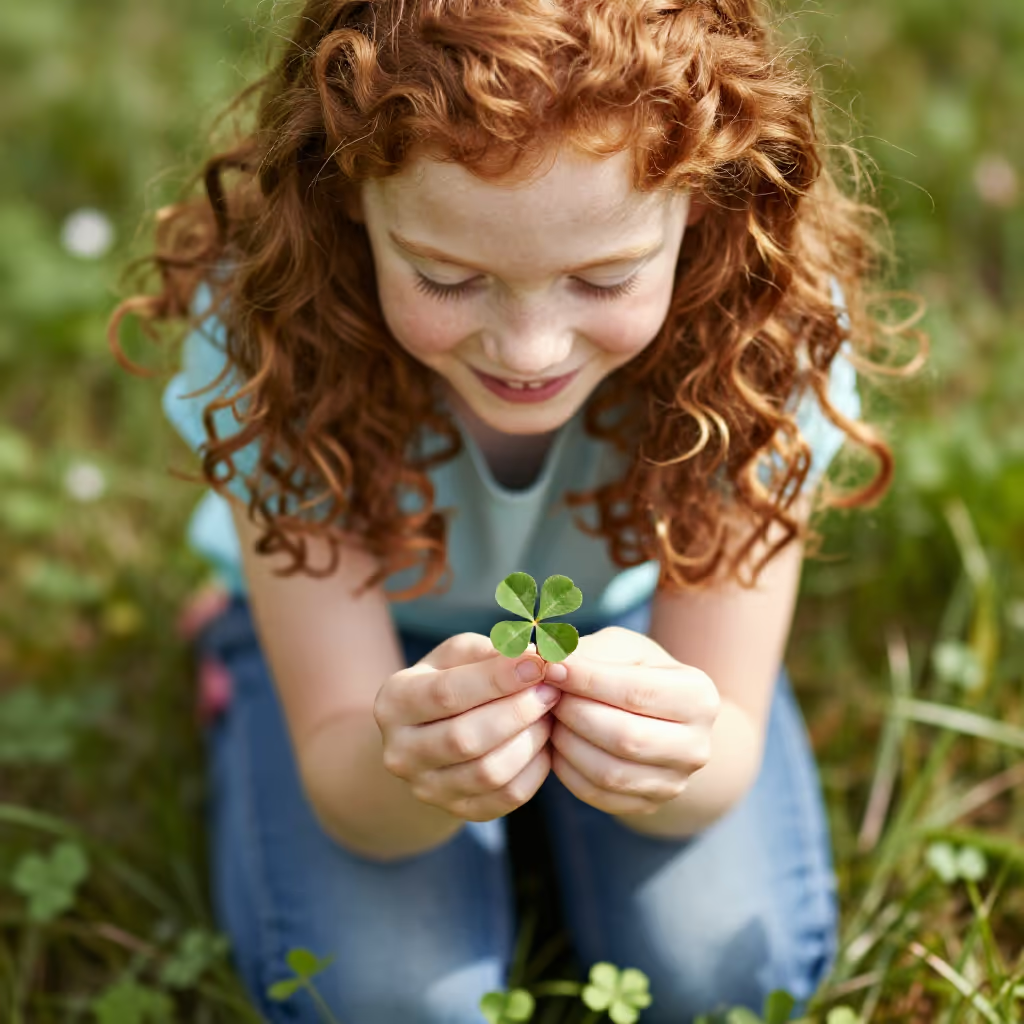
four-leaf clover
As a short form for four-leaf clover, which is considered a symbol of good luck.
Sie hat im Urlaub einen vierblättrigen Klee gefunden und ihn als Glücksbringer getrocknet.
She found a four-leaf clover on vacation and dried it as a lucky charm.

to praise to the skies
To praise someone or something excessively and enthusiastically.
Der Kritiker hat den neuen Roman über den grünen Klee gelobt.
The critic praised the new novel to the skies.
'Klee' (clover) refers to the whole plant. A single leaf of it is called 'Kleeblatt' (clover leaf). This distinction is useful for understanding related words.
Auf der Wiese wächst überall Klee.
Clover is growing everywhere in the meadow.
When 'Klee' (clover) is meant as a symbol of good luck, the adjective 'vierblättrig' (four-leaf) is almost always added. Without this addition, the ordinary plant is usually meant.
Ein vierblättriger Klee soll Glück bringen.
A four-leaf clover is supposed to bring good luck.
The idiom 'jemanden/etwas über den grünen Klee loben' (to praise someone/something to the skies) is a fixed expression. The object being praised is in the accusative. The form of the idiom itself does not change.
Sie lobte ihren neuen Mitarbeiter über den grünen Klee.
She praised her new employee to the skies.
cloverleaf
Klee refers to the whole plant, while Kleeblatt refers only to its characteristic leaf. So when talking about the plant growing in a meadow, Klee is the appropriate word; when referring to a single leaf on it, Kleeblatt is the right choice.
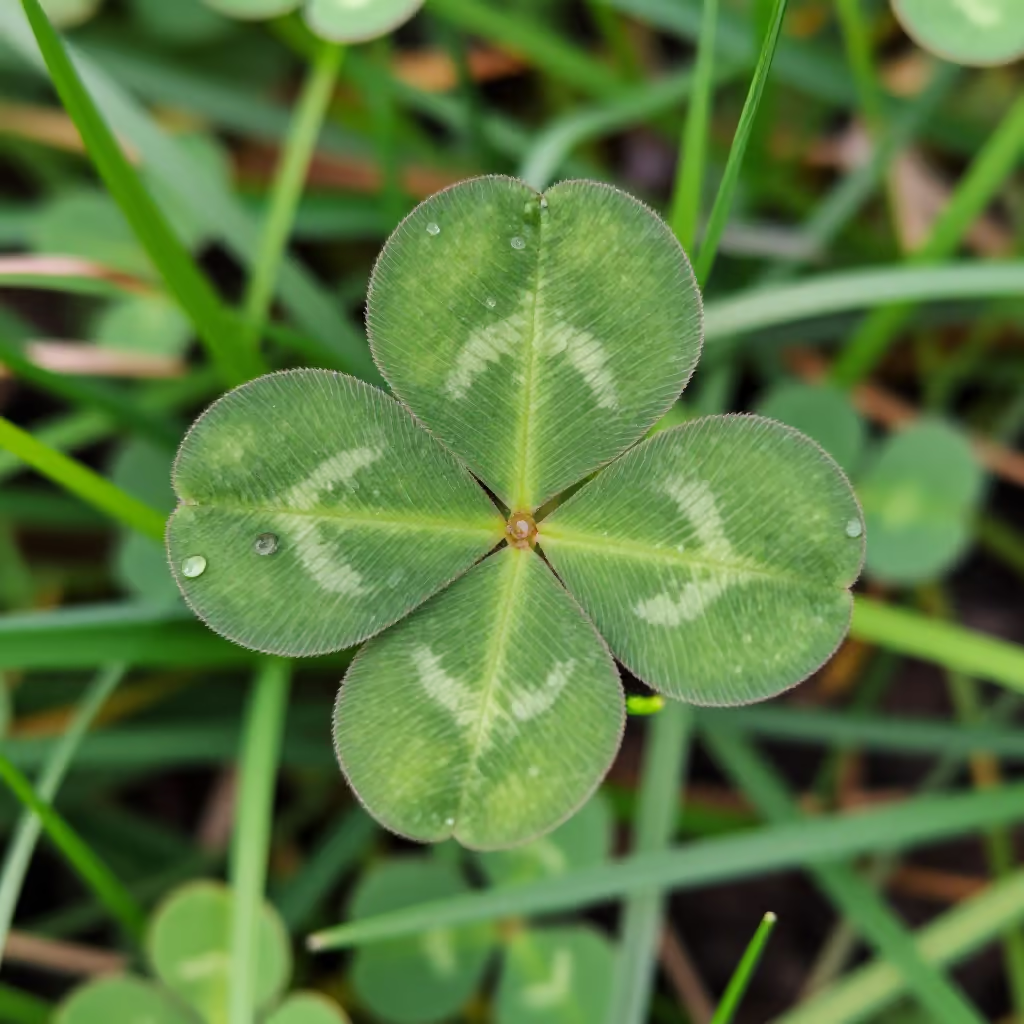
Auf der Wiese wächst zwischen dem Gras viel Klee.
A lot of clover grows among the grass in the meadow.
Auf der Wiese betrachtet Mia ein Kleeblatt mit drei Blättchen.
In the meadow, Mia examines a cloverleaf with three leaflets.