

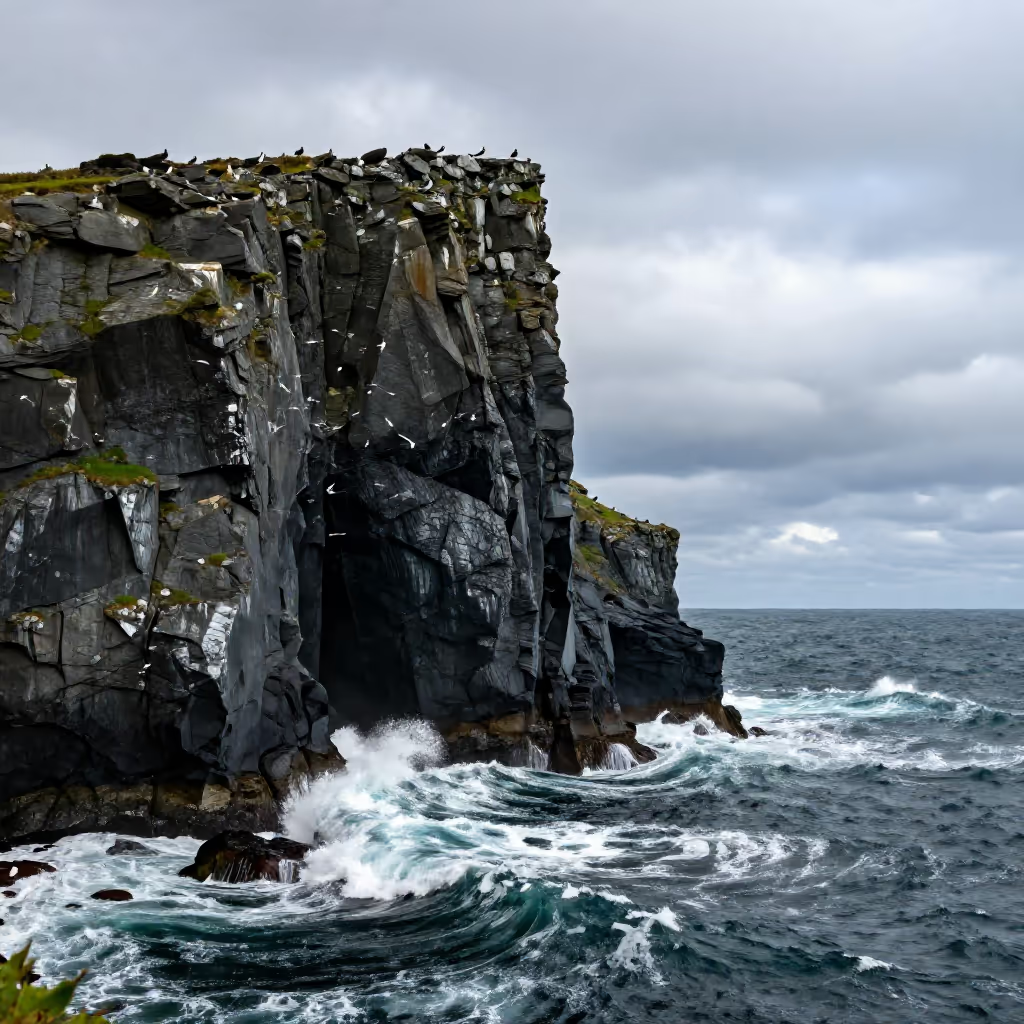
A steep rock formation rising out of the sea or a landscape. It is a rarer, often poetic variant of 'die Klippe' (the cliff).
example
Der Leuchtturm stand einsam auf dem hohen Klipp über der tosenden See.
The lighthouse stood alone on the high cliff above the roaring sea.
Usage tips
Register and style
The word 'der Klipp' (cliff) is a rare and mostly poetic or literary variant. It is often used to describe a dramatic or picturesque scene.
EXAMPLE
In dem Gedicht stürzt der Held vom hohen Klipp ins Meer.
In the poem, the hero falls from the high cliff into the sea.
Common mistake
Pay attention to the masculine gender 'der Klipp'. The much more common form for a rock formation by the sea is feminine.
EXAMPLE
Ein schmaler Pfad führte den Klipp hinauf.
A narrow path led up the cliff.
Typical collocations
'Klipp' (cliff) is often combined with adjectives such as 'hoch' (high), 'steil' (steep), or 'schroff' (rugged). Typical verbs are 'ragen' (to jut out/tower) or 'stehen' (to stand).
EXAMPLE
Der schroffe Klipp ragte bedrohlich aus dem Wasser.
The rugged cliff jutted threateningly out of the water.
Compare with
near_synonym · confusable
Klipp vs Felsen
rock
'der Felsen' and 'der Klipp' can both mean a large rock formation. 'Felsen' is the normal, general word for massive rock, for example in the mountains or on the coast. 'Klipp' refers more to a steep rock formation, often by the sea, and is a rarer, poetic form of 'Klippe'. Learners may confuse the words because both describe something large and stony. In everyday language, 'Felsen' is almost always more natural. 'Klipp' fits more in literary or special descriptions.
Klipp
Jonas fotografiert den dunklen Klipp vor der Küste.
Jonas is photographing the dark cliff off the coast.
Felsen
Wir kletterten auf einen flachen Felsen und sahen über das Tal.
We climbed onto a flat rock and looked out over the valley.