

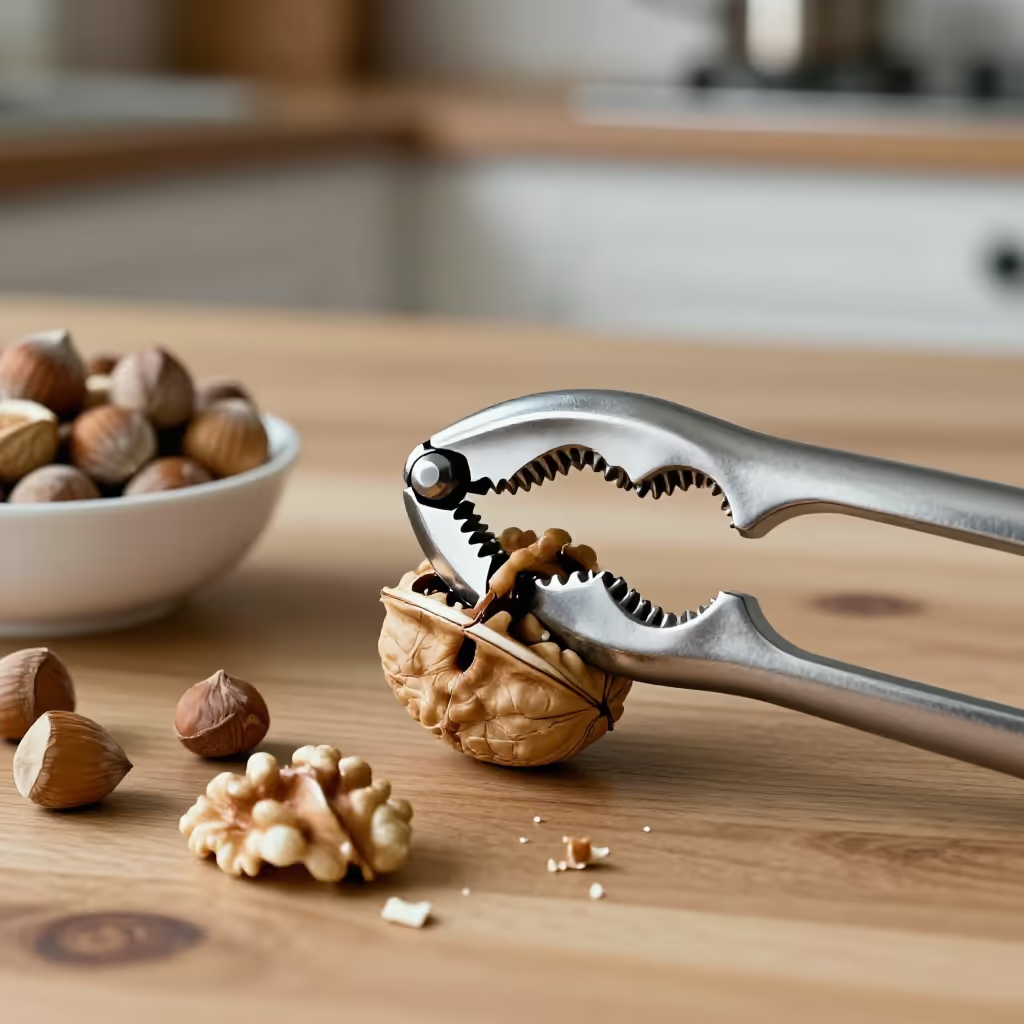
der Knacker
nutcracker
A tool, usually a pair of pliers or tongs, used to crack open the hard shell of nuts.
EXAMPLE
Gib mir bitte den Knacker, ich bekomme diese Walnuss nicht auf.
Please give me the nutcracker; I can't get this walnut open.
nutcracker / knackwurst / safecracker
Loading your saved state.
nutcracker
A tool, usually a pair of pliers or tongs, used to crack open the hard shell of nuts.
Gib mir bitte den Knacker, ich bekomme diese Walnuss nicht auf.
Please give me the nutcracker; I can't get this walnut open.

knackwurst sausage
A particular type of sausage that makes a cracking sound when you bite into it.
Zum Abendbrot gab es frisches Brot und ein Paar heiße Knacker.
For supper there was fresh bread and a pair of hot knackwurst sausages.

old geezer
A colloquial, often slightly derogatory or joking term for an old man.
Der alte Knacker von nebenan beschwert sich immer über den Lärm.
The old geezer next door is always complaining about the noise.
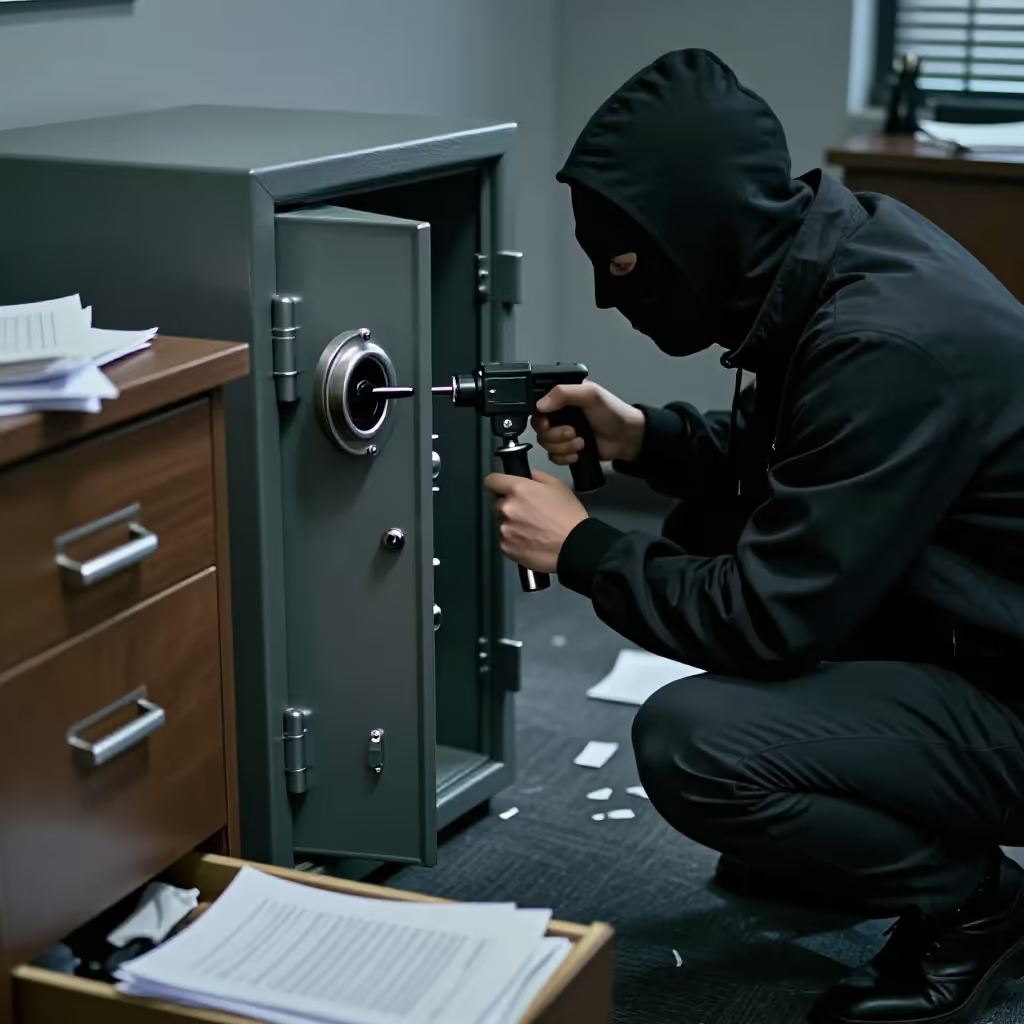
safecracker
A person who forcibly opens or breaks into something, especially a burglar who cracks a safe.
Die Polizei sucht einen erfahrenen Knacker, der für mehrere Einbrüche verantwortlich ist.
The police are looking for an experienced safecracker who is responsible for several break-ins.
All meanings of 'Knacker' derive from the verb 'knacken' (to crack). The ending '-er' refers either to a tool ('Nussknacker' = nutcracker), a person ('Safeknacker' = safecracker), or something that makes a cracking sound (sausage).
Hörst du, wie die Wurst beim Braten knackt?
Do you hear how the sausage cracks as it fries?
The term 'Knacker' (old geezer) for an old man is very colloquial and can sound derogatory or disrespectful. It is often used in the combination 'alter Knacker' (old geezer).
Pass auf, was du sagst, der alte Knacker versteht mehr, als du denkst.
Watch what you say; the old geezer understands more than you think.
When 'Knacker' appears in the context of 'Nüssen' (nuts), 'Schalen' (shells), or as a 'Werkzeug' (tool) or 'Zange' (pliers/tongs), it always means a nutcracker.
Ohne einen guten Knacker bekommt man die Macadamianüsse kaum auf.
Without a good nutcracker, it's almost impossible to open macadamia nuts.
In the context of food, butcher shops, 'ein Paar' (a pair), or meals such as supper, 'Knacker' refers to the type of sausage.
Beim Metzger kaufe ich immer ein Paar frische Knacker.
At the butcher's, I always buy a pair of fresh knackwurst sausages.
In the meaning 'Einbrecher' (burglar), the word is often made more specific, for example as 'Safeknacker' (safecracker) or 'Tresorknacker' (safecracker).
Der berühmte Safeknacker konnte jedes Schloss öffnen.
The famous safecracker could open any lock.
burglar
An Einbrecher enters a building in order to steal. A Knacker is an informal term for someone who forcibly opens something, especially a safe. For the same crime, Einbrecher highlights the unauthorized entry, while Knacker emphasizes breaking something open.
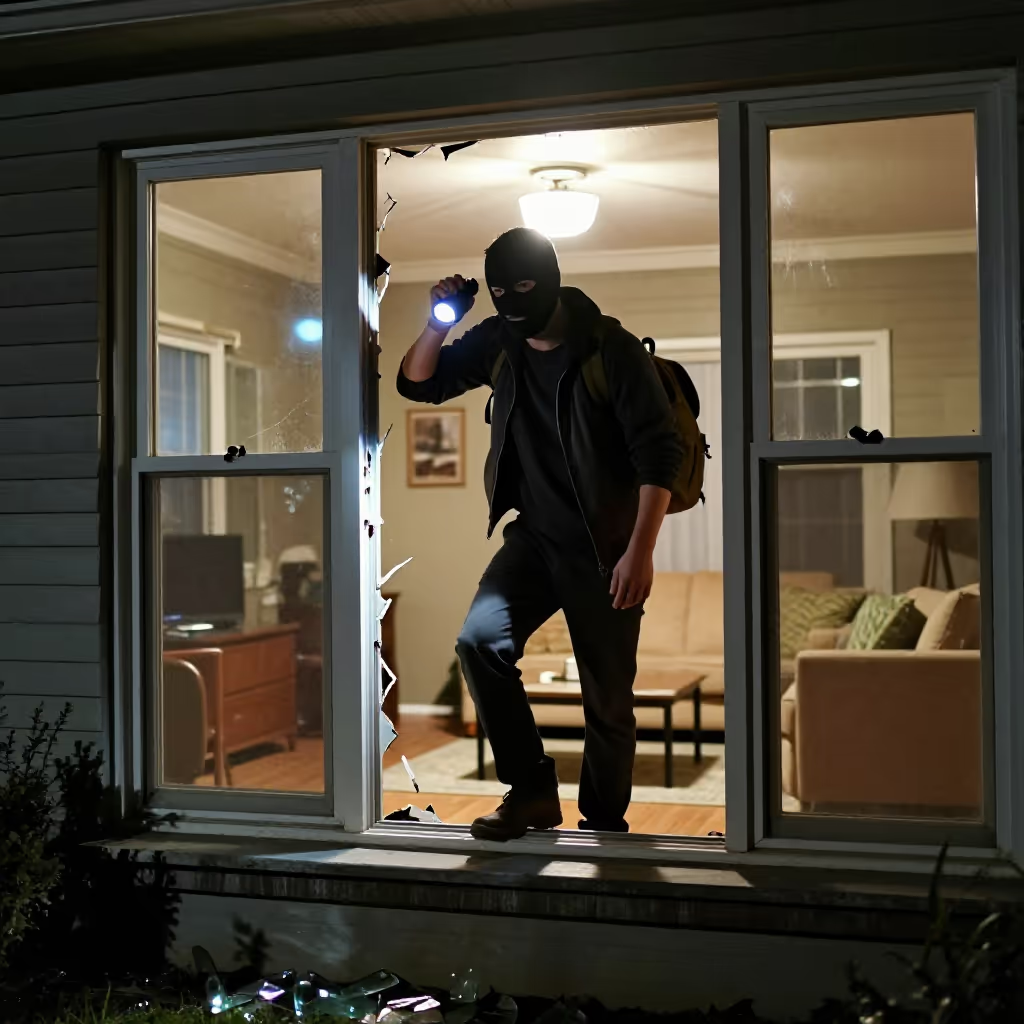
Der Knacker öffnete nachts den Safe der Bank mit Gewalt.
The safecracker forcibly opened the bank's safe at night.
Der Einbrecher drang nachts in die Bank ein, um Geld zu stehlen.
The burglar broke into the bank at night to steal money.