

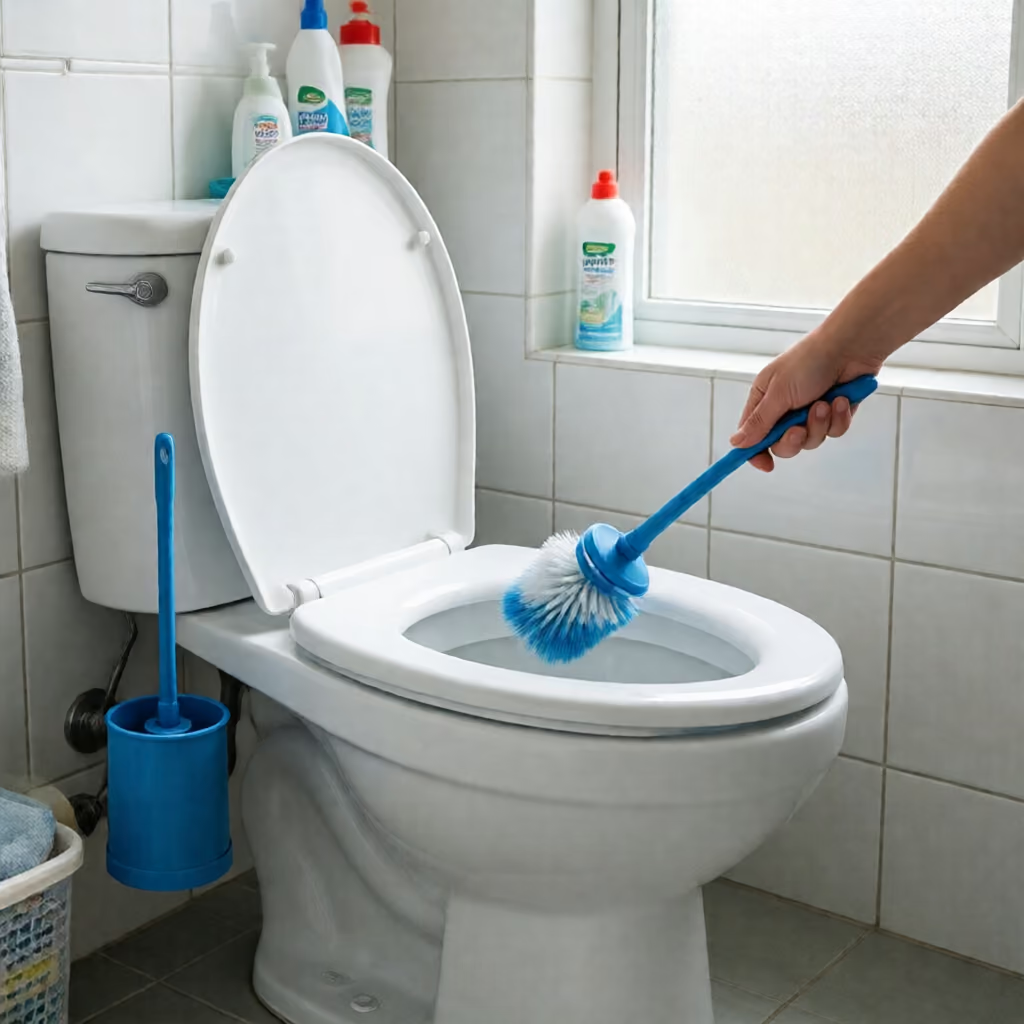
die Klobürste
toilet brush
A brush with a handle used to clean the toilet bowl.
EXAMPLE
Nach der Benutzung der Toilette stellte sie die Klobürste wieder in den Behälter.
After using the toilet, she put the toilet brush back in its holder.
toilet brush
die Klobürste, die Klobürsten
Loading your saved state.
toilet brush
A brush with a handle used to clean the toilet bowl.
Nach der Benutzung der Toilette stellte sie die Klobürste wieder in den Behälter.
After using the toilet, she put the toilet brush back in its holder.
| gender | feminine die |
|---|---|
| plural | die Klobürsten |
| genitive | der Klobürste |
| singular | plural | |
|---|---|---|
| nominative | die Klobürste | die Klobürsten |
| accusative | die Klobürste | die Klobürsten |
| dative | der Klobürste | den Klobürsten |
| genitive | der Klobürste | der Klobürsten |
The article changes with the case; it is shown in colour.
'Klobürste' consists of 'Klo' (toilet) and 'Bürste' (brush). The first part names where it is used, while the second names the object.
Für das kleine Klo brauchen wir noch eine Klobürste.
We still need a toilet brush for the small toilet.
When you mention the toilet brush as a cleaning tool, 'mit der Klobürste' (with the toilet brush) is a typical pattern. 'Mit' is followed by the dative.
Er reinigt die Toilettenschüssel mit der Klobürste.
He cleans the toilet bowl with the toilet brush.
Common collocations are 'die Klobürste benutzen' (to use the toilet brush), 'die Klobürste ausspülen' (to rinse the toilet brush), and 'die Klobürste austauschen' (to replace the toilet brush). 'Ausspülen' fits cleaning with water, while 'austauschen' refers to replacing an old brush.
Nach dem Putzen spült sie die Klobürste gründlich aus.
After cleaning, she rinses the toilet brush thoroughly.
Wir sollten die alte Klobürste austauschen.
We should replace the old toilet brush.