

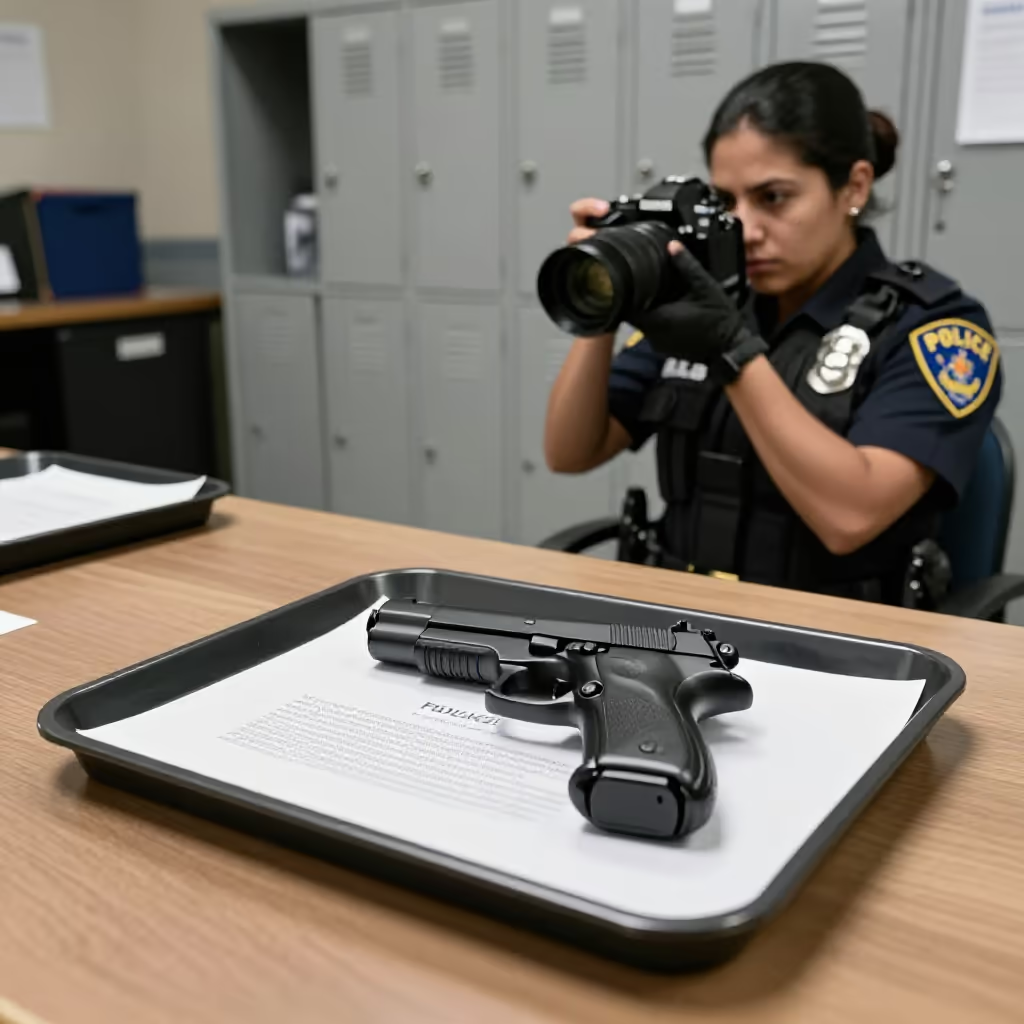
die Knarre
gun
A colloquial and often derogatory term for a firearm, especially a pistol or revolver.
EXAMPLE
Der Bankräuber bedrohte den Kassierer mit einer Knarre.
The bank robber threatened the cashier with a gun.
gun / ratchet / noisemaker
Loading your saved state.
gun
A colloquial and often derogatory term for a firearm, especially a pistol or revolver.
Der Bankräuber bedrohte den Kassierer mit einer Knarre.
The bank robber threatened the cashier with a gun.

ratchet
A tool with a ratcheting mechanism used to tighten or loosen screws or nuts without having to remove and reposition the tool. Synonymous with 'Ratsche' (ratchet).
Gib mir bitte mal die Knarre mit dem Zehner-Aufsatz.
Please hand me the ratchet with the 10 mm socket.
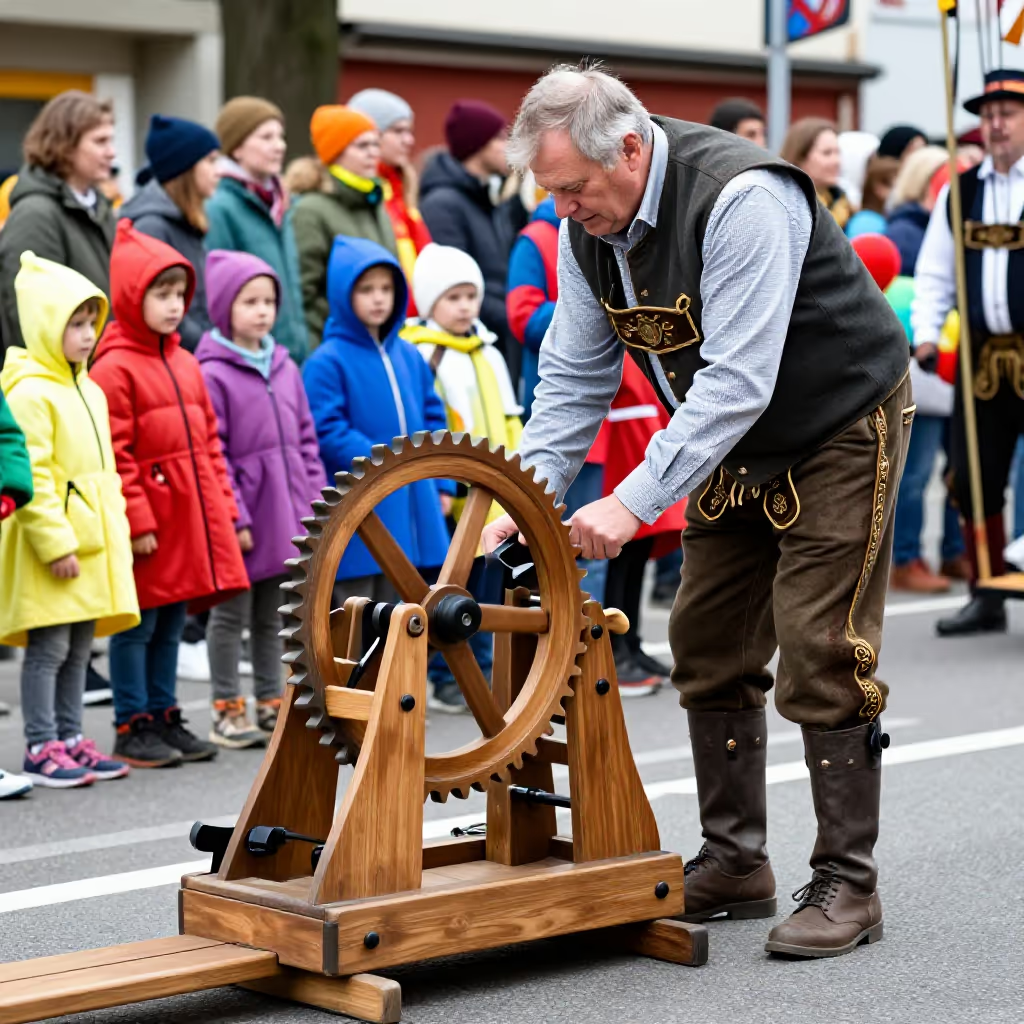
noisemaker
A noise-making instrument, usually made of wood, that produces a creaking or rattling sound by turning a crank. It is often used in traditional customs such as Carnival.
Beim Faschingsumzug machten die Kinder mit ihren Knarren einen ohrenbetäubenden Lärm.
During the Carnival parade, the children made a deafening noise with their noisemakers.
The word 'Knarre' is onomatopoeic and derives from the verb 'knarren' (to creak), which describes a squeaking or rattling sound. This origin connects all the meanings: the sound of the tool and the instrument, as well as the harsh, unpleasant sound of the word for a weapon.
Die alte Holztür knarrte, als er sie öffnete.
The old wooden door creaked as he opened it.
Because 'Knarre' refers to very different things, context is crucial for understanding it. Words from the areas of crime ('bedrohen' — to threaten), trades or handiwork ('Schraube' — screw), or tradition ('Fasching' — Carnival) clearly show which meaning is intended.
Im Werkzeugkasten fand er die passende Knarre nicht.
He couldn't find the right ratchet in the toolbox.
As a term for a firearm, 'Knarre' is purely colloquial. The word has a negative and dangerous connotation and is often used in films or crime novels, but rarely in formal contexts such as police reports.
„Hände hoch, oder ich benutze die Knarre!“, schrie der Dieb.
'Hands up, or I'll use the gun!' shouted the thief.
When 'Knarre' means a tool, it is often combined with an 'Aufsatz' (attachment) or a 'Nuss' (socket) for different screw sizes. Typical actions are 'festziehen' (to tighten) or 'lösen' (to loosen) a screw.
Für diese Schraube brauchst du eine Knarre mit einem 13er-Aufsatz.
For this screw, you need a ratchet with a 13 mm socket.
weapon
Waffe is the neutral standard term and can refer to different types of weapons. Knarre is a colloquial and often derogatory term for a firearm, especially a pistol or revolver. Waffe is therefore appropriate in an objective report, while Knarre is used in casual or disparaging language.
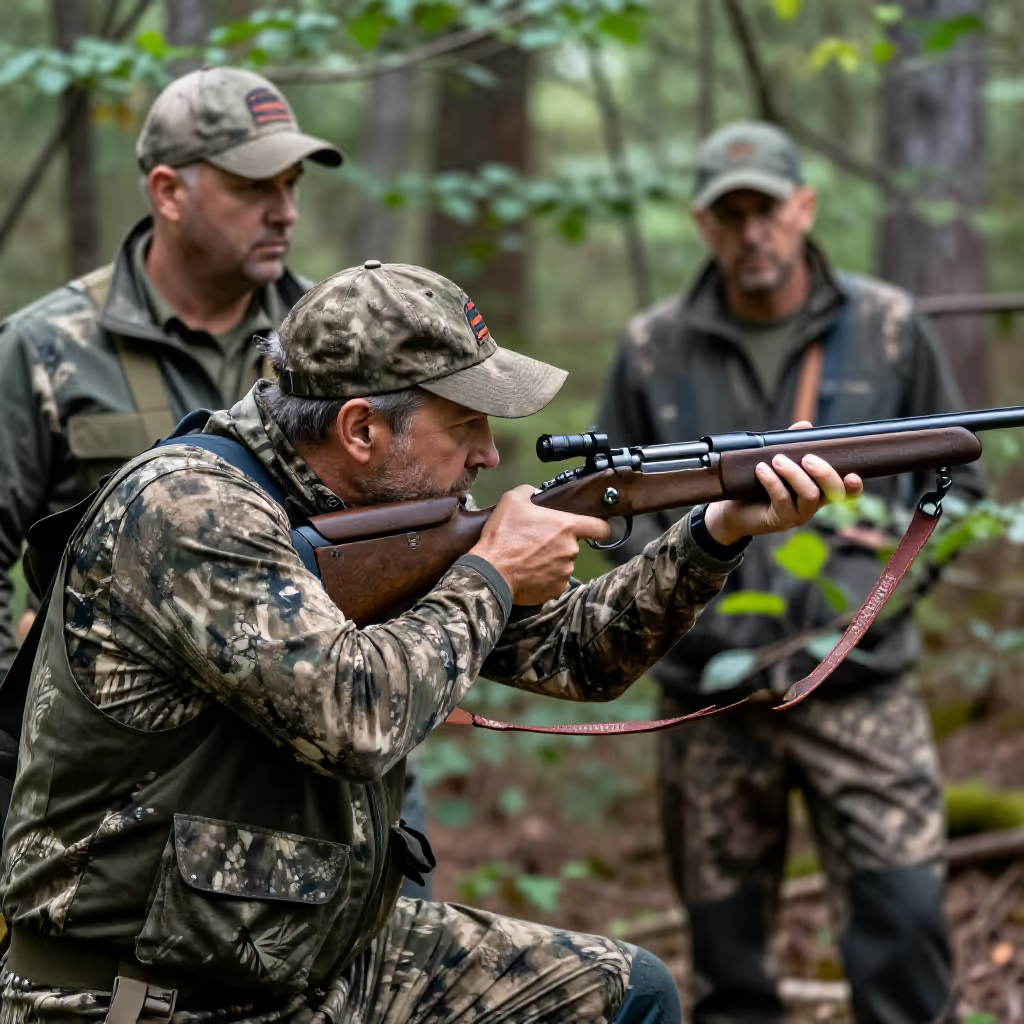
Sein Freund erzählte später, dass der Täter eine Knarre bei sich trug.
His friend later said that the perpetrator was carrying a gun.
Im Polizeibericht steht, dass der Täter eine Waffe bei sich trug.
The police report states that the perpetrator was carrying a weapon.