

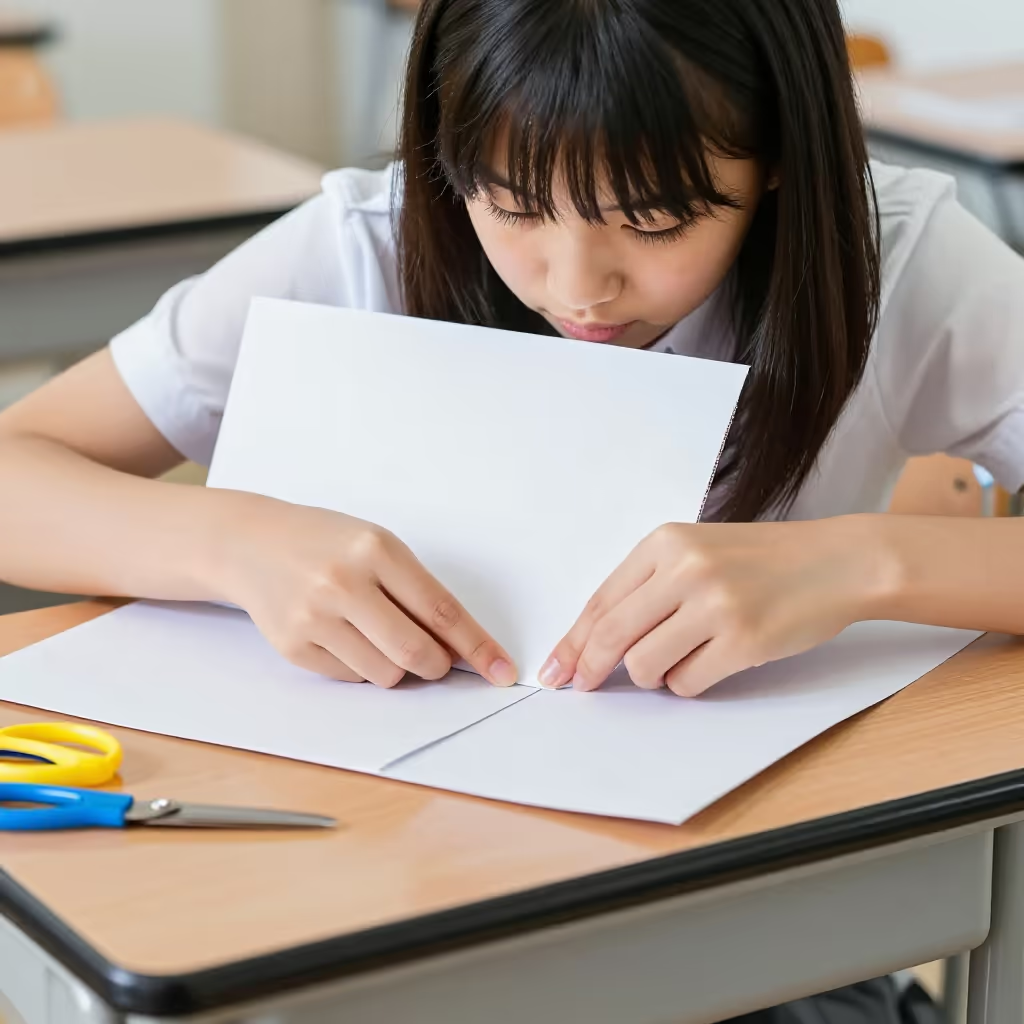
knicken
to fold
To bend something, usually paper or cardboard, so that a sharp crease or break is formed.
EXAMPLE
Bitte knicke die wichtigen Dokumente nicht, sondern rolle sie.
Please don't fold the important documents; roll them instead.
to fold / bend
Loading your saved state.
to fold
To bend something, usually paper or cardboard, so that a sharp crease or break is formed.
Bitte knicke die wichtigen Dokumente nicht, sondern rolle sie.
Please don't fold the important documents; roll them instead.

to bend / snap
To break or damage a thin, elongated object by bending it.
Der starke Wind hat den jungen Baum geknickt.
The strong wind snapped the young tree.

to forget about something
A colloquial expression meaning that one can forget about or give up on something because it is hopeless or unattainable.
Die geplante Reise nach Australien können wir knicken, die Flüge sind viel zu teuer.
We can forget about the planned trip to Australia; the flights are far too expensive.
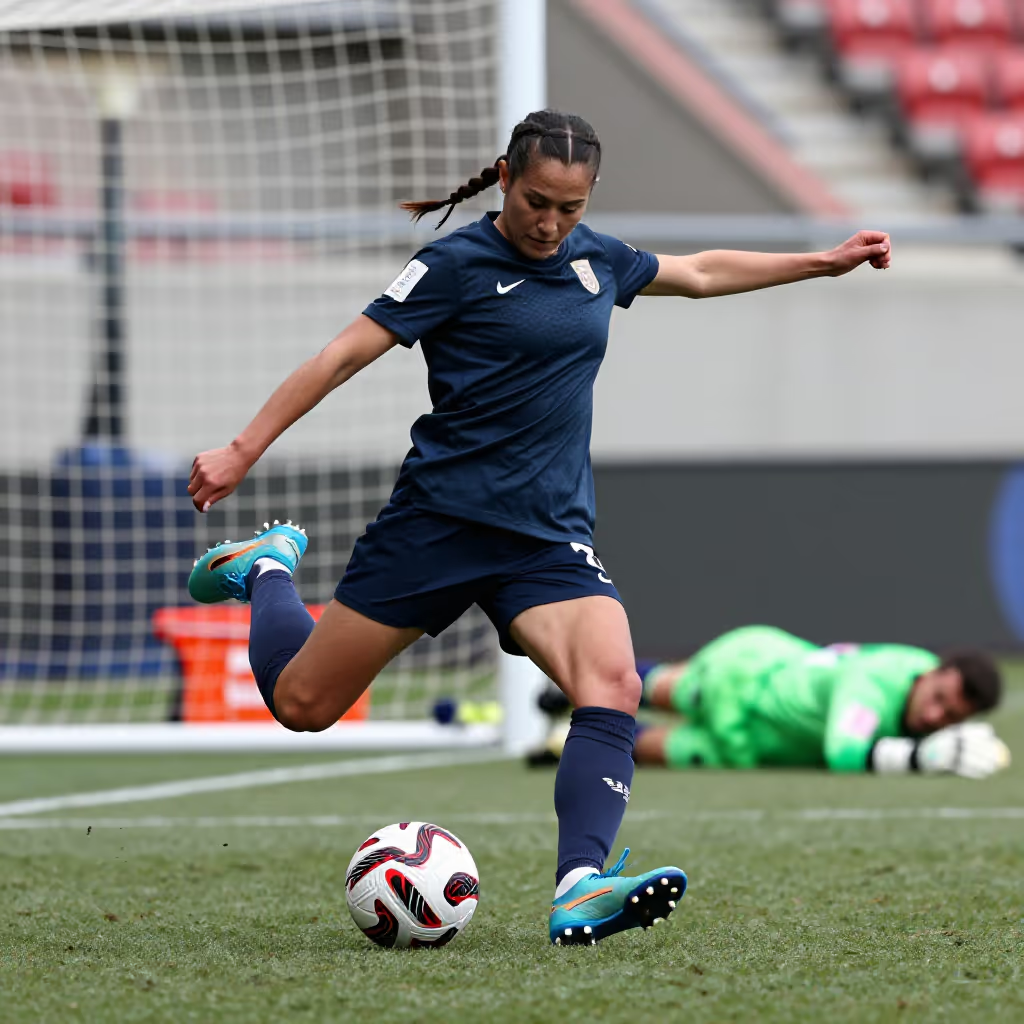
to bend
In sports, especially soccer: to kick the ball with a special technique so that it gets a curved trajectory.
Er hat den Freistoß unhaltbar um die Mauer ins Tor geknickt.
He bent the free kick unstoppably around the wall into the goal.
The verb 'knicken' is closely related to the noun 'der Knick' (bend, crease). A 'Knick' is the result of the action: a crease, a bend, or a breaking point.
Nach dem Sturm war ein deutlicher Knick im Baumstamm zu sehen.
After the storm, a clear bend could be seen in the tree trunk.
The perfect tense of 'knicken' can be formed with 'haben' (to have) or 'sein' (to be), which changes the meaning slightly. With 'haben', the active action is emphasized; with 'sein', the state or result is emphasized.
Er hat den Brief aus Versehen geknickt.
He accidentally folded the letter.
The object of the verb makes the meaning clear. With flat, thin things like 'Papier' (paper), 'Foto' (photo), or 'Karton' (cardboard), 'knicken' means to fold or crease. With long, rigid things like 'Ast' (branch), 'Blume' (flower), or 'Zweig' (twig), it means to break or snap.
Wer hat die Seite in meinem neuen Buch geknickt?
Who folded the page in my new book?
The colloquial expression 'etwas knicken können' has a fixed structure with the modal verb 'können' (can). It expresses that a plan or hope has to be given up.
Den Ausflug am Wochenende können wir bei diesem Regen wohl knicken.
With this rain, we can probably forget about the weekend outing.
to give up / submit
Aufgeben neutrally describes no longer pursuing a hopeless attempt or plan. Etwas knicken können conveys this idea colloquially and often quite directly. Aufgeben fits a factual situation, while in a casual conversation you can say that someone can knicken something.

Ohne die nötige Genehmigung können wir den Plan für das Konzert knicken.
Without the necessary permit, we can forget about our plan for the concert.
Ohne die nötige Genehmigung müssen wir den Plan für das Konzert aufgeben.
Without the necessary permit, we have to give up our plan for the concert.