


das Knie
knee
The joint in the middle of the leg that connects the thigh with the lower leg.
EXAMPLE
Er hat sich beim Fußballspielen das Knie verletzt.
He injured his knee while playing soccer.
knee
Loading your saved state.
knee
The joint in the middle of the leg that connects the thigh with the lower leg.
Er hat sich beim Fußballspielen das Knie verletzt.
He injured his knee while playing soccer.

to rush something
A fixed expression meaning to decide or do something hastily and without careful consideration.
Wir sollten diese wichtige Entscheidung nicht übers Knie brechen.
We shouldn't rush this important decision.
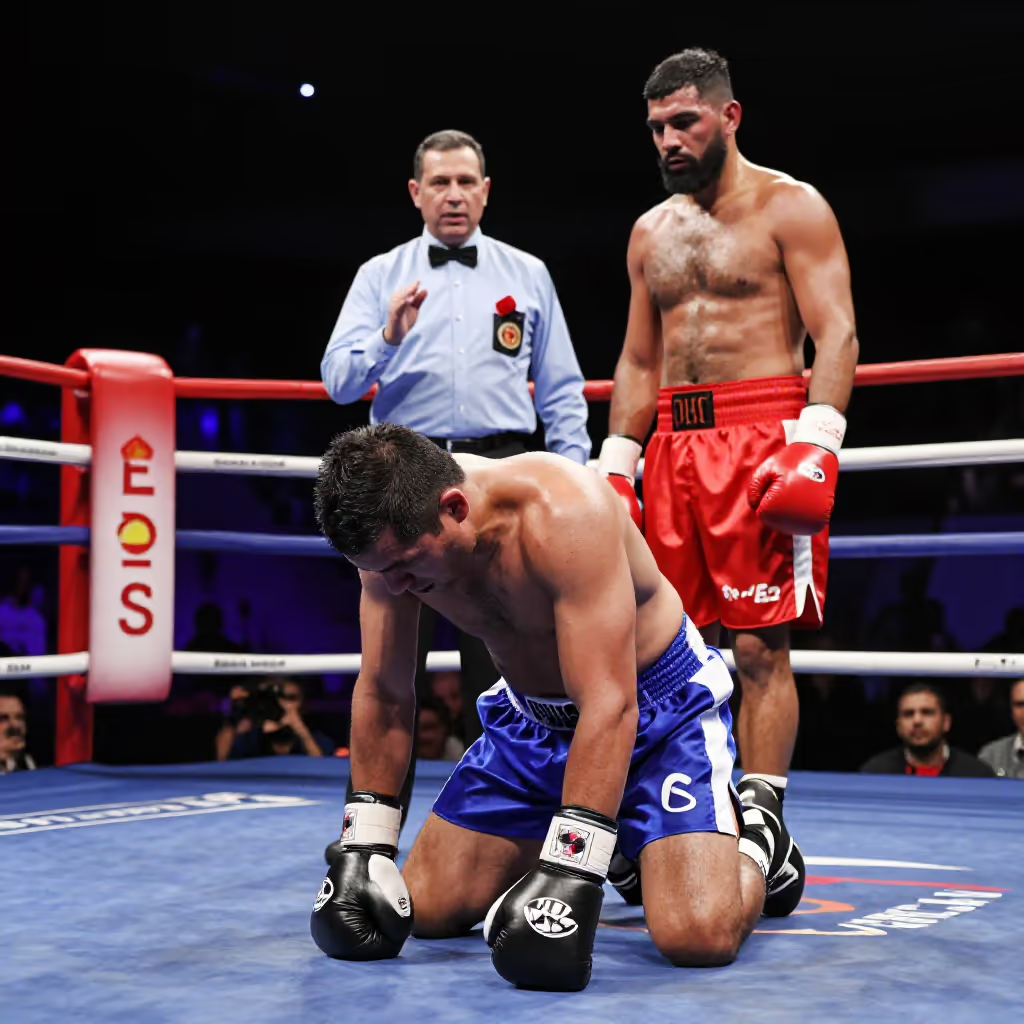
to bring someone to their knees
A fixed expression meaning to defeat, overwhelm, or force someone to give up.
Die anhaltende Dürre hat viele Bauern in die Knie gezwungen.
The ongoing drought has brought many farmers to their knees.
You can easily recognize the meaning of 'Knie' (knee) from the context. If it is about the body, sports, or medicine, it refers to the joint. If it is about a quick decision, the idiom 'etwas übers Knie brechen' (to rush something) is meant. If it is about defeating an opponent, 'jemanden in die Knie zwingen' (to bring someone to their knees) is meant.
Beim Wandern schmerzte mein linkes Knie.
My left knee hurt while hiking.
Pay attention to the case after prepositions. Movement is expressed with the accusative, while a position or place is expressed with the dative.
Das Kind fiel auf die Knie.
The child fell to its knees.
The idiom 'etwas übers Knie brechen' (to rush something) is used as a fixed expression. The thing that is decided hastily appears as the accusative object.
Man sollte eine Heirat niemals übers Knie brechen.
One should never rush into marriage.
In the idiom 'jemanden in die Knie zwingen' (to bring someone to their knees), the person or thing that is defeated is the accusative object.
Die hohen Kosten haben die Firma in die Knie gezwungen.
The high costs brought the company to its knees.