


der Knochen
bone
One of the hard parts that make up the skeleton of humans and vertebrates.
EXAMPLE
Er hat sich beim Fußballspielen einen Knochen gebrochen.
He broke a bone while playing soccer.
bone
Loading your saved state.
bone
One of the hard parts that make up the skeleton of humans and vertebrates.
Er hat sich beim Fußballspielen einen Knochen gebrochen.
He broke a bone while playing soccer.

bone
A bone with scraps of meat on it, used for cooking broth or as food for animals such as dogs.
Der Hund vergrub seinen Knochen im Garten.
The dog buried its bone in the garden.

a tough nut
A colloquial expression for a very difficult task or a resilient, tough person.
Diese Prüfung war ein wirklich harter Knochen.
This exam was a really tough nut to crack.
A very common and fixed collocation is 'sich einen Knochen brechen' (to break a bone). This is the everyday way to talk about a bone fracture.
Sei vorsichtig auf dem Eis, damit du dir keinen Knochen brichst!
Be careful on the ice so you don't break a bone!
The idiom 'nass bis auf die Knochen sein' (to be soaked to the bone) means that someone is completely drenched, for example after heavy rain.
Wir sind ohne Schirm in einen Gewitterschauer geraten und waren nass bis auf die Knochen.
We got caught in a thunderstorm without an umbrella and were soaked to the bone.
Whether it means part of the skeleton or food for animals becomes clear from context. With injuries or in a medical context, it refers to the skeleton; with dogs or when cooking soup, it refers to an animal bone.
Das Röntgenbild zeigte, dass der Knochen nicht gebrochen ist.
The X-ray showed that the bone is not broken.
The colloquial expression 'ein harter Knochen' (a tough nut / a tough customer) can refer both to a very difficult task and to a resilient, unyielding person.
Die Verhandlung mit dem Kunden war ein harter Knochen.
The negotiation with the client was a tough nut to crack.
bones / remains
Knochen refers neutrally to one or more individual parts of a skeleton. Gebein is used almost exclusively as Gebeine and, in elevated or solemn language, refers to the bones of a deceased person as a whole. Knochen is therefore appropriate in a factual description, while Gebeine is more suitable for a solemn burial.
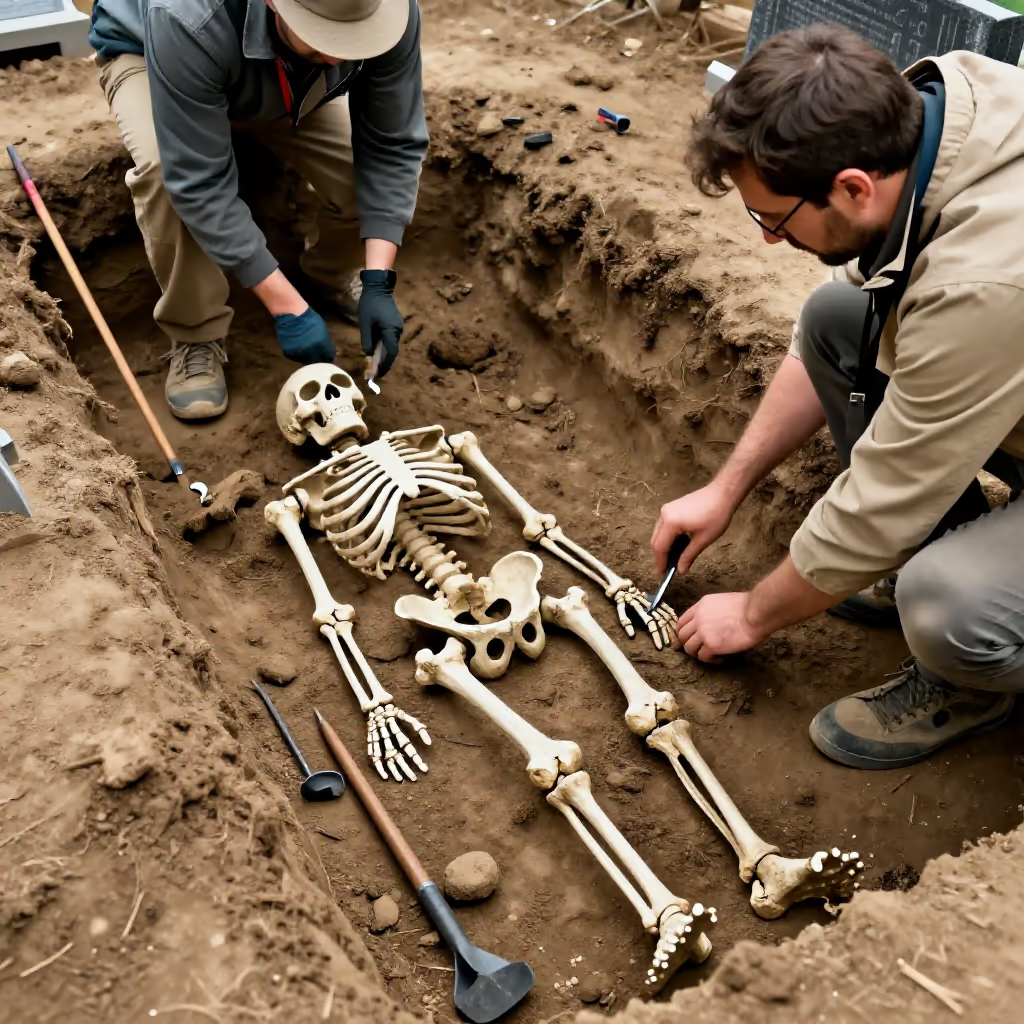
Im alten Grab fanden die Forschenden mehrere Knochen des Verstorbenen.
The researchers found several bones of the deceased in the old grave.
Bei der feierlichen Umbettung wurden die Gebeine des Verstorbenen beigesetzt.
The deceased’s remains were buried during the solemn reinterment ceremony.