

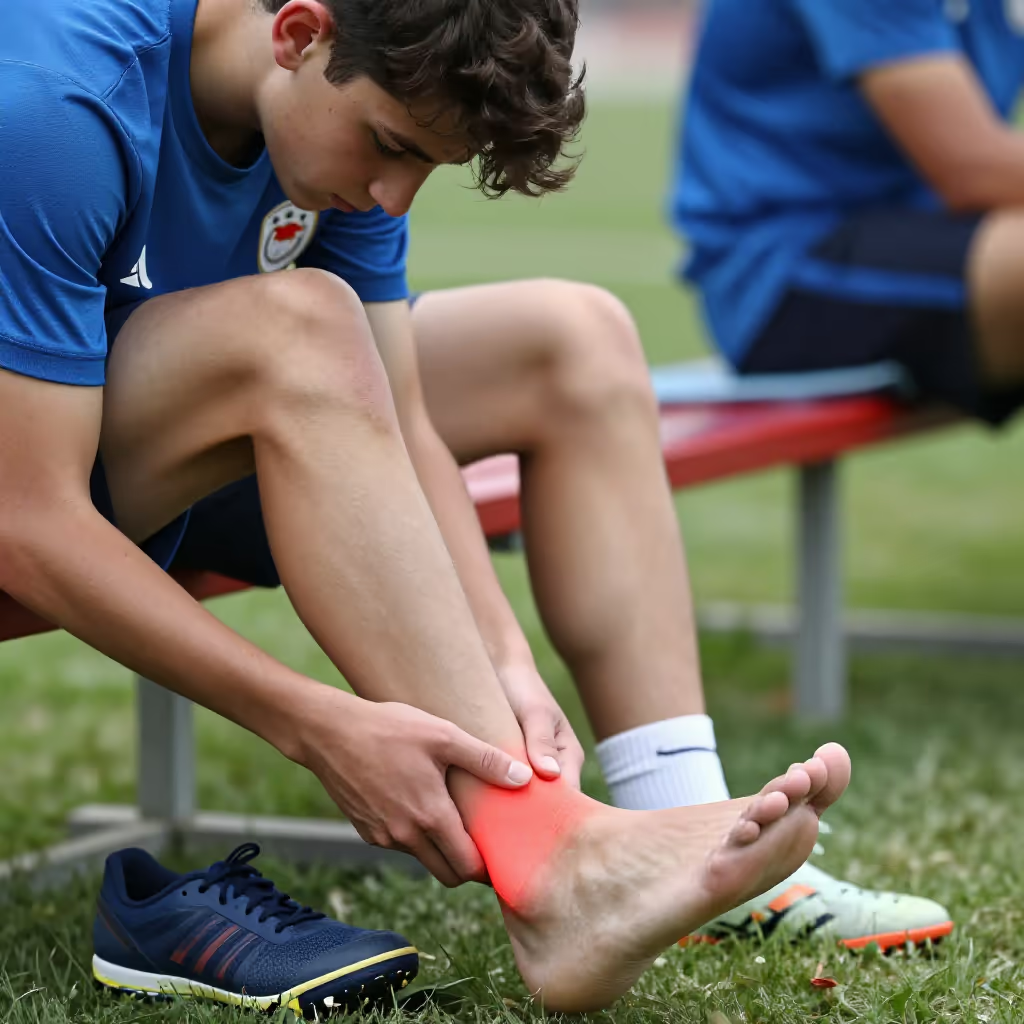
der Knöchel
ankle
The joint that connects the foot to the lower leg.
EXAMPLE
Beim Sport ist sie umgeknickt und hat sich den Knöchel verstaucht.
While playing sports, she twisted her ankle and sprained it.
ankle / knuckle
Loading your saved state.
ankle
The joint that connects the foot to the lower leg.
Beim Sport ist sie umgeknickt und hat sich den Knöchel verstaucht.
While playing sports, she twisted her ankle and sprained it.
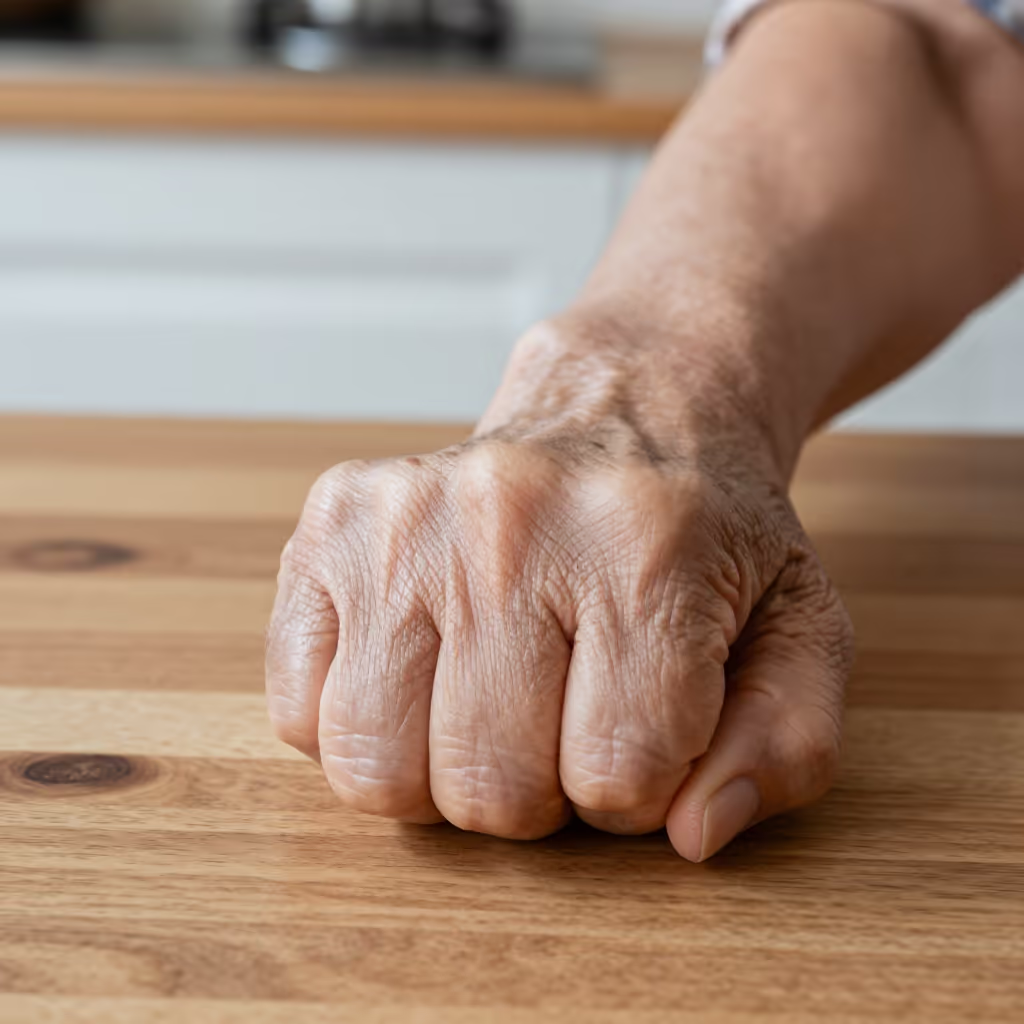
knuckle
The joint on a finger, especially the protruding part on the back of the hand when you make a fist.
Er schlug wütend mit den Knöcheln auf den Tisch.
He angrily hit the table with his knuckles.
You can tell from context whether 'Knöchel' means the joint on the foot (ankle) or on the finger (knuckle). Words like 'Fuß' (foot), 'umknicken' (to twist one's ankle), or 'verstauchen' (to sprain) point to the foot, while 'Hand' (hand), 'Finger' (finger), or 'Faust' (fist) point to the finger.
Sie hat sich den Knöchel am Fuß gebrochen.
She broke her ankle.
In connection with the ankle, typical verbs are 'sich den Knöchel verstauchen' (to sprain one's ankle), 'sich den Knöchel brechen' (to break one's ankle), or simply 'umknicken' (to twist one's ankle).
Ich bin gestern beim Laufen umgeknickt und mein Knöchel ist jetzt geschwollen.
I twisted my ankle while running yesterday, and now my ankle is swollen.
When the finger joints are meant, 'Knöchel' is often connected with actions like 'eine Faust machen' (to make a fist) or 'mit den Knöcheln auf den Tisch schlagen' (to hit the table with one's knuckles).
Beim Boxen muss man lernen, mit den Knöcheln zu treffen.
In boxing, you have to learn to hit with your knuckles.