

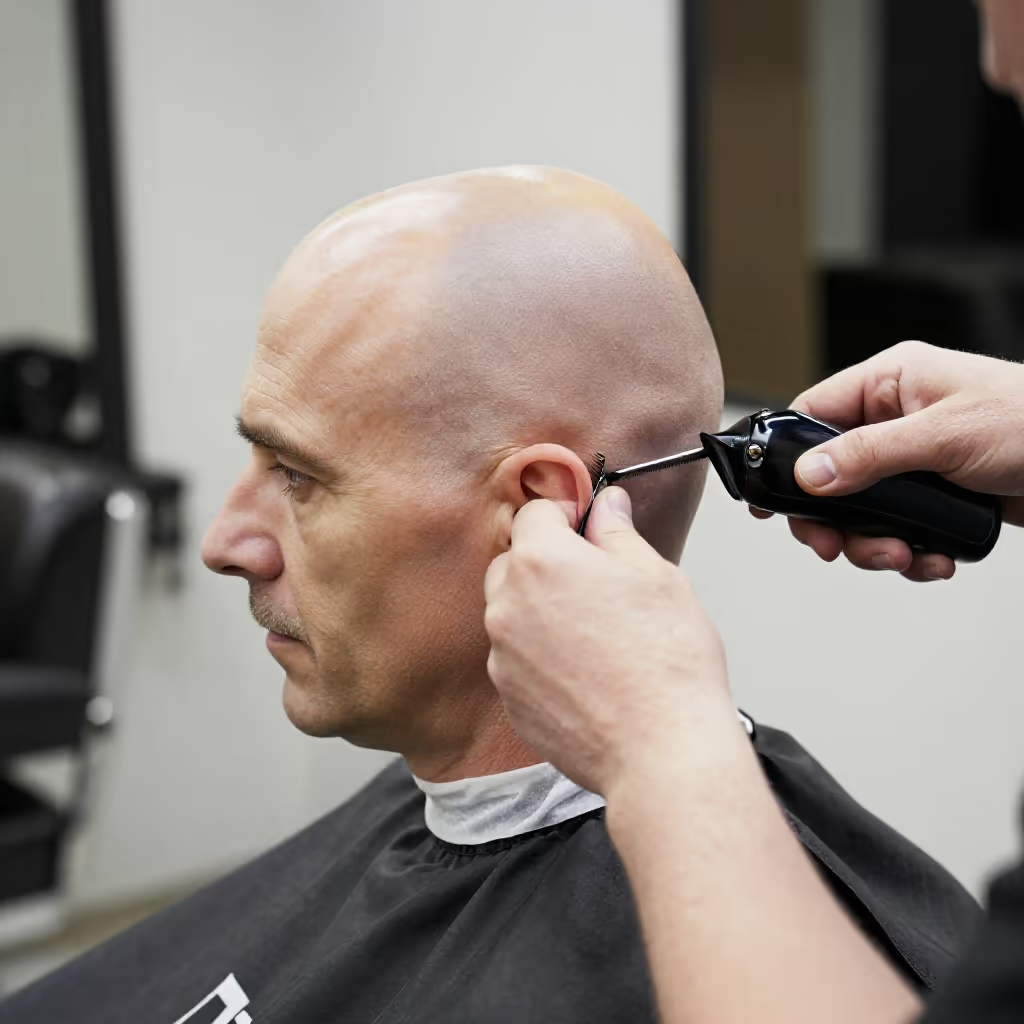
kahl
bald
Without hair on the head; having a bald head.
EXAMPLE
Er trägt eine Mütze, weil sein Kopf kahl ist.
He wears a hat because his head is bald.
bald / bare
Loading your saved state.
bald
Without hair on the head; having a bald head.
Er trägt eine Mütze, weil sein Kopf kahl ist.
He wears a hat because his head is bald.
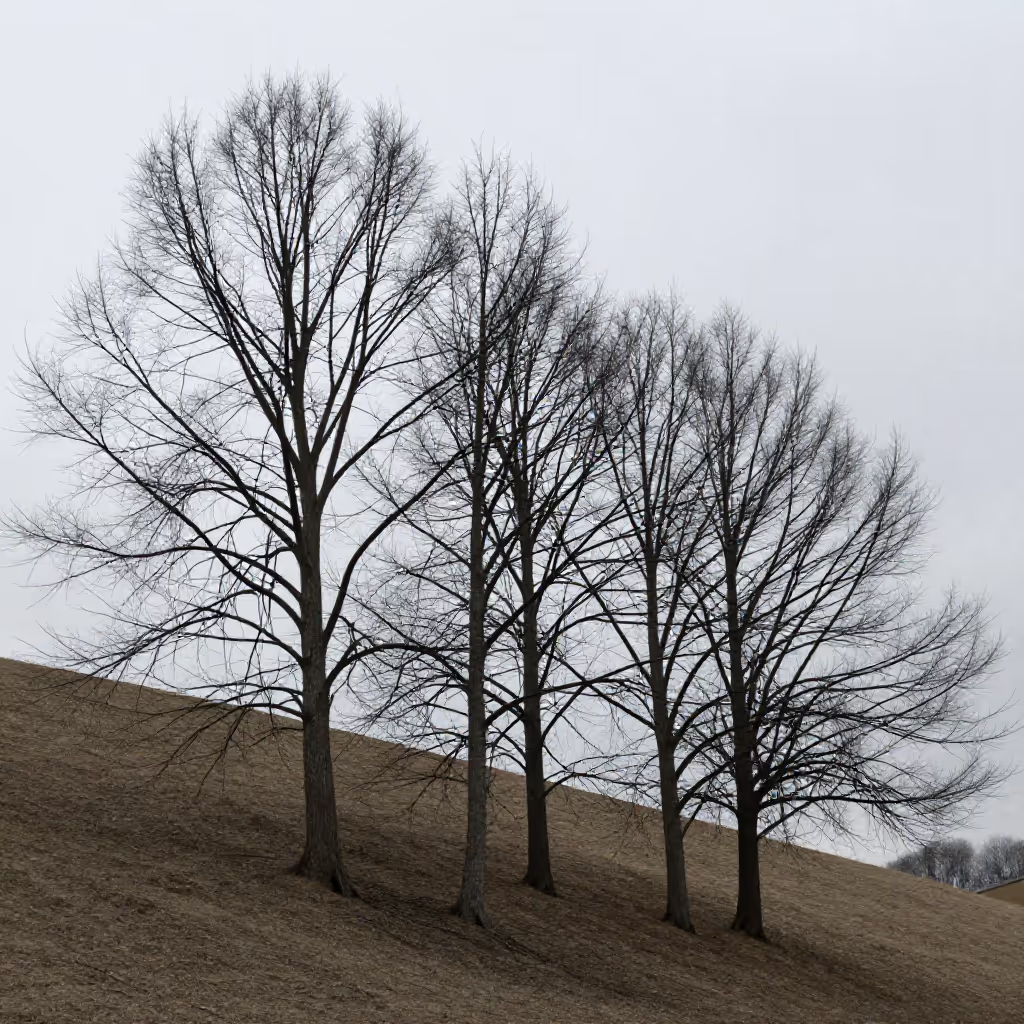
bare
Without leaves, plants, or other vegetation. Often used for trees in winter or landscapes.
Im Herbst werden die Äste der Laubbäume kahl.
In autumn, the branches of deciduous trees become bare.
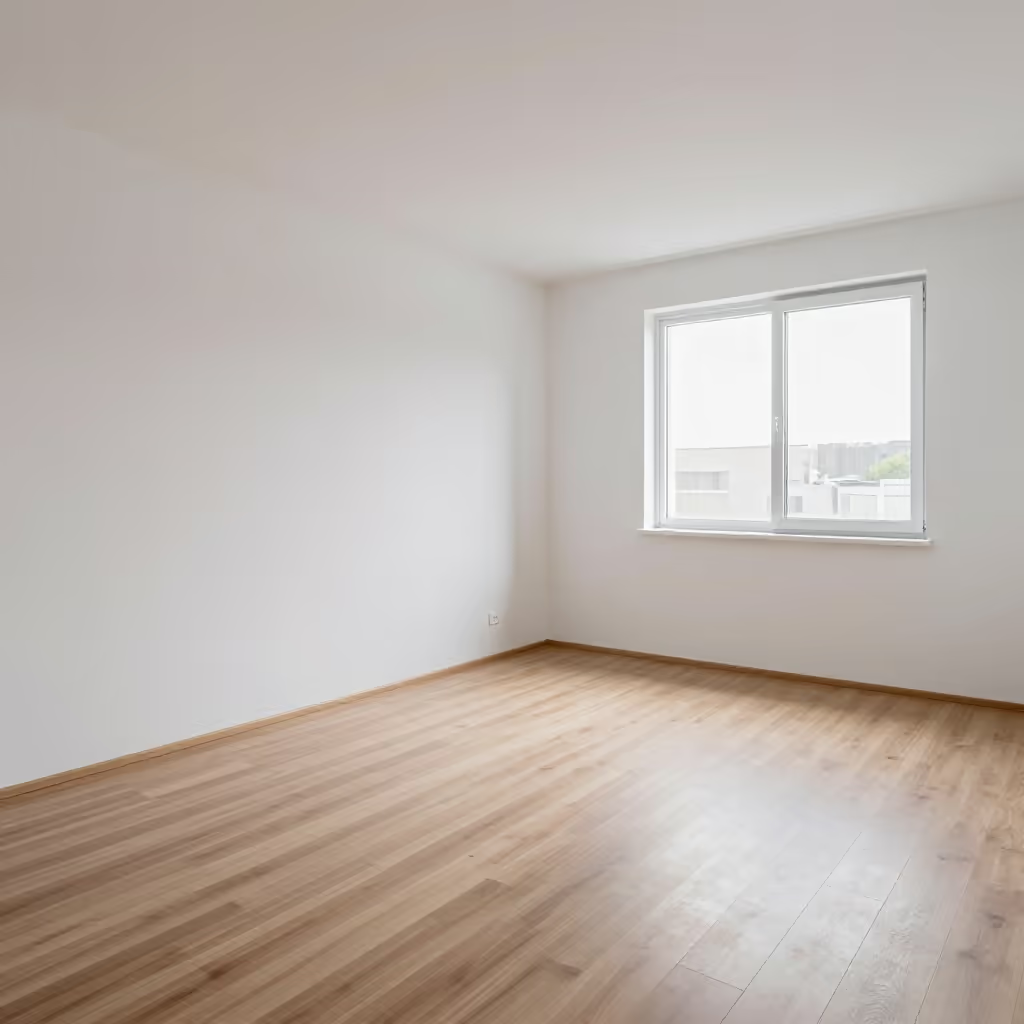
bare
Empty, unfurnished, and undecorated. Refers to rooms or walls.
Nach dem Auszug wirkte die Wohnung groß und kahl.
After the move-out, the apartment looked large and bare.
The word 'kahl' (bald/bare) has a different meaning depending on the context. The noun it describes makes it clear whether it is about a head without hair, a tree without leaves, or an empty room.
Ein kahler Kopf braucht im Winter eine Mütze.
A bald head needs a hat in winter.
When talking about hair, 'kahl' (bald) is often used in the combinations 'ein kahler Kopf' (a bald head) or 'eine kahle Stelle' (a bald spot) on the head.
Viele Männer bekommen mit dem Alter eine kahle Stelle am Hinterkopf.
Many men get a bald spot on the back of their head as they age.
In nature, 'kahl' (bare) often describes trees, branches, or entire landscapes without vegetation. Typical combinations are 'kahle Bäume' (bare trees), 'kahle Äste' (bare branches), or 'ein kahler Felsen' (a bare rock).
Die Landschaft war nach dem Brand schwarz und kahl.
After the fire, the landscape was black and bare.
For rooms and surfaces, 'kahl' (bare) means unfurnished or undecorated. People often speak of 'kahle Wände' (bare walls), 'ein kahles Zimmer' (a bare room), or 'eine kahle Wohnung' (a bare apartment).
Ohne Bilder an den Wänden sieht das Zimmer sehr kahl aus.
Without pictures on the walls, the room looks very bare.
empty
Both words can describe a room without furnishings. Leer mainly says that there is nothing in it, while kahl additionally conveys a plain and bare impression. Use leer for the absence of objects and kahl when the lack of decoration is also being emphasized.
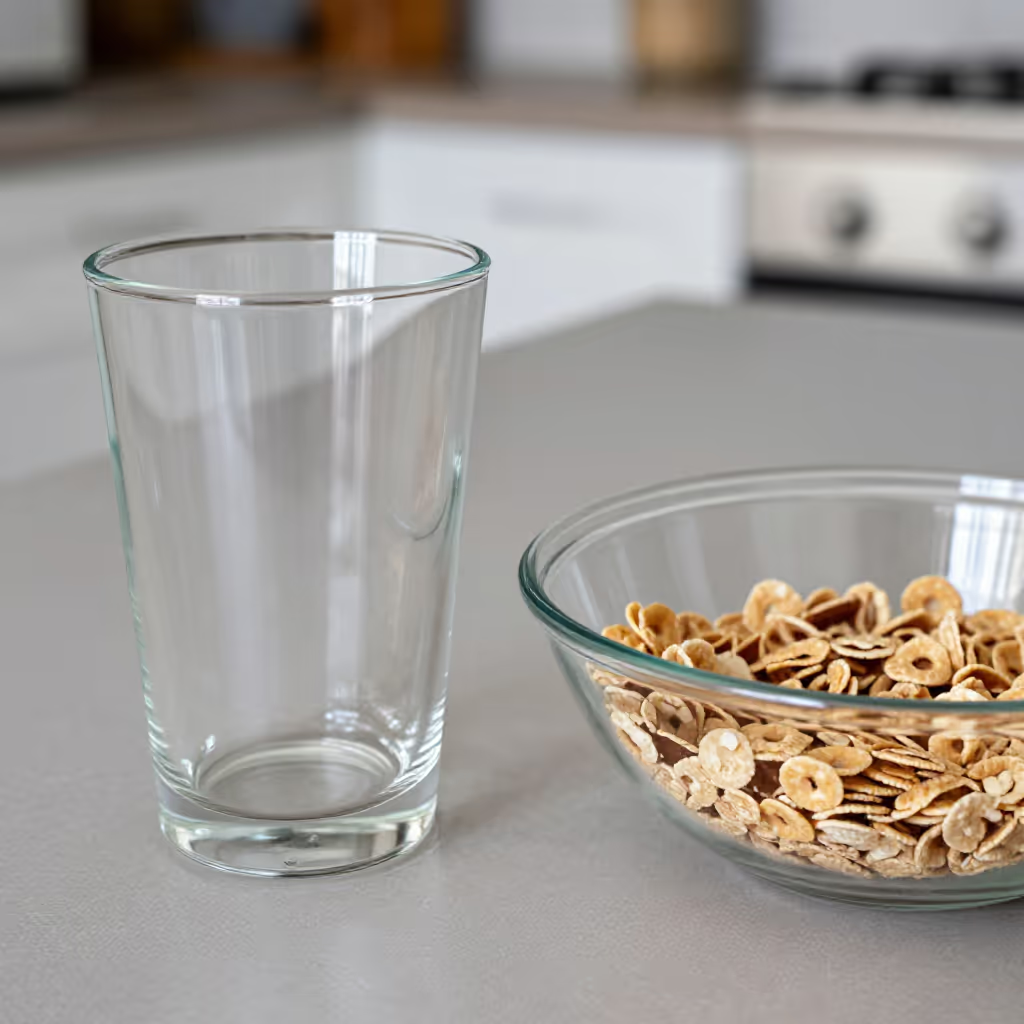
Das Zimmer wirkte kahl, weil neben den Möbeln auch Bilder und Vorhänge fehlten.
The room looked bare because, besides the furniture, it also lacked pictures and curtains.
Das Zimmer war leer, weil die Möbel bereits umgezogen waren.
The room was empty because the furniture had already been moved.