

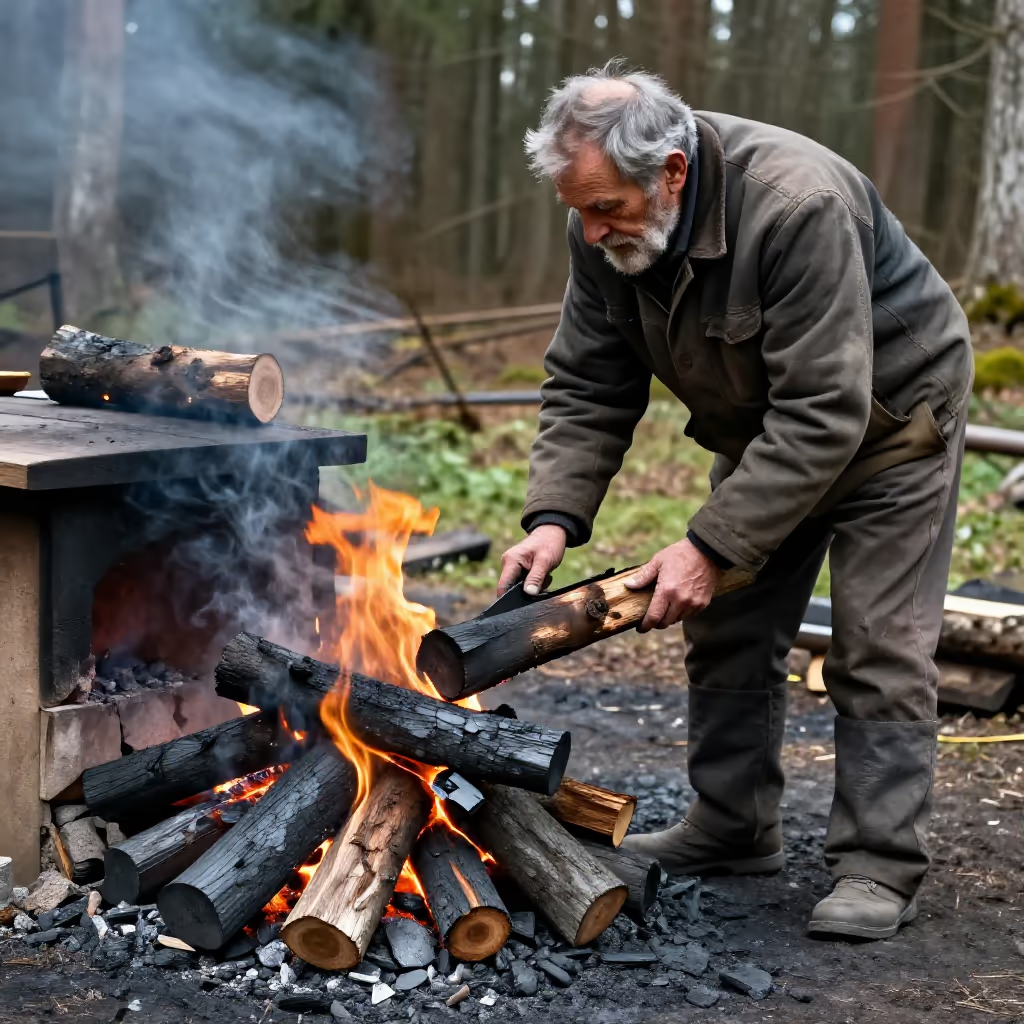
A person whose profession is to turn wood into charcoal in a charcoal kiln. It is an old craft profession that is rare today.
example
Im Freilichtmuseum zeigte ein Köhler den Besuchern, wie früher Holzkohle hergestellt wurde.
At the open-air museum, a charcoal burner showed visitors how charcoal used to be made.

Usage tips
Word structure
The word "Köhler" (charcoal burner) is derived from the noun "die Kohle" (coal/charcoal). The ending "-er" here indicates a person professionally connected with something, similar to "Bäcker" (baker, from backen) or "Tischler" (carpenter, from Tisch).
EXAMPLE
Der Beruf des Köhlers war früher sehr wichtig für die Eisenverarbeitung.
The profession of the charcoal burner used to be very important for iron processing.
Context clue
You can tell from context whether the profession or the surname is meant. If the word appears with "Herr" (Mr.) or "Frau" (Ms./Mrs.), it is the name. If the topic is "Handwerk" (craft), "Wald" (forest), or "Holzkohle" (charcoal), the profession is meant.
EXAMPLE
Der alte Köhler erklärte den Kindern seine Arbeit.
The old charcoal burner explained his work to the children.
Cultural context
The profession of the charcoal burner is very rare in Germany today and has more of a historical or folkloric significance. You often find charcoal burners in open-air museums or at traditional festivals, but hardly ever as an everyday profession anymore.
EXAMPLE
Auf dem Mittelaltermarkt führte ein Köhler sein altes Handwerk vor.
At the medieval market, a charcoal burner demonstrated his old craft.