


kühlen
to cool
To make something cold or lower its temperature.
EXAMPLE
Wir sollten die Getränke für die Party im Kühlschrank kühlen.
We should cool the drinks for the party in the refrigerator.
to cool
Loading your saved state.
to cool
To make something cold or lower its temperature.
Wir sollten die Getränke für die Party im Kühlschrank kühlen.
We should cool the drinks for the party in the refrigerator.
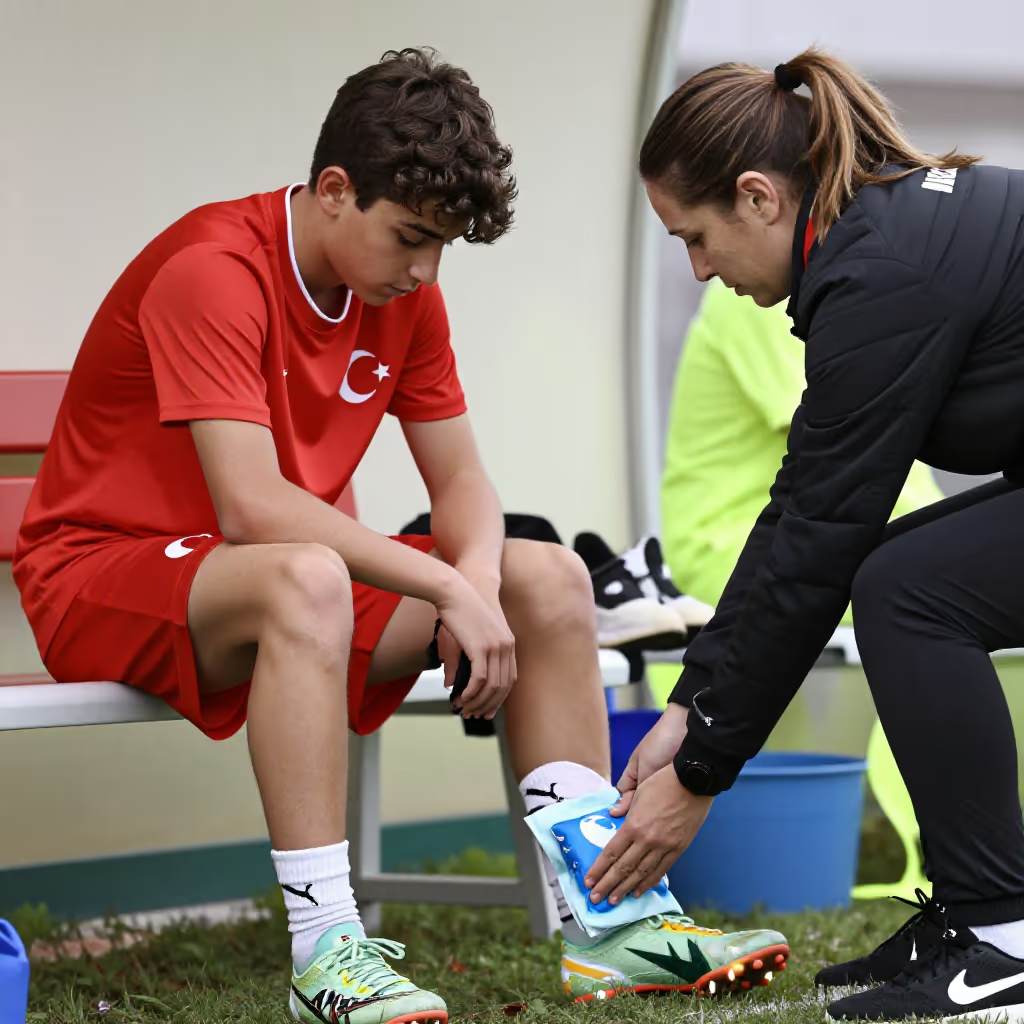
to cool
To treat an injury or swelling with something cold in order to relieve pain and reduce the swelling.
Du solltest deinen verstauchten Knöchel sofort mit einem Eisbeutel kühlen.
You should cool your sprained ankle immediately with an ice pack.

to cool oneself off
To cool down one's own body, for example with a cold drink, water, or shade.
Nach dem Sonnenbad kühlte er sich mit einem Sprung in den See.
After sunbathing, he cooled himself off by jumping into the lake.

to take it out on someone
To vent one's anger or frustration on a person who is usually uninvolved or weaker.
Nach dem Streit mit seinem Chef kühlte er sein Mütchen an seinen Mitarbeitern.
After the argument with his boss, he took it out on his employees.
The verb "kühlen" (to cool) is derived directly from the adjective "kühl" (cool). It describes the action of making something or oneself cool.
Eine kühle Brise wehte vom Meer herüber.
A cool breeze blew in from the sea.
When a person cools down their own body, the verb is used reflexively: "sich kühlen" (to cool oneself off). The reflexive pronoun (sich, mich, dich, etc.) is necessary here.
Nach dem langen Lauf kühlte ich mich unter der kalten Dusche.
After the long run, I cooled myself off under the cold shower.
The idiom "sein Mütchen an jemandem kühlen" (to take it out on someone) is a fixed unit. It means to vent one's anger on a person. The person who receives the anger always appears with the preposition "an" in the dative.
Er war wütend auf seinen Lehrer und kühlte sein Mütchen an seinem kleinen Bruder.
He was angry with his teacher and took it out on his little brother.
In a medical context, "kühlen" (to cool) is often combined with body parts or injuries. Typical phrases are "den Knöchel kühlen" (to cool the ankle), "eine Schwellung kühlen" (to cool a swelling), or "die Wunde kühlen" (to cool the wound).
Der Arzt sagte, ich solle das Knie regelmäßig kühlen.
The doctor said I should cool my knee regularly.
to cool down
Kühlen usually refers to a deliberate action that makes something reach a lower temperature. Abkühlen can also refer to this action, but it emphasizes the change in temperature more strongly and can also be used without a person carrying out the action. Therefore, only abkühlen is appropriate for something becoming cooler on its own.
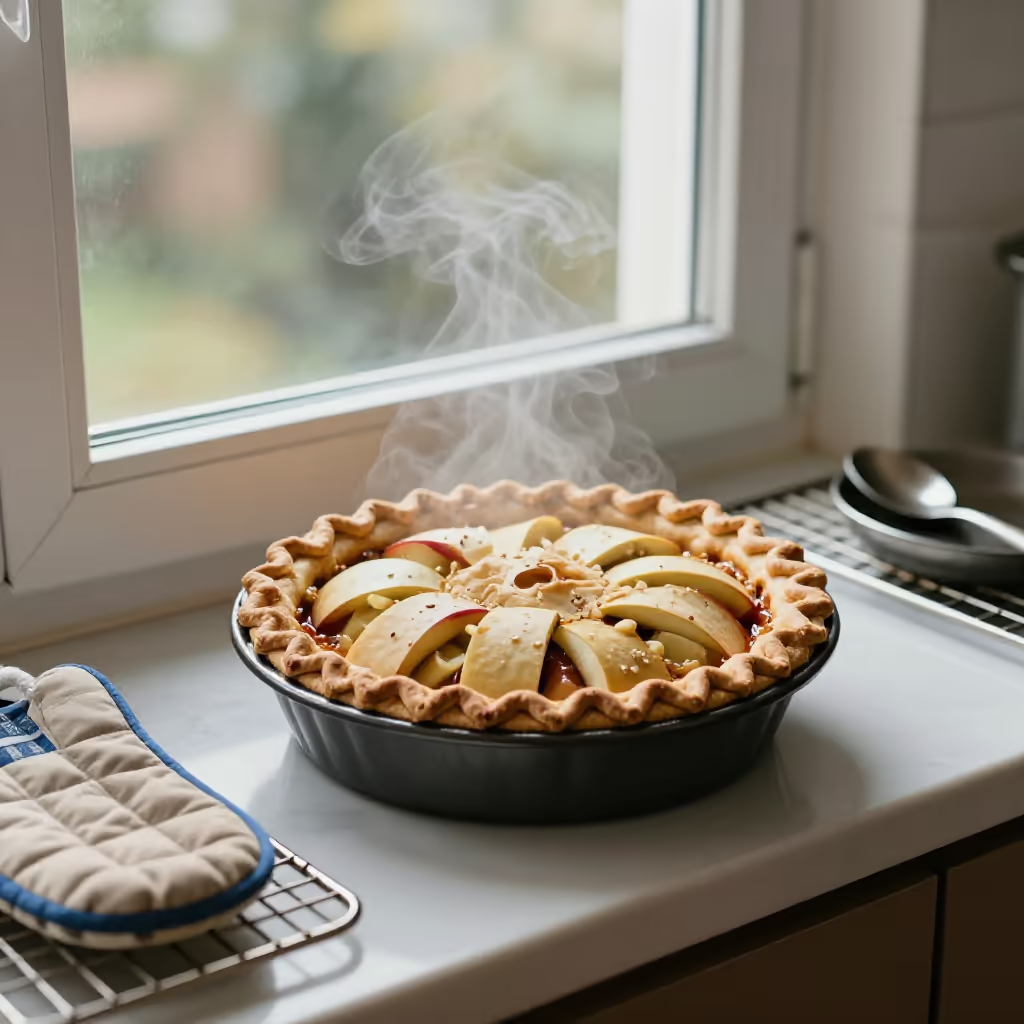
Ich kühle den heißen Tee gezielt mit einem Eiswürfel.
I deliberately cool the hot tea with an ice cube.
Während des Wartens kühlt der heiße Tee von selbst ab.
While we wait, the hot tea cools down on its own.