A bulbous glass vessel with a narrow neck that is used in chemistry laboratories to heat, mix, or distill liquids.
example
Der Chemiker füllte die reagierende Flüssigkeit vorsichtig in den Kolben.
The chemist carefully poured the reacting liquid into the flask.
Usage tips
Context clues
Since this word has very different meanings, context is crucial. Look for words like 'Labor' (laboratory) or 'Chemie' (chemistry) for the vessel meaning, 'Pflanze' (plant) or 'Mais' (corn) for the plant-part meaning, and 'Gewehr' (rifle) or 'Waffe' (weapon) for the firearm-part meaning.
EXAMPLE
Im Labor erhitzte sie die Lösung in einem Glaskolben.
In the laboratory, she heated the solution in a glass flask.
Typical collocations
In a laboratory context, 'Kolben' (flask) is often described with adjectives like 'gläsern' (glass) or 'bauchig' (bulbous). Typical verbs are 'füllen' (to fill), 'erhitzen' (to heat), or 'schwenken' (to swirl).
EXAMPLE
Der Chemiker schwenkte den Kolben, um die Flüssigkeiten zu mischen.
The chemist swirled the flask to mix the liquids.
Fixed compound: Maiskolben
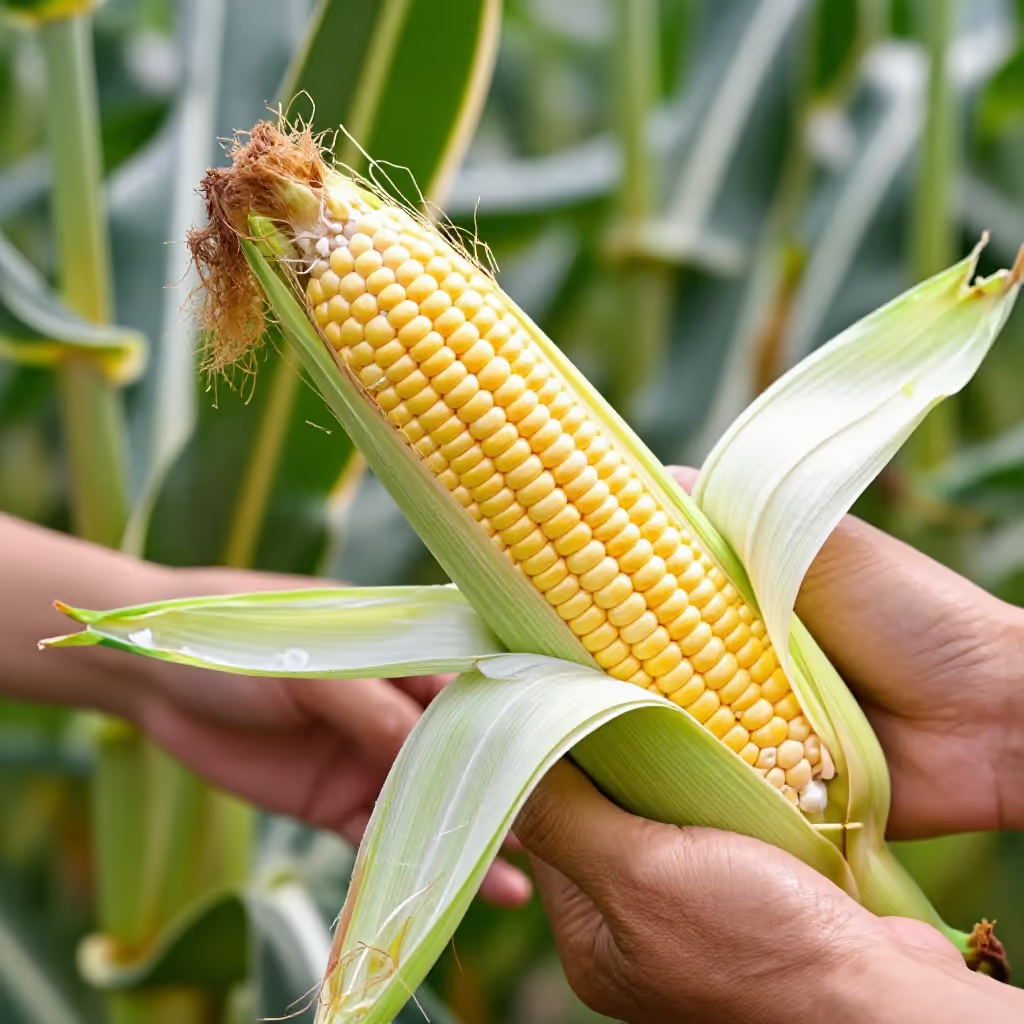
The most common use in a botanical context is the compound 'der Maiskolben' (corn cob / ear of corn). This word is often learned and used as a single unit.
EXAMPLE
Gegrillter Maiskolben mit Butter ist eine beliebte Beilage.
Grilled corn on the cob with butter is a popular side dish.
Use in weapon contexts
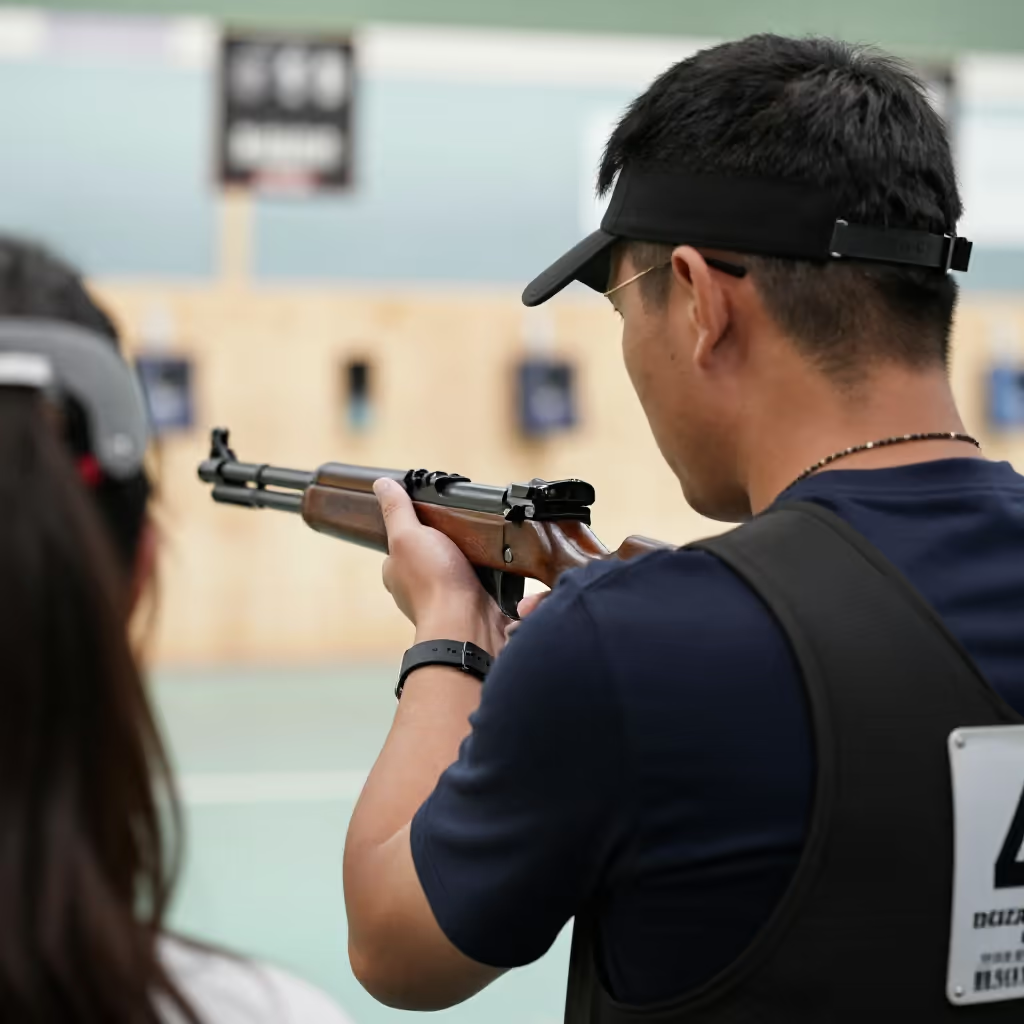
When talking about weapons, 'Kolben' (stock) is often mentioned in connection with actions. Typical formulations are 'mit dem Kolben schlagen' (to hit with the stock) or 'den Kolben an die Schulter pressen' (to press the stock against the shoulder).
EXAMPLE
Der Schütze presste den Kolben fest an seine Schulter, um zu zielen.
The marksman pressed the stock firmly against his shoulder to aim.
Compare with
near_synonym · confusable
Kolbe vs Schaft
shaft
'der Schaft' and 'der Kolbe' can both refer to parts of a firearm. Here, 'der Schaft' is the longer part by which the weapon is held or guided. 'Der Kolbe' is more specifically the rear part that is braced against the shoulder. The words can be confused because the stock belongs to this area of the weapon. In practical terms: the 'Schaft' is the larger or more general part, while the 'Kolbe' is the rear end.
Kolbe
Der Soldat drückte den Kolbe gegen die Schulter und zielte ruhig.
The soldier pressed the stock against his shoulder and aimed calmly.
Schaft
Am Schaft der Waffe waren noch alte Kratzer zu sehen.
Old scratches could still be seen on the shaft of the weapon.