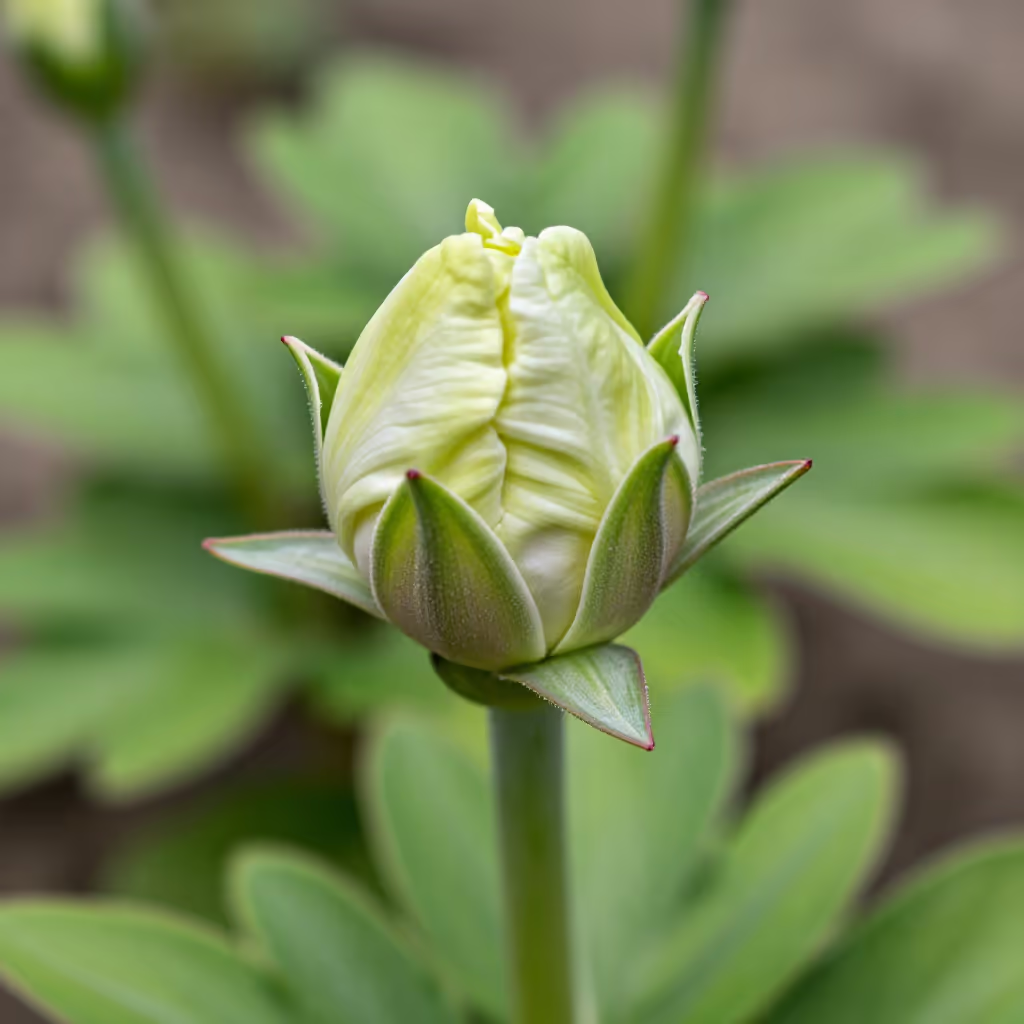
The still-closed, underdeveloped shoot of a plant, from which a flower, a leaf, or an entire branch develops.
example
Im Frühling sind die Bäume voller Knospen, die bald aufblühen werden.
In spring, the trees are full of buds that will soon bloom.

Usage tips
Word family
The noun 'die Knospe' (bud) belongs to the verb 'knospen' (to bud). When plants get new shoots in spring, you say: 'Die Bäume knospen' (The trees are budding).
EXAMPLE
Sobald es wärmer wird, fangen die Pflanzen an zu knospen.
As soon as it gets warmer, the plants start to bud.
Typical verbs
Buds are often described with verbs that express development or opening. Typical phrases are 'Knospen treiben' (to produce buds), 'Knospen bilden' (to form buds), or 'Knospen platzen auf' (buds burst open).
EXAMPLE
Die Rosen in unserem Garten haben schon die ersten Knospen getrieben.
The roses in our garden have already produced their first buds.
Register and style
The figurative meaning for a young person is poetic and is mainly used in literature or in very vivid, figurative language. In normal everyday life, this use is rare.
EXAMPLE
In dem Roman wird die Protagonistin als „zarte Knospe“ beschrieben, die zur Frau heranreift.
In the novel, the protagonist is described as a 'zarte Knospe' (delicate bud) who matures into a woman.
Compare with
near_synonym · confusable
Knospe vs Auge
eye
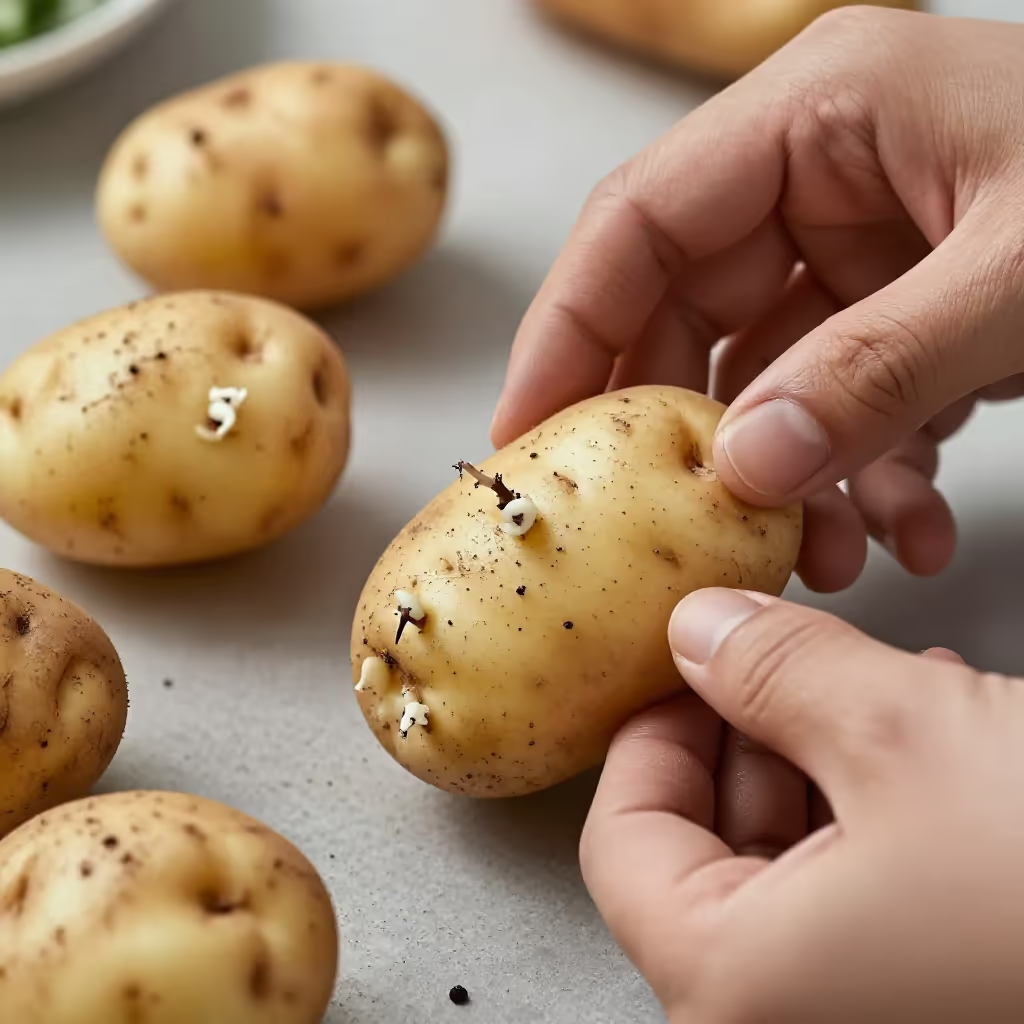
'das Auge' and 'die Knospe' can both mean a part of a plant from which something new grows. 'die Knospe' is the normal word for a still-closed young plant part that later becomes a flower, leaf, or branch. 'das Auge' is used more specifically in this meaning, especially for potatoes or certain plants. The words can be confusing because an 'Auge' on a plant is basically a kind of bud. In everyday language, 'Knospe' is more general, while 'Auge' sounds more precise for potatoes and similar plants.
Knospe
Am Rosenstrauch öffnet sich heute die erste Knospe.
The first bud on the rosebush is opening today.
Auge
Beim Pflanzen zeigt das Auge der Kartoffel nach oben.
When planting, the eye of the potato points upward.