

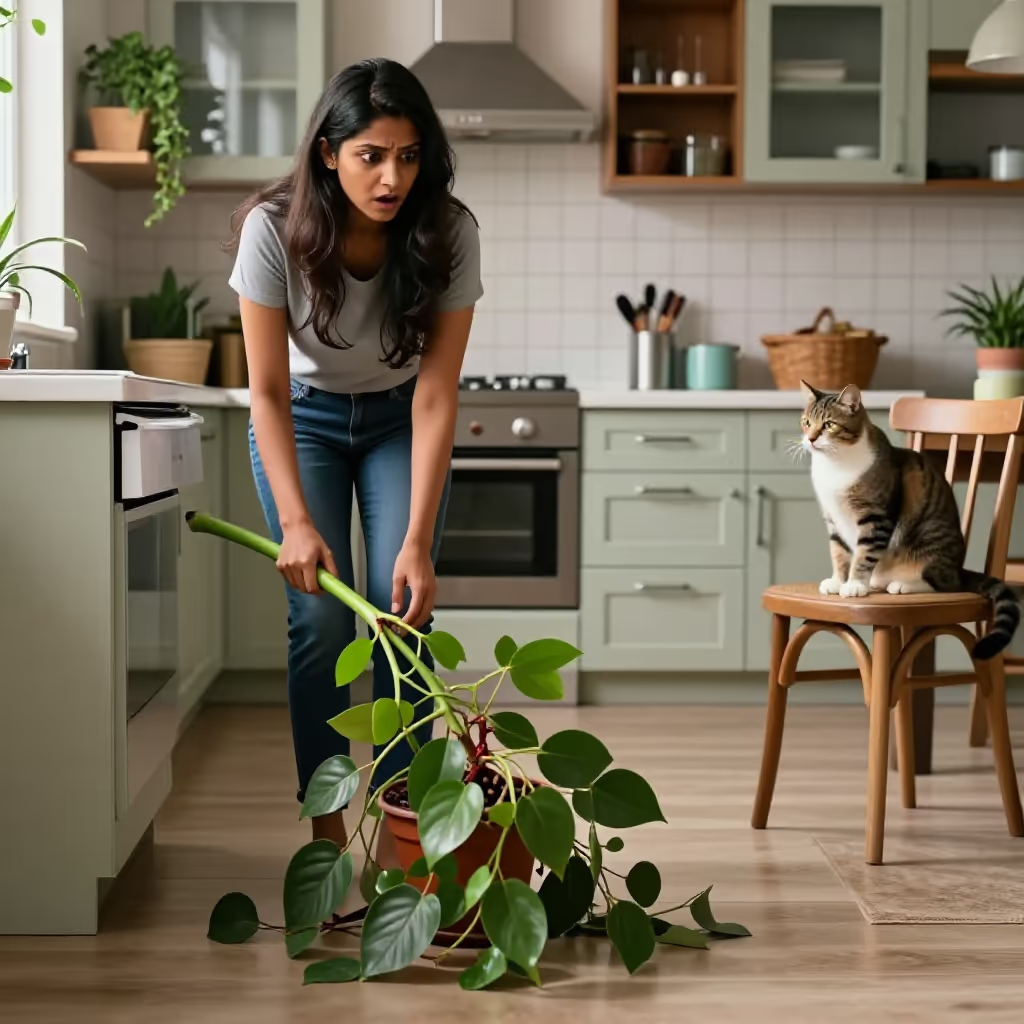
Expresses that something is strange, surprising, or unexpected. It is used to point out an odd or contradictory circumstance.
example
Obwohl es den ganzen Tag geregnet hat, war die Straße komischerweise komplett trocken.
Although it had rained all day, the street was strangely enough completely dry.

Usage tips
Word structure
The word is made up of 'komisch' (strange) and the ending '-erweise', which means 'in a ... way'. Literally, it means 'in a strange/odd way'.
EXAMPLE
Er hat die Prüfung bestanden, obwohl er komischerweise kaum gelernt hat.
He passed the exam, even though, strangely enough, he had hardly studied.
Sentence position
As an adverb, 'komischerweise' can stand in position 1; then the verb follows in position 2. But it can also stand in the middle of the sentence after the verb and the subject.
EXAMPLE
Komischerweise war niemand zu Hause.
Strangely enough, nobody was at home.
Meaning: strange, not funny
Although 'komisch' can also mean 'funny', 'komischerweise' almost always means 'strangely enough' or 'surprisingly enough'. It expresses astonishment about an unexpected fact, not amusement.
EXAMPLE
Ich habe meinen Schlüssel in den Kühlschrank gelegt, komischerweise.
I put my key in the refrigerator, strangely enough.
Compare with
near_synonym · confusable
komischerweise vs überraschenderweise
surprisingly
'komischerweise' and 'überraschenderweise' both show that something does not happen the way one expected. 'überraschenderweise' works well when you simply want to express that you did not expect the result. 'komischerweise' often sounds a bit more personal and emphasizes more strongly that something seems strange or not entirely logical. Learners may confuse the words because both are used for unexpected situations. If something is only unexpected, 'überraschenderweise' is very fitting. If it also seems odd, 'komischerweise' sounds more natural.
komischerweise
Komischerweise finde ich meinen Schlüssel nicht, obwohl er eben noch auf dem Tisch lag.
Strangely enough, I can't find my key, even though it was just on the table.
überraschenderweise
Überraschenderweise hat meine Schwester den Wettbewerb gewonnen.