

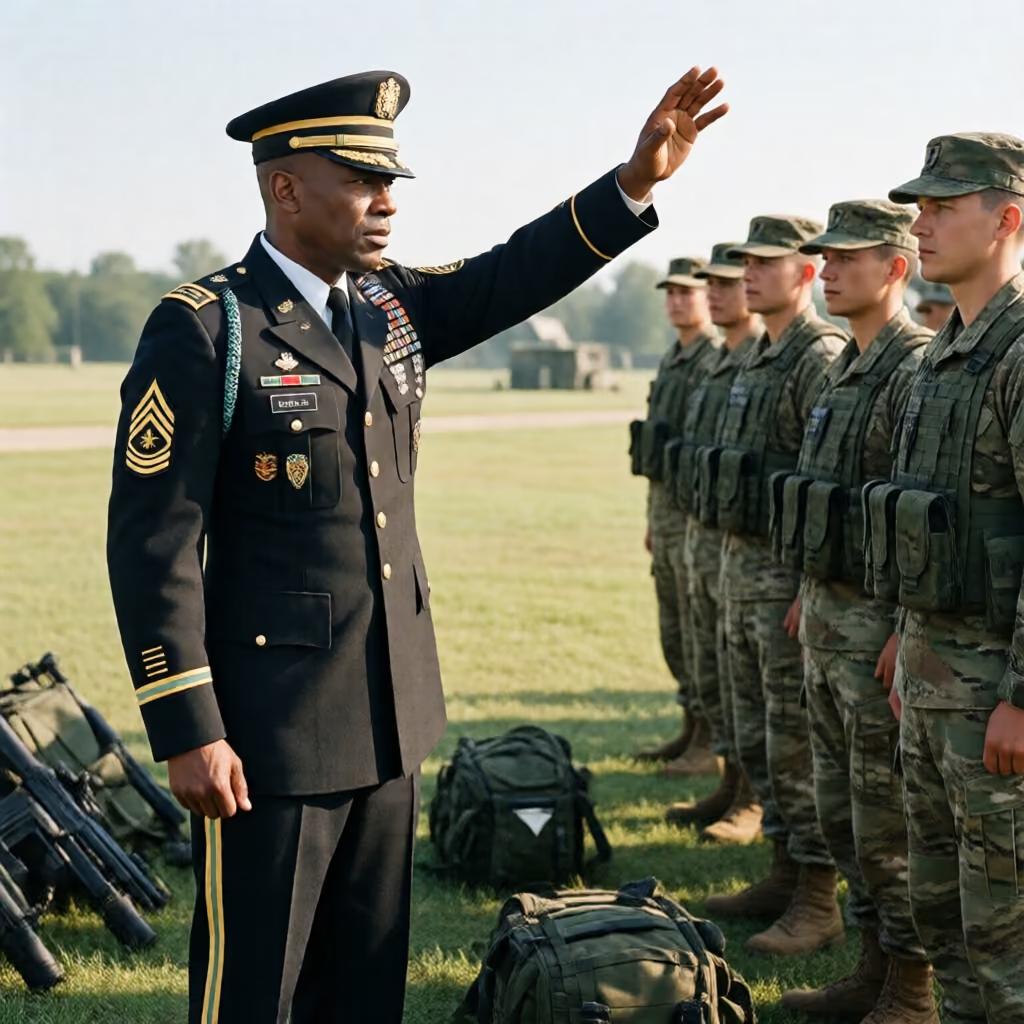
kommandieren
to command
To lead a military unit or a group and give it orders.
EXAMPLE
Der Hauptmann kommandierte die Kompanie während des Einsatzes.
The captain commanded the company during the operation.
to command / boss around
kommandieren – kommandierte – hat kommandiert
Loading your saved state.
to command
To lead a military unit or a group and give it orders.
Der Hauptmann kommandierte die Kompanie während des Einsatzes.
The captain commanded the company during the operation.

to boss around
To give someone orders in a domineering or bossy tone and tell them what to do.
Er kommandiert seine Mitarbeiter ständig und lässt ihnen kaum eigene Entscheidungen.
He constantly bosses his employees around and hardly lets them make their own decisions.
| ich | kommandiere |
|---|---|
| du | kommandierst |
| er/sie/es | kommandiert |
| wir | kommandieren |
| ihr | kommandiert |
| sie | kommandieren |
| ich | kommandierte |
|---|---|
| du | kommandiertest |
| er/sie/es | kommandierte |
| wir | kommandierten |
| ihr | kommandiertet |
| sie | kommandierten |
| ich | habe kommandiert |
|---|---|
| du | hast kommandiert |
| er/sie/es | hat kommandiert |
| wir | haben kommandiert |
| ihr | habt kommandiert |
| sie | haben kommandiert |
| du | kommandiere! kommandier! |
|---|---|
| ihr | kommandiert! |
| Sie | kommandieren Sie! |
| ich | hatte kommandiert |
|---|---|
| du | hattest kommandiert |
| er/sie/es | hatte kommandiert |
| wir | hatten kommandiert |
| ihr | hattet kommandiert |
| sie | hatten kommandiert |
| ich | werde kommandieren |
|---|---|
| du | wirst kommandieren |
| er/sie/es | wird kommandieren |
| wir | werden kommandieren |
| ihr | werdet kommandieren |
| sie | werden kommandieren |
| ich | kommandiere |
|---|---|
| du | kommandierest |
| er/sie/es | kommandiere |
| wir | kommandieren |
| ihr | kommandieret |
| sie | kommandieren |
Used for reported speech.
| ich | kommandierte |
|---|---|
| du | kommandiertest |
| er/sie/es | kommandierte |
| wir | kommandierten |
| ihr | kommandiertet |
| sie | kommandierten |
Used for wishes and “would”.
| infinitive | kommandieren |
|---|---|
| with zu | zu kommandieren |
| present participle | kommandierend |
| past participle | kommandiert |
'kommandieren' (to command / boss around) normally takes a direct accusative object: the person, group, or military unit being commanded. There is usually no preposition between the verb and the person or group being commanded.
Der Oberst kommandiert die gesamte Einheit.
The colonel commands the entire unit.
Sie kommandiert ihre Assistenten während der Veranstaltung.
She bosses her assistants around during the event.
In its military sense, 'kommandieren' (to command) is frequently used with terms for military units and troops. Typical objects include a battalion, a regiment, a company, or a unit.
Der erfahrene Offizier kommandierte ein Regiment an der Grenze.
The experienced officer commanded a regiment at the border.
When it means giving orders in a domineering way, 'kommandieren' (to boss around) is often used critically or disapprovingly. Clues such as 'ständig' (constantly), 'immer' (always), or 'herum' (around), as well as an everyday work or home setting, often indicate that the meaning is not military command.
Ich lasse mich doch nicht ständig von dir kommandieren!
I'm not going to let you boss me around all the time!
Im Büro kommandiert sie alle, obwohl sie nicht die Vorgesetzte ist.
At the office, she bosses everyone around even though she isn't the supervisor.