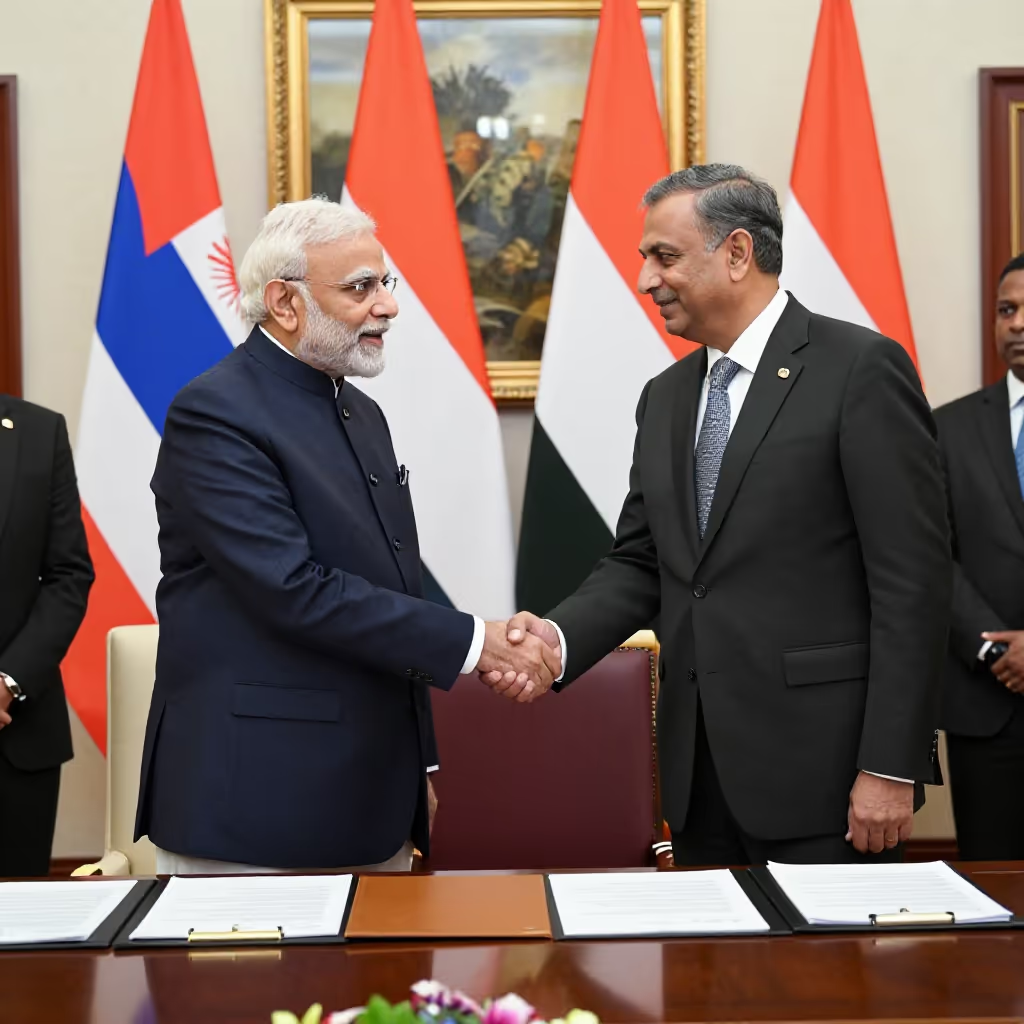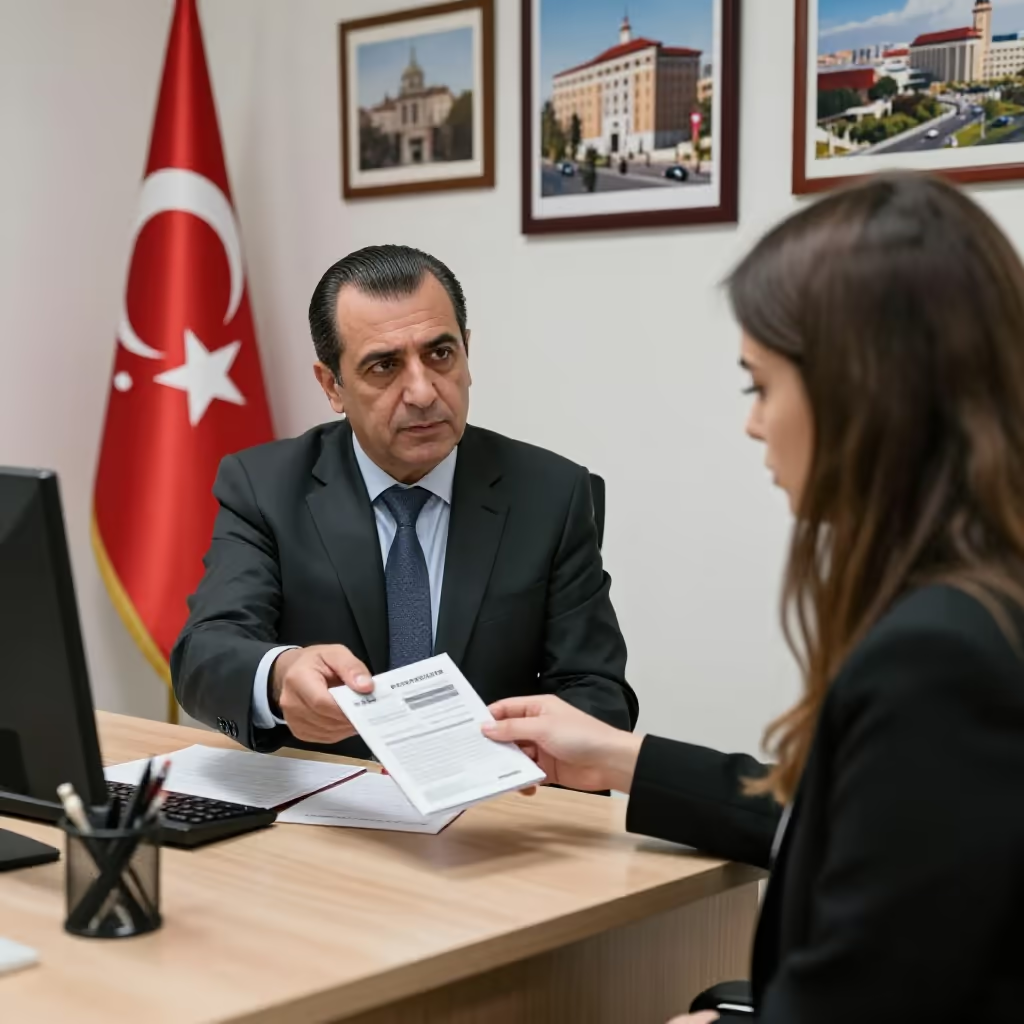
A senior government official who represents the interests of their country and its citizens in an important city abroad.
example
Wegen meines verlorenen Passes musste ich zum deutschen Konsul in Mailand gehen.
Because of my lost passport, I had to go to the German consul in Milan.

Usage tips
Context clue
The meaning depends strongly on the historical context. If people are talking about ancient Rome, it refers to the high-ranking official. In modern contexts, it is about the diplomat abroad.
EXAMPLE
Als römischer Konsul hatte Cäsar große Macht.
As a Roman consul, Caesar had great power.
Word family
'Der Konsul' (the consul) is the person. The associated office or building is 'das Konsulat' (the consulate). The adjective is 'konsularisch' (consular).
EXAMPLE
Ich muss zum Konsulat, um mit dem Konsul zu sprechen.
I have to go to the consulate to speak with the consul.
Typical collocations
In the modern sense, the word is often used with actions such as 'zum Konsul gehen' (to go to the consul), 'einen Termin beim Konsul haben' (to have an appointment with the consul), or in connection with documents such as a passport or visa.
EXAMPLE
Für das Visum benötigst du einen Termin beim zuständigen Konsul.
For the visa, you need an appointment with the responsible consul.
Register
This meaning is used exclusively in historical texts or conversations about the Roman Republic. Signal words are names like Cicero or Caesar and dates with 'v. Chr.' (BC).
EXAMPLE
Im alten Rom wurden jedes Jahr zwei Konsuln gewählt.
In ancient Rome, two consuls were elected every year.
Compare with
confusable
Konsul vs Botschafter
ambassador
'der Botschafter' and 'der Konsul' both belong to a state's representation abroad. They can be confused because both work officially for their country. However, 'der Botschafter' is the highest diplomatic representative of a state in another country. 'der Konsul' usually works in a specific city and mainly helps citizens of his country, for example with passports or emergencies. For the political representation of a country, you would more likely say 'Botschafter'; for help at the consulate, more likely 'Konsul'.
Konsul
Nach dem Verlust ihres Passes wandte sich Maria an den Konsul.
After losing her passport, Maria contacted the consul.
Botschafter
Der Botschafter vertritt sein Land bei wichtigen Gesprächen mit der Regierung.
The ambassador represents his country in important talks with the government.