

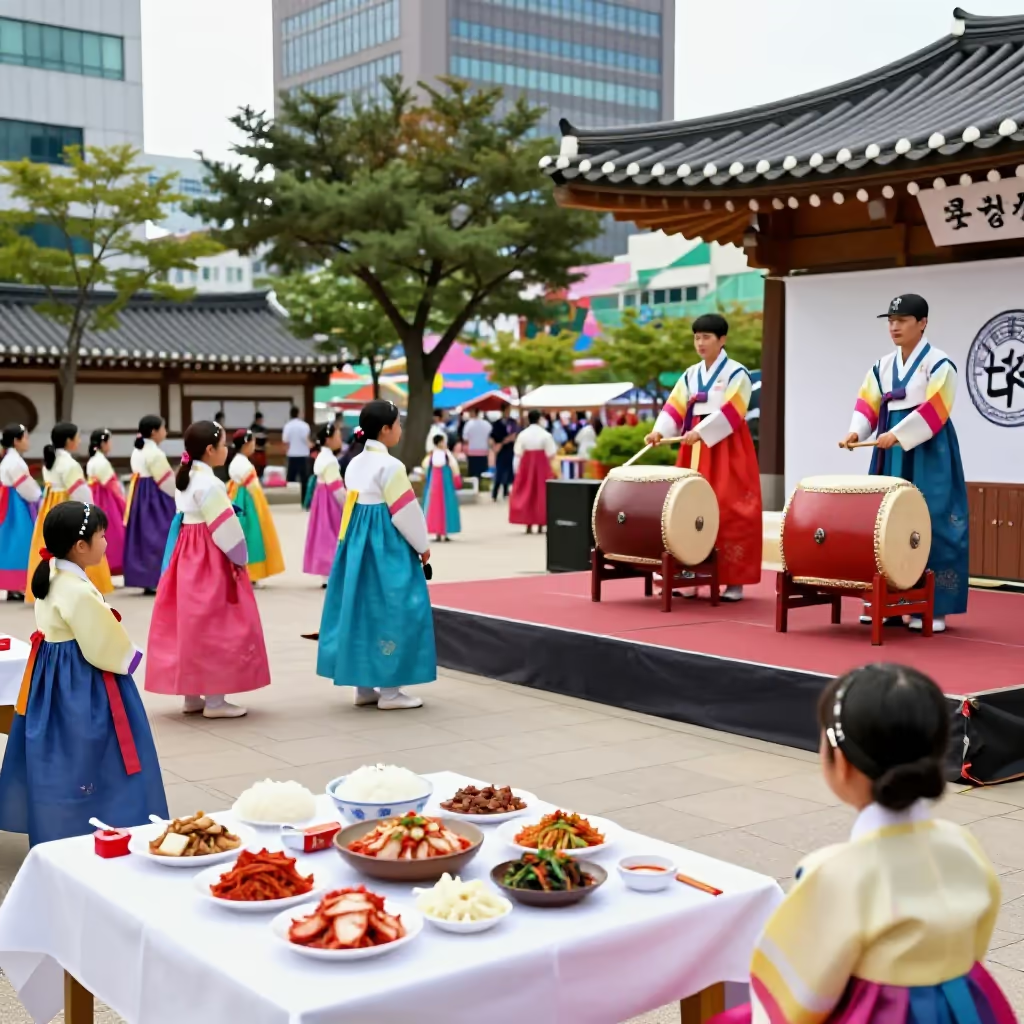
koreanisch
Korean
Refers to Korea, its culture, its inhabitants, or its language.
EXAMPLE
Wir waren gestern in einem authentischen koreanischen Restaurant essen.
Yesterday we ate at an authentic Korean restaurant.
Korean
Loading your saved state.
Korean
Refers to Korea, its culture, its inhabitants, or its language.
Wir waren gestern in einem authentischen koreanischen Restaurant essen.
Yesterday we ate at an authentic Korean restaurant.

Korean
The Korean language. In this meaning, the word is used as a noun and capitalized in German.
Sie lernt seit zwei Jahren Koreanisch an der Volkshochschule.
She has been learning Korean at the adult education center for two years.
Pay attention to capitalization: the adjective is written in lowercase ('koreanisches Essen' — Korean food). When the language is meant, it is treated as a noun and capitalized ('Koreanisch lernen' — to learn Korean).
Ich liebe koreanische Filme.
I love Korean films.
The ending '-isch' is often used in German to form an adjective from a country or region. This pattern helps you recognize and understand many other adjectives of nationality.
Die deutsche Sprache ist anders als die japanische oder chinesische.
The German language is different from Japanese or Chinese.
As an adjective, 'koreanisch' (Korean) is often used in connection with culture, food, or business. Common combinations are 'die koreanische Küche' (Korean cuisine), 'koreanische Popmusik' (Korean pop music/K-pop), or 'ein koreanisches Unternehmen' (a Korean company).
Die koreanische Hautpflege ist weltweit sehr beliebt.
Korean skincare is very popular worldwide.
When 'Koreanisch' refers to the language, it is often combined with verbs like 'sprechen' (to speak), 'lernen' (to learn), 'verstehen' (to understand), or 'übersetzen' (to translate). The phrase 'auf Koreanisch' (in Korean) is also very common.
Kannst du das bitte auf Koreanisch wiederholen?
Can you please repeat that in Korean?
South Korean
Koreanisch generally refers to Korea, its culture, or its inhabitants. Südkoreanisch specifically refers to the Republic of Korea and thus distinguishes it from North Korea. When this distinction matters, südkoreanisch is appropriate; without such a distinction, koreanisch may be sufficient.
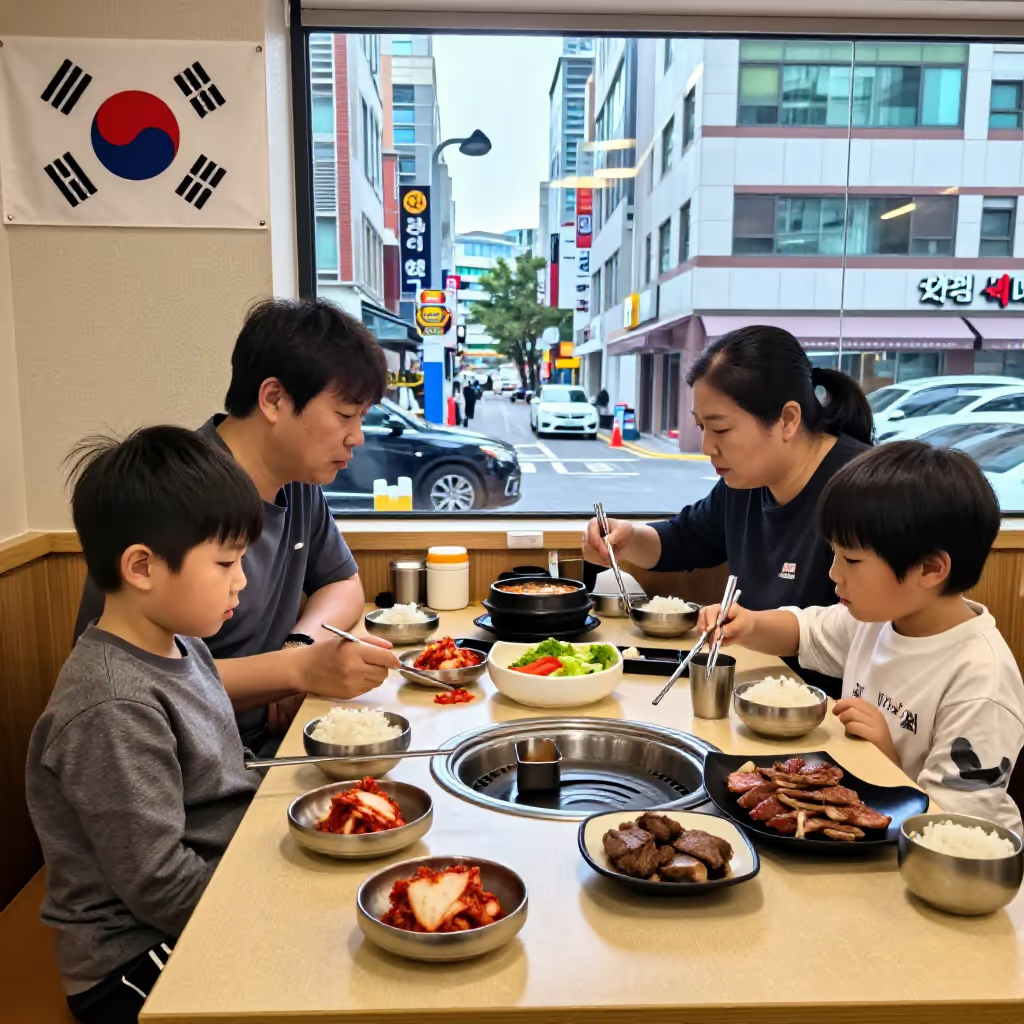
Das Restaurant serviert traditionelle koreanische Gerichte.
The restaurant serves traditional Korean dishes.
Das Restaurant serviert Gerichte aus verschiedenen südkoreanischen Regionen.
The restaurant serves dishes from various South Korean regions.