


der Kot
feces
The solid or semi-solid waste excretions from the intestines of humans or animals; fecal matter.
EXAMPLE
Pass auf, dass du nicht in den Hundekot auf dem Gehweg trittst.
Be careful not to step in the dog feces on the sidewalk.
feces / dirt
Loading your saved state.
feces
The solid or semi-solid waste excretions from the intestines of humans or animals; fecal matter.
Pass auf, dass du nicht in den Hundekot auf dem Gehweg trittst.
Be careful not to step in the dog feces on the sidewalk.
dirt / mud
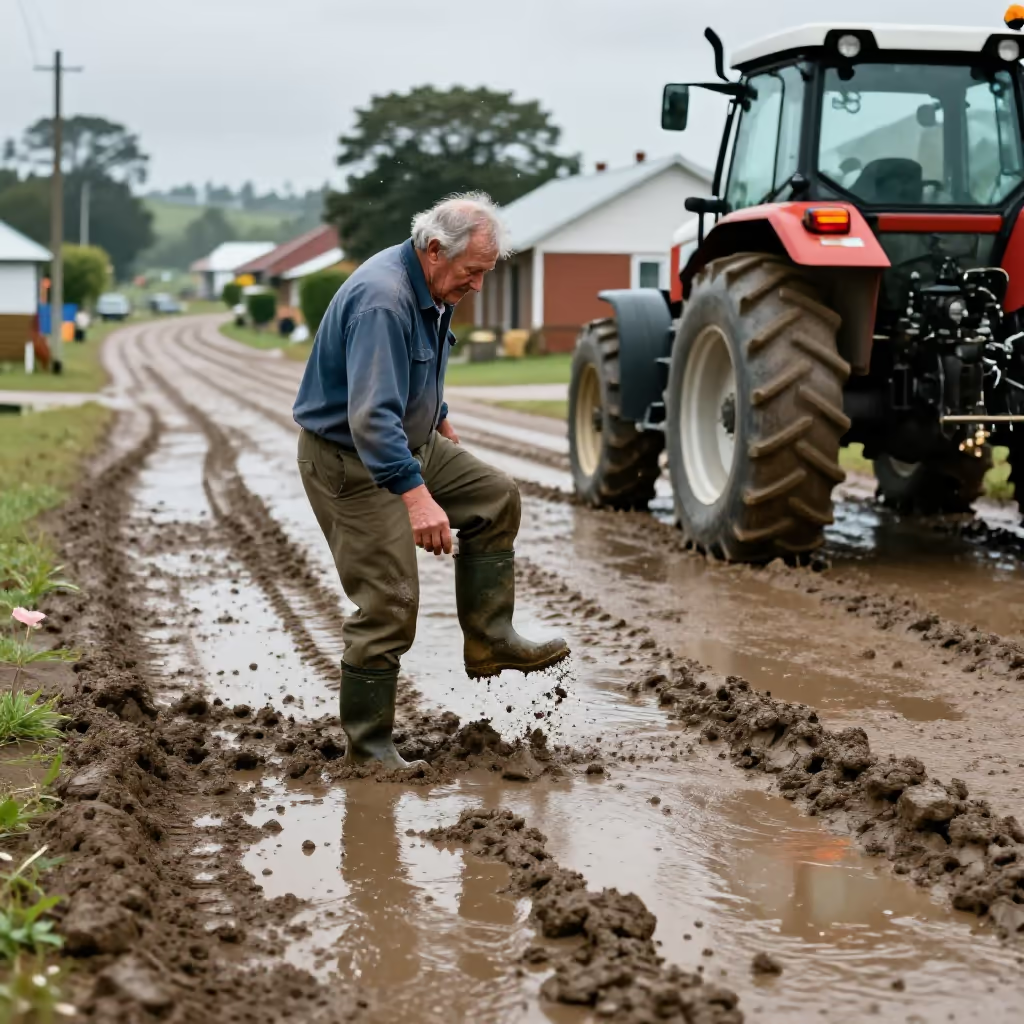
An outdated or regional term for dirt, filth, or mud.
Nach dem langen Marsch im Regen waren seine Stiefel voller Kot.
After the long march in the rain, his boots were covered in mud.
The meaning 'Schmutz' (dirt) or 'Schlamm' (mud) is outdated and is now used only in historical texts or certain dialects. In modern Standard German, 'Kot' (feces) almost exclusively means fecal matter.
Beim Wandern im Wald muss man aufpassen, wo man hintritt.
When hiking in the forest, you have to watch where you step.
'Kot' (feces) is a direct, biological term. It is not vulgar, but it is often avoided in polite everyday language or replaced by a paraphrase.
Der Tierarzt untersuchte eine Probe des Kots.
The veterinarian examined a sample of the feces.
The word is often used in compound nouns to specify the source, for example 'Hundekot' (dog feces), 'Vogelkot' (bird droppings), or 'Katzenkot' (cat feces).
In vielen Parks gibt es spezielle Tüten für Hundekot.
In many parks there are special bags for dog feces.
dirt / crap
Dreck is the normal modern word for general dirt or mud. Kot can also occur with this meaning, but it is then outdated or regional and sounds unusual in present-day standard German. Use Dreck in everyday situations; Kot fits here only in an old or regional linguistic context.
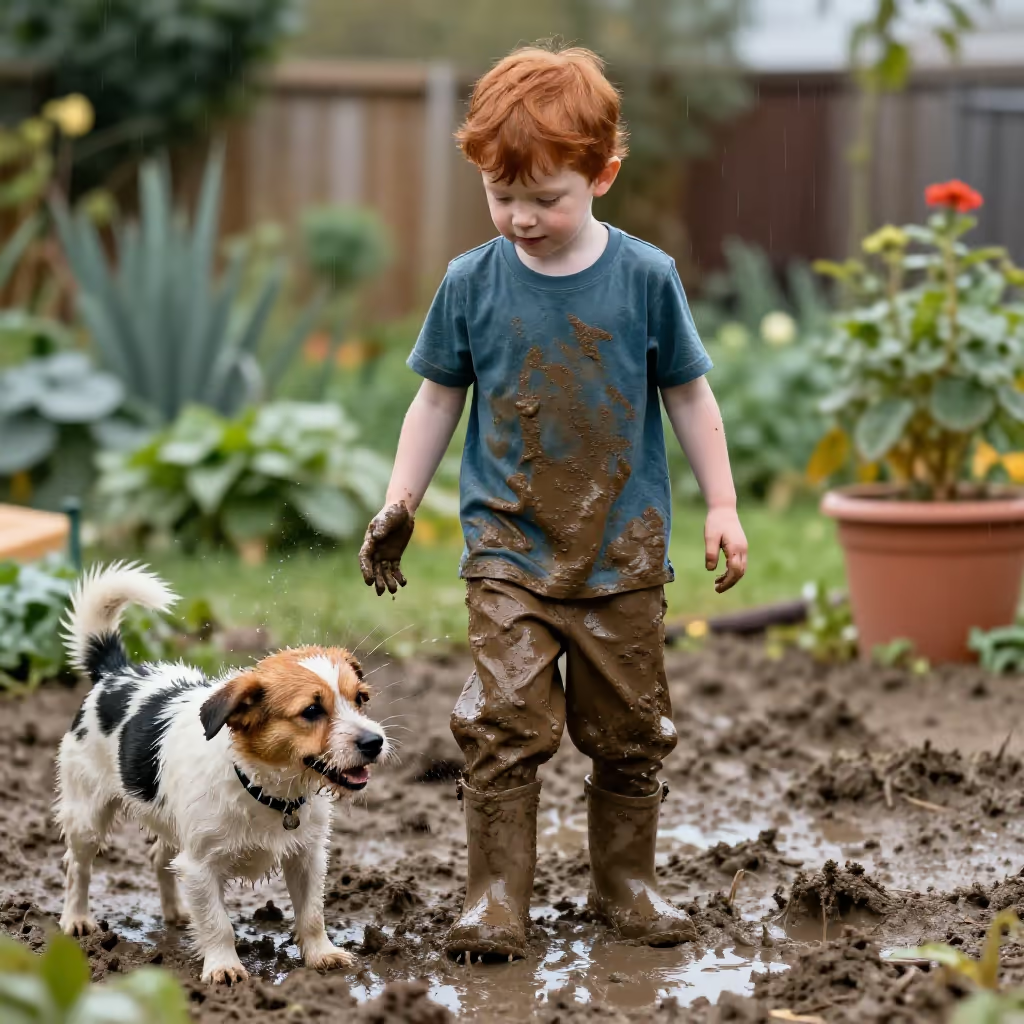
Im alten Text wird der Schmutz auf dem Weg als Kot bezeichnet.
In the old text, the dirt on the path is referred to as Kot.
Der Dreck auf dem Weg klebte an den Schuhen.
The dirt on the path stuck to our shoes.