

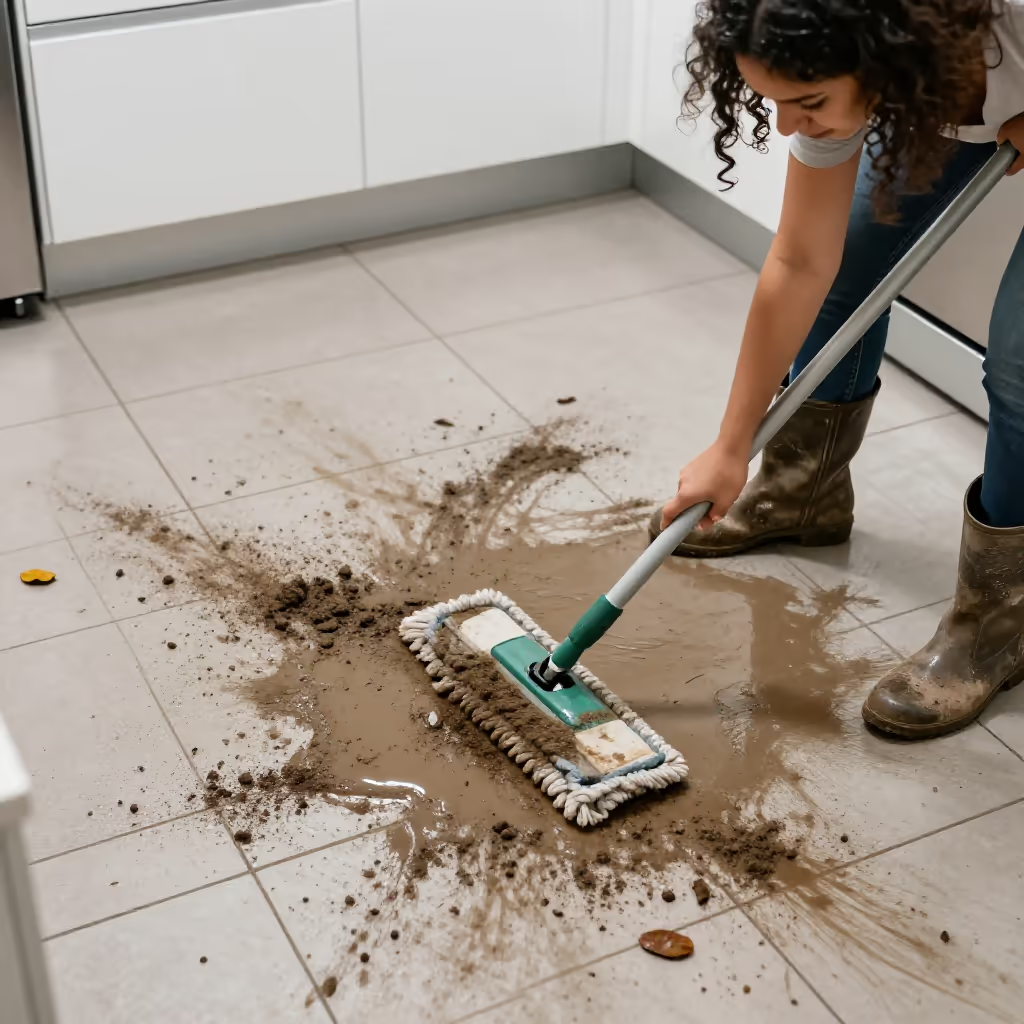
der Schmutz
dirt
A substance that makes something unclean, such as grime, dust, or soil.
EXAMPLE
Nach dem Spaziergang im Regen war überall Schmutz an seinen Schuhen.
After the walk in the rain, there was dirt all over his shoes.
dirt
Loading your saved state.
dirt
A substance that makes something unclean, such as grime, dust, or soil.
Nach dem Spaziergang im Regen war überall Schmutz an seinen Schuhen.
After the walk in the rain, there was dirt all over his shoes.

filth
Morally offensive or indecent content in a figurative sense, such as rumors, lies, or vulgar depictions.
Diese Zeitung druckt nur Schmutz und Klatschgeschichten.
This newspaper prints nothing but filth and gossip stories.
The noun 'der Schmutz' (dirt) is the basis for the adjective 'schmutzig' (dirty) and the verb 'verschmutzen' (to pollute/soil). All words in this family refer to uncleanliness.
Deine Hände sind schmutzig, wasch sie bitte.
Your hands are dirty; please wash them.
In its main meaning, 'Schmutz' (dirt) is used as an uncountable noun. You say 'viel Schmutz' (a lot of dirt) or 'etwas Schmutz' (some dirt), but normally not a plural form.
Nach der Gartenarbeit hatte ich überall Schmutz an der Kleidung.
After gardening, I had dirt all over my clothes.
The literal meaning refers to physical dirt. The figurative meaning can be recognized from the context of media, rumors, or morally questionable behavior.
Der Hausmeister entfernt den Schmutz im Treppenhaus.
The caretaker removes the dirt in the stairwell.
Common verbs in connection with physical dirt are 'Schmutz machen' (to make a mess/create dirt), 'Schmutz entfernen' (to remove dirt), or 'im Schmutz spielen' (to play in the dirt).
Pass auf, dass du mit den nassen Schuhen keinen Schmutz machst.
Be careful not to make a mess with your wet shoes.
In its figurative meaning, 'Schmutz' (filth) is a very strong, derogatory word. It is used to brand content or behavior as morally reprehensible.
In der Kampagne wurde viel mit Schmutz geworfen.
A lot of mud was slung during the campaign.
dirt / crap
Dreck and Schmutz both refer to a substance that makes something dirty. Schmutz is the more neutral term, whereas Dreck is colloquial and often sounds more strongly evaluative. Use Schmutz in factual situations and Dreck when you want to emphasize the dirt or use a clearly colloquial term.
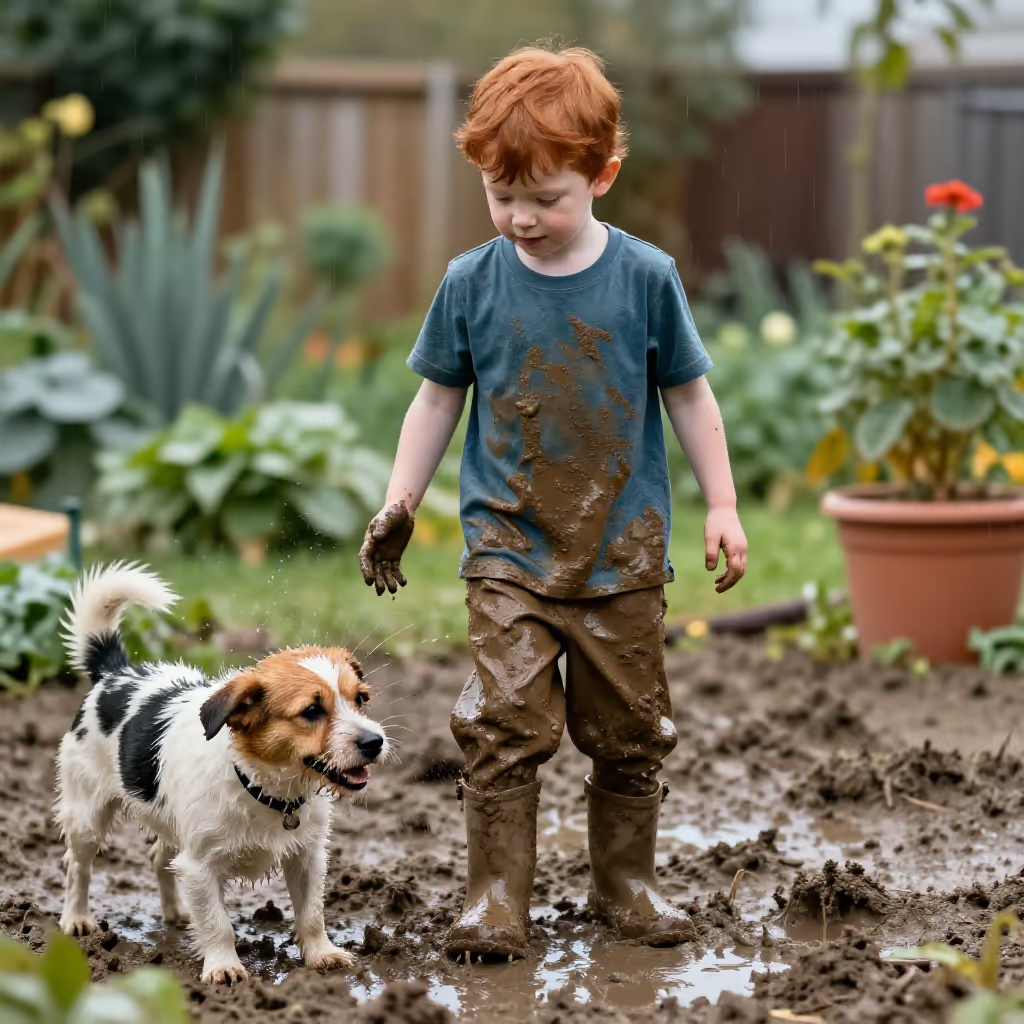
Der Schmutz an meinen Schuhen geht kaum noch ab.
The dirt on my shoes is almost impossible to remove.
Der Dreck an meinen Schuhen geht kaum noch ab.
The dirt on my shoes is almost impossible to remove.