

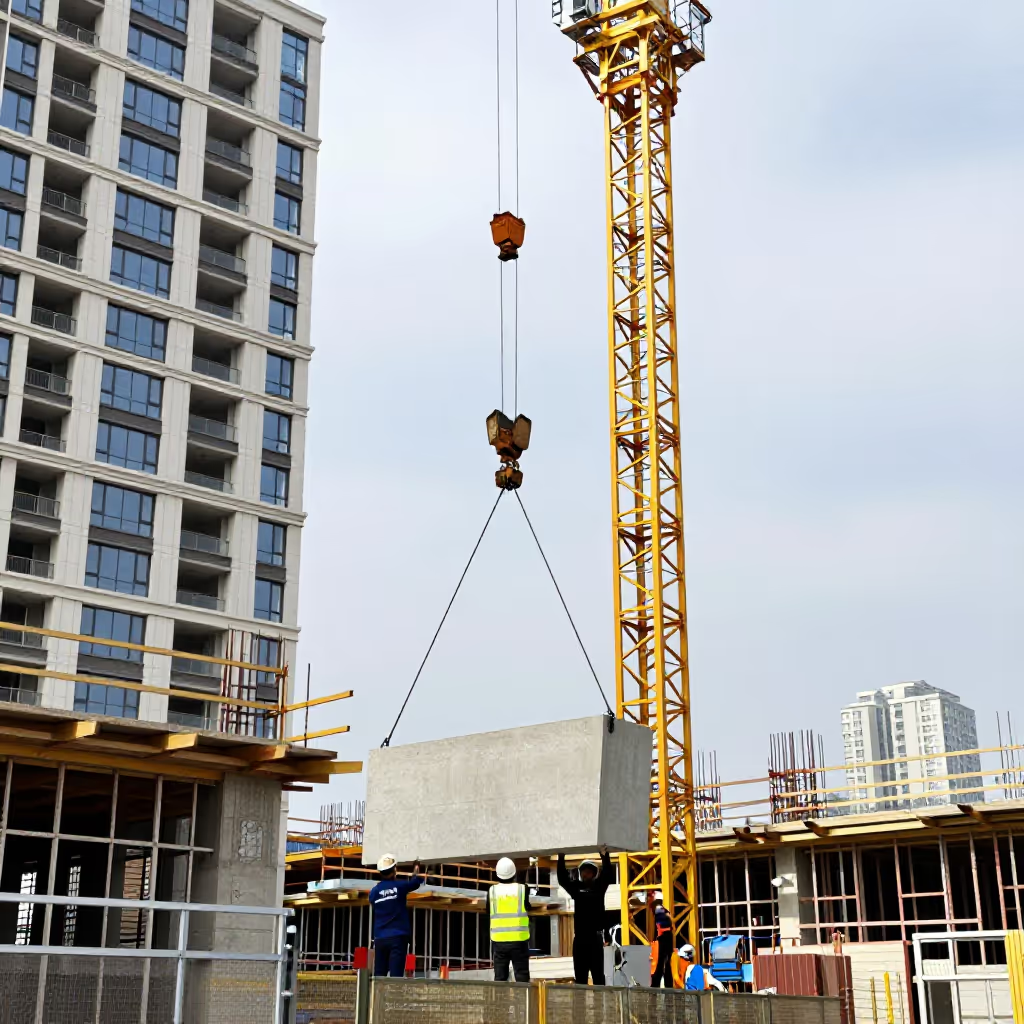
A large machine for lifting and moving heavy loads, typically used on construction sites, in ports, or in industrial facilities.
example
Ein riesiger Kran hob die Fertigteile des Hauses an ihren Platz.
A huge crane lifted the prefabricated parts of the house into place.

Usage tips
Meaning in context
Whether the machine or the bird is meant is easy to recognize from context. Terms like 'Baustelle' (construction site), 'Last' (load), or 'Hafen' (port) point to the machine, while 'Vögel' (birds), 'fliegen' (to fly), or 'Feld' (field) refer to the bird.
EXAMPLE
Der Kran auf der Baustelle ist weithin sichtbar.
The crane on the construction site is visible from far away.
Typical collocations
In connection with the construction machine, typical expressions are 'einen Kran aufstellen' (to set up a crane), 'einen Kran bedienen' (to operate a crane), or 'etwas mit dem Kran heben' (to lift something with the crane). The person who controls the crane is called 'Kranführer' (crane operator).
EXAMPLE
Nur ein erfahrener Kranführer darf diese schwere Last heben.
Only an experienced crane operator may lift this heavy load.
Rare meaning
The use of 'Kran' (crane) for the bird is rare today and is considered outdated or regional. In most situations, the word refers to the construction machine.
EXAMPLE
Der Dichter schrieb über den Ruf des Krans im Moor.
The poet wrote about the call of the crane in the moor.