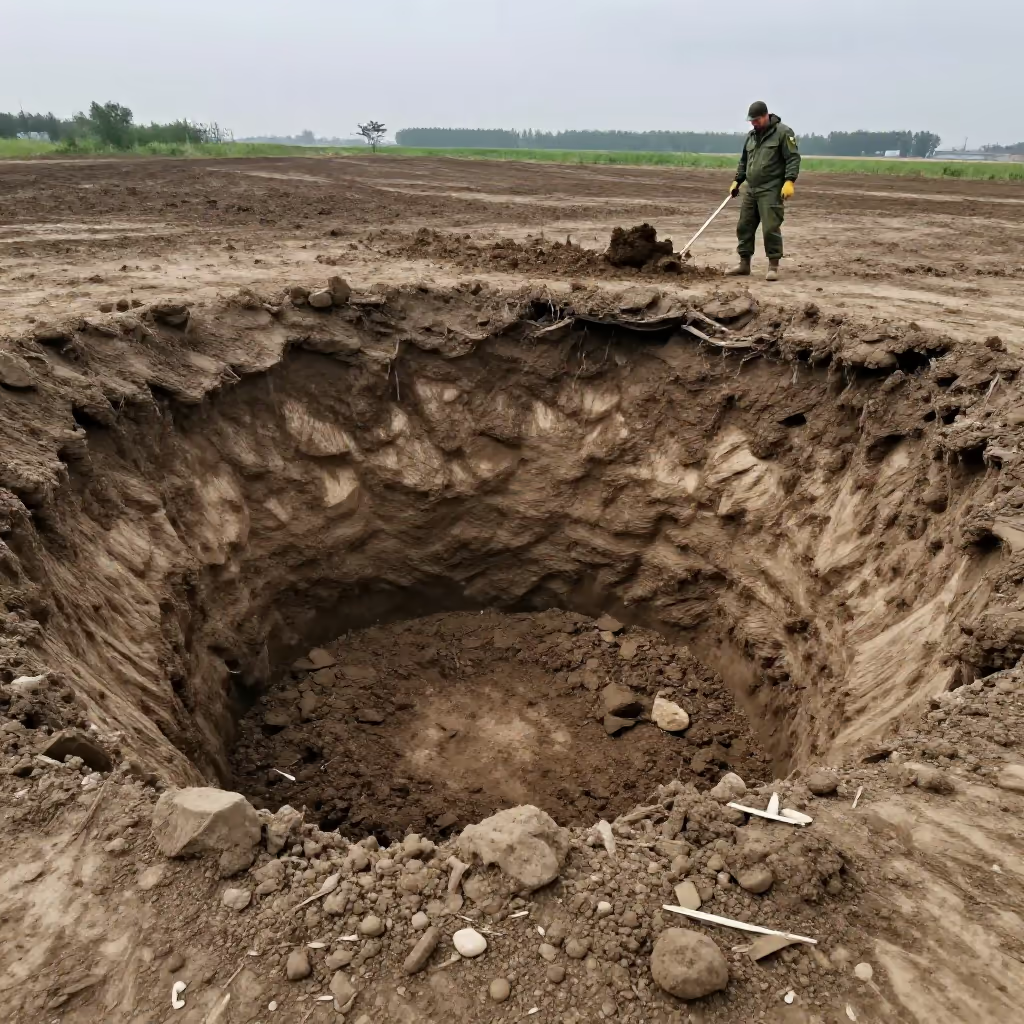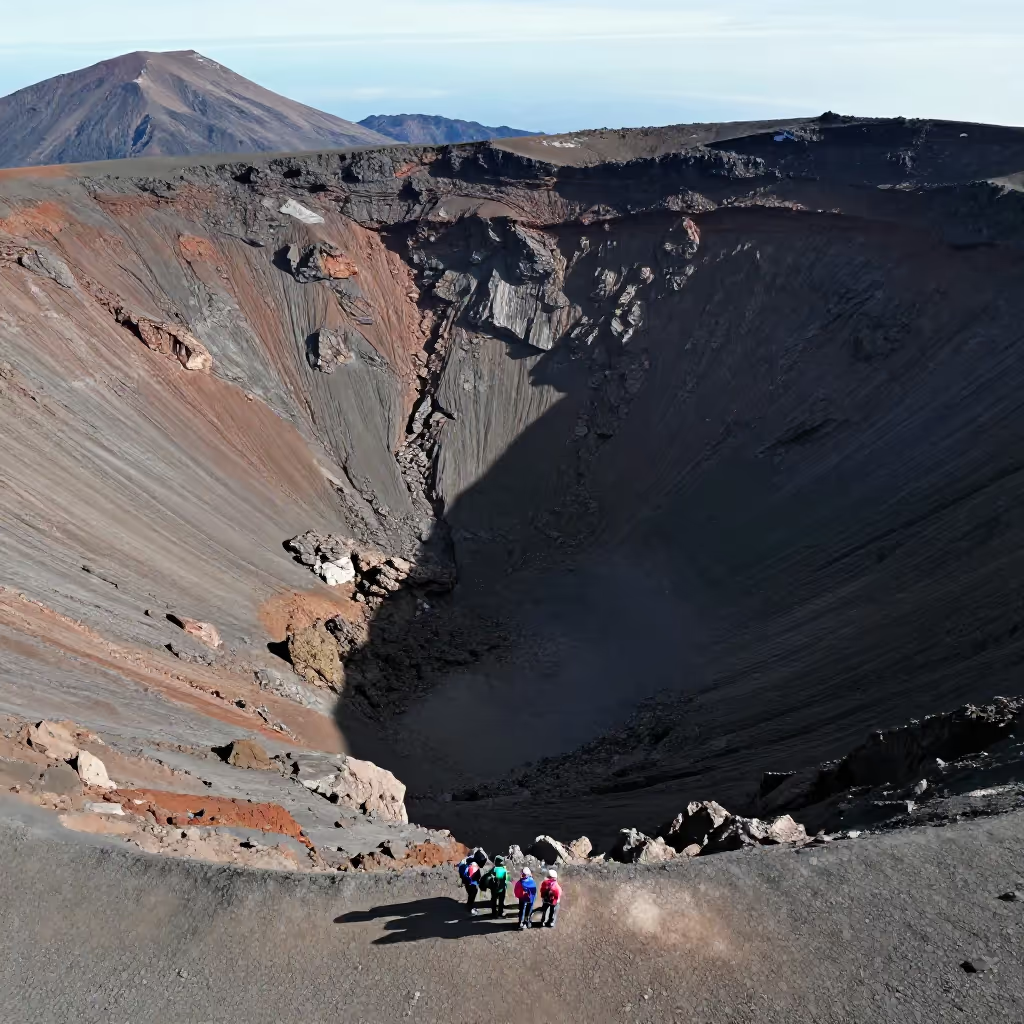
A funnel-shaped depression in the Earth's surface that was formed by a volcanic eruption, a meteorite impact, or a large explosion.
example
Man kann bis zum Rand des Vulkans wandern und in den Krater blicken.
You can hike up to the edge of the volcano and look into the crater.
Usage tips
Context clue
You can recognize the meaning from the context. Words like 'Vulkan' (volcano), 'Mond' (moon), or 'Meteorit' (meteorite) point to the geological meaning. Words like 'Explosion' (explosion), 'Bombe' (bomb), or 'Baustelle' (construction site) indicate a hole created by destruction.
EXAMPLE
Die Astronauten sammelten Gesteinsproben aus einem Mondkrater.
The astronauts collected rock samples from a lunar crater.
Productive compounds
The word 'Krater' (crater) is often the second part of compound nouns that describe the origin of the crater more precisely. Typical examples are 'Vulkankrater' (volcanic crater), 'Mondkrater' (lunar crater), or 'Einschlagskrater' (impact crater).
EXAMPLE
Der größte bekannte Einschlagskrater der Erde liegt in Südafrika.
The largest known impact crater on Earth is in South Africa.
Typical collocations
In a geological context, 'Krater' (crater) is often used with verbs like 'hineinblicken' (to look into) or 'hinabsteigen' (to descend into). Adjectives like 'tief' (deep), 'riesig' (huge), or 'erloschen' (extinct) are also common.
EXAMPLE
Vom Wanderweg aus kann man sicher in den tiefen Krater blicken.
From the hiking trail, you can safely look into the deep crater.
Typical verbs
When a crater is created by destruction, the verbs 'hinterlassen' (to leave behind), 'reißen' (to tear/open up), or 'verursachen' (to cause) are often used.
EXAMPLE
Der Meteorit hat bei seinem Einschlag einen gewaltigen Krater gerissen.
The meteorite tore open a massive crater when it struck.
Compare with
near_synonym · confusable
Krater vs Loch
hole
'das Loch' and 'der Krater' can both refer to a depression or opening in a surface. 'Loch' is the general word and works for small or large openings in many things, for example in a wall, in the ground, or in clothing. 'Krater' is more specific: it is usually large, round, or funnel-shaped and is formed by a volcano, a meteorite impact, an explosion, or severe destruction. Learners may confuse the words because a crater looks like a large hole. But not every hole is a crater. Use 'Krater' only when the shape and how it was formed fit.
Krater
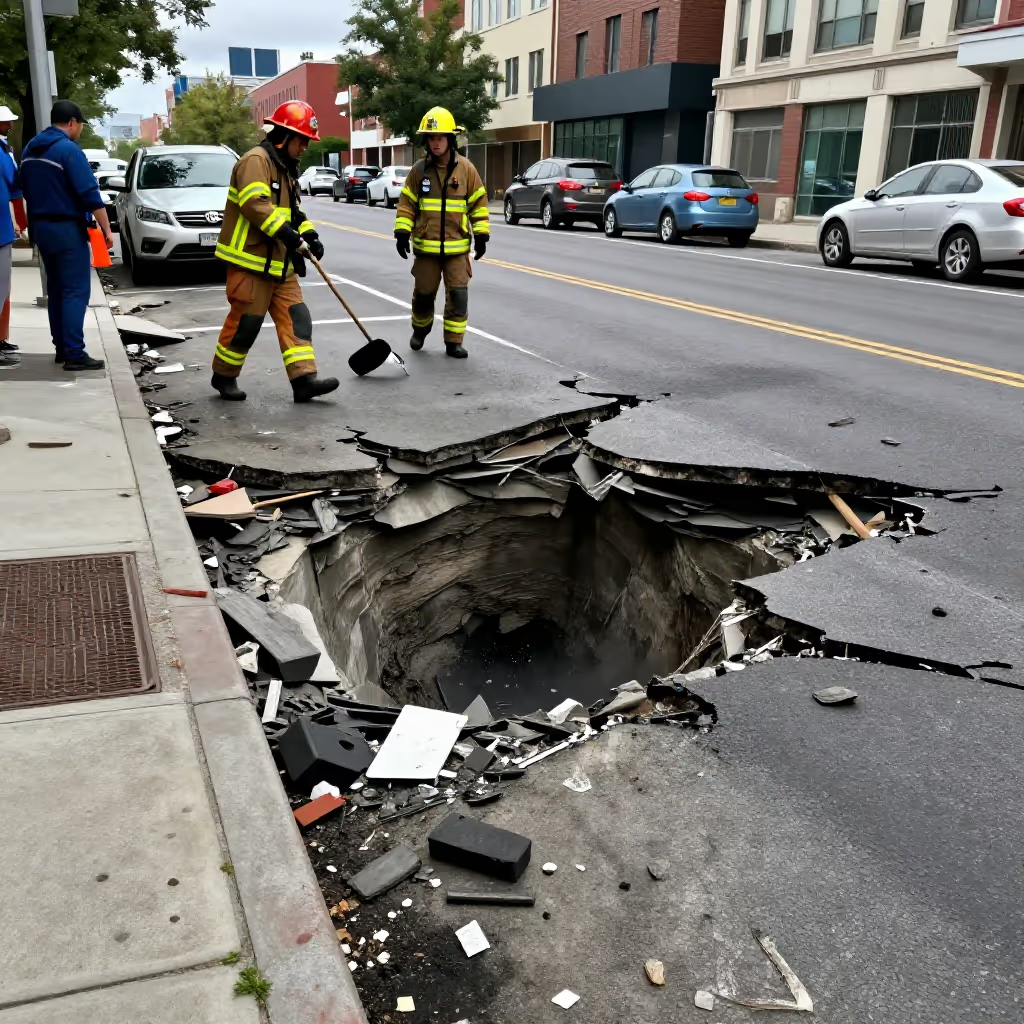
Nach der Explosion blieb ein tiefer Krater in der Straße zurück.
After the explosion, a deep crater was left in the street.
Loch
Im Reifen ist ein kleines Loch, deshalb verliert das Fahrrad Luft.
There is a small hole in the tire, so the bicycle is losing air.