

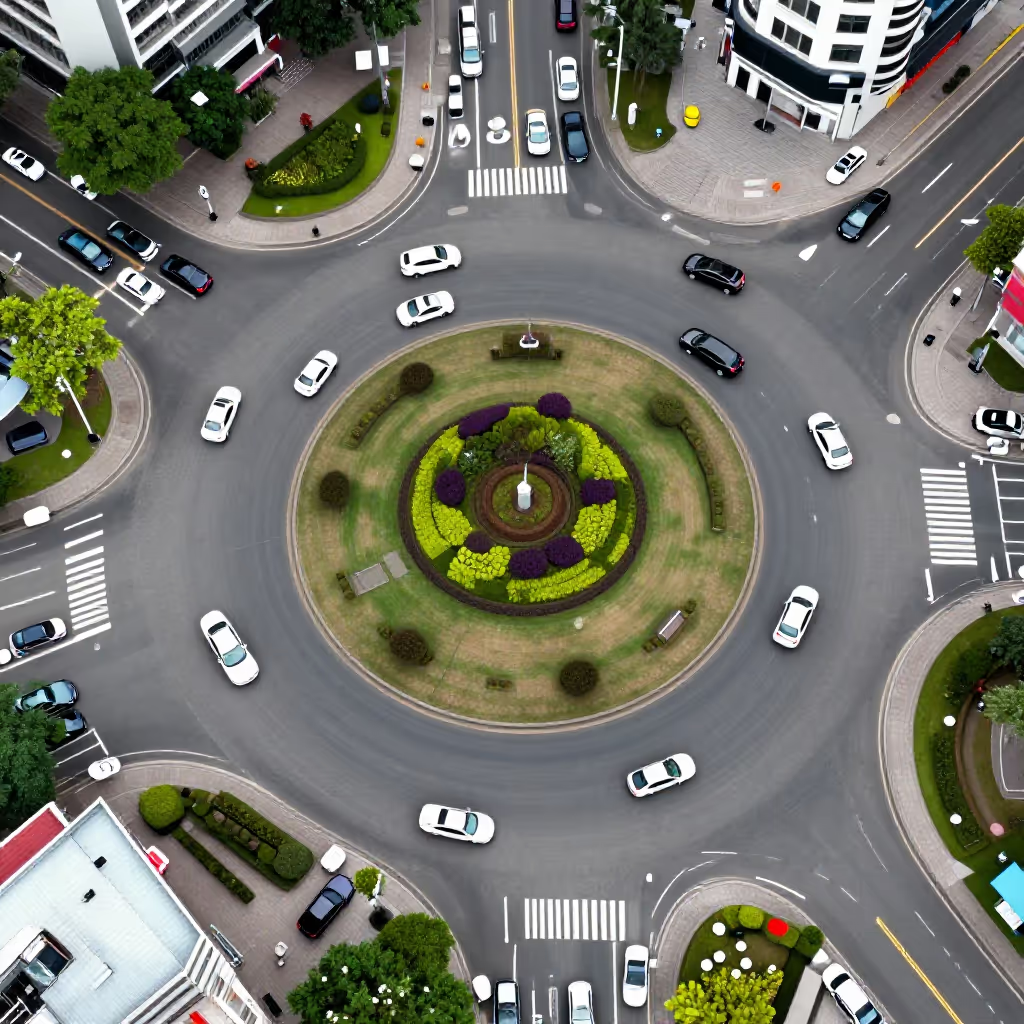
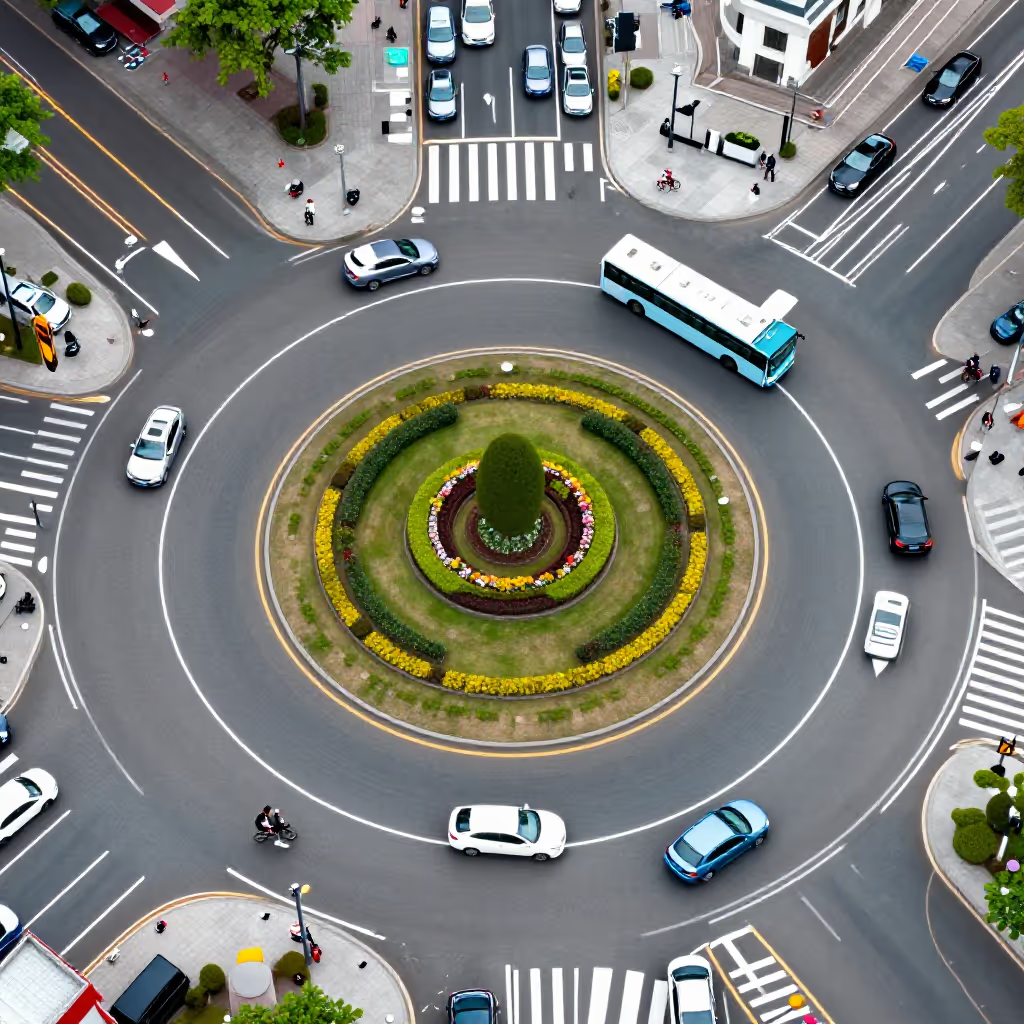
A traffic system where several roads lead into a circular roadway. Traffic flows in one direction around a central island.
example
Fahren Sie in den Kreisverkehr ein und nehmen Sie die zweite Ausfahrt.
Enter the roundabout and take the second exit.
Usage tips
Compound word
The word is made up of 'Kreis' (circle) and 'Verkehr' (traffic). So it literally describes traffic that flows in a circle. This logic helps you remember the word.
EXAMPLE
In vielen europäischen Städten ersetzen Kreisverkehre alte Kreuzungen.
In many European cities, roundabouts are replacing old intersections.
Correct preposition
Pay attention to the case with the preposition 'in': You drive 'in den Kreisverkehr' (into the roundabout; accusative, direction), but you are already 'im Kreisverkehr' (in the roundabout; dative, location).
EXAMPLE
Du musst in den Kreisverkehr fahren und dann die dritte Ausfahrt nehmen.
You have to drive into the roundabout and then take the third exit.
Typical verbs
Typical verbs used in connection with 'Kreisverkehr' (roundabout) are 'einfahren' (to enter/drive into), 'verlassen' (to leave), and 'die Ausfahrt nehmen' (to take the exit).
EXAMPLE
An dieser Stelle müssen Sie den Kreisverkehr verlassen.
At this point, you have to leave the roundabout.
Compare with
confusable
Kreisverkehr vs Kreuzung
intersection / crossing
'die Kreuzung' and 'der Kreisverkehr' both belong to road traffic and describe places where several roads meet. A 'Kreuzung' is generally a place where streets or paths cross. There are often traffic lights, signs, or right-of-way rules there. A 'Kreisverkehr' is a special form: cars drive in a circle around a central island. Learners may confuse the words because you can turn or change direction at both places. If the roadway is round, you say 'Kreisverkehr'; otherwise, 'Kreuzung' is usually correct.
Kreisverkehr
Im Kreisverkehr nimmst du die zweite Ausfahrt Richtung Bahnhof.
In the roundabout, take the second exit toward the train station.