

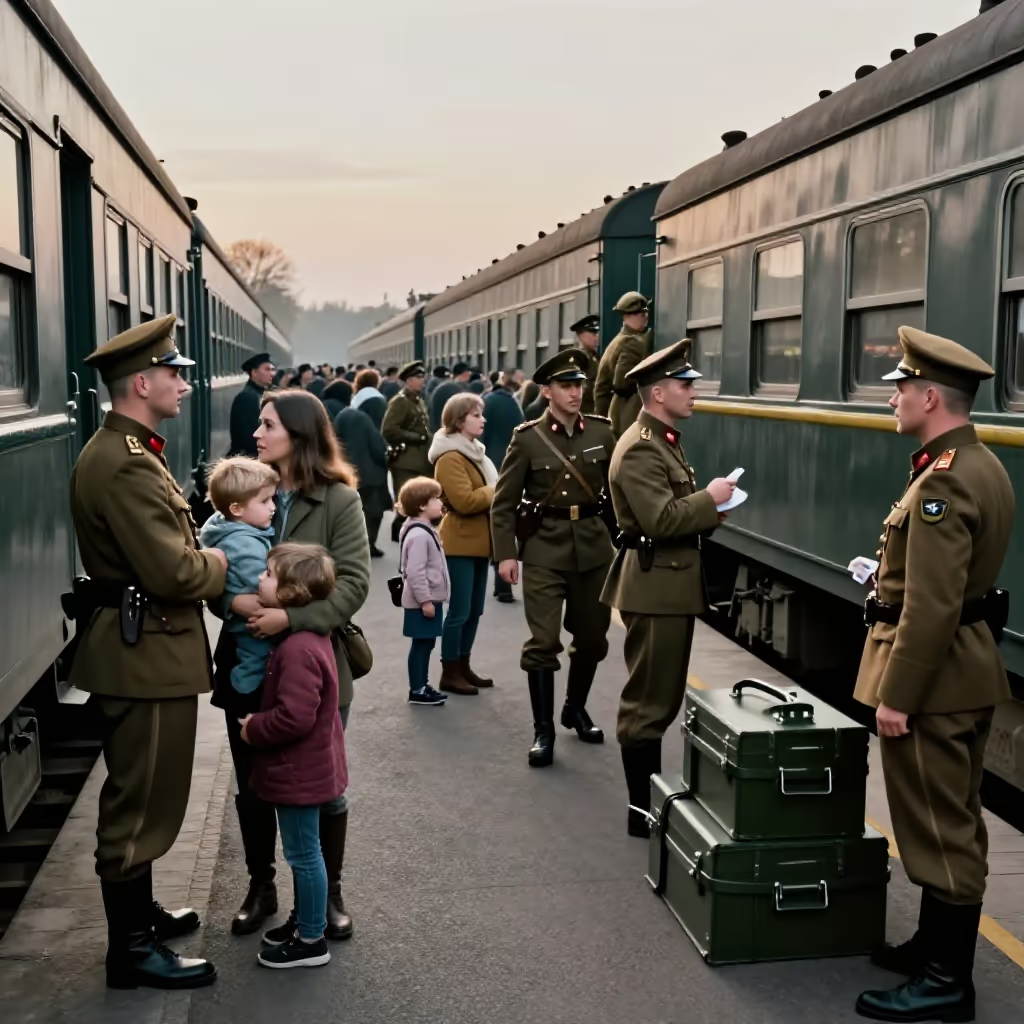
der Kriegsbeginn
start of the war
The point in time or moment when a war begins.
EXAMPLE
Der Kriegsbeginn im Jahr 1939 markierte einen Wendepunkt in der Geschichte.
The start of the war in 1939 marked a turning point in history.
start of the war
Loading your saved state.
start of the war
The point in time or moment when a war begins.
Der Kriegsbeginn im Jahr 1939 markierte einen Wendepunkt in der Geschichte.
The start of the war in 1939 marked a turning point in history.
This word is made up of 'Krieg' (war) and 'Beginn' (beginning/start). The 's' between them is a linking s that connects the two nouns. It literally means 'der Beginn des Krieges' (the beginning of the war).
Viele Historiker beschäftigen sich mit den Ursachen für den Kriegsbeginn.
Many historians study the causes of the start of the war.
In combination with prepositions such as 'seit' (since), 'vor' (before), or 'nach' (after), 'Kriegsbeginn' (start of the war) is often used without an article to define a point in time.
Seit Kriegsbeginn hat sich die Lage im Land dramatisch verändert.
Since the start of the war, the situation in the country has changed dramatically.
'Kriegsbeginn' (start of the war) is a formal word used mainly in historical, political, or journalistic texts. It is rather rare in everyday language.
Die Ausstellung dokumentiert das Leben der Zivilbevölkerung nach Kriegsbeginn.
The exhibition documents the life of the civilian population after the start of the war.