

kroatisch
Croatian
Relates to Croatia, its people, its language, or its culture.
EXAMPLE
Wir haben unseren Urlaub an der kroatischen Adriaküste verbracht.
We spent our vacation on the Croatian Adriatic coast.
Croatian
Loading your saved state.
Croatian
Relates to Croatia, its people, its language, or its culture.
Wir haben unseren Urlaub an der kroatischen Adriaküste verbracht.
We spent our vacation on the Croatian Adriatic coast.
Adjectives that refer to countries or regions often end in '-isch'. 'Kroatisch' (Croatian) is derived directly from the country name 'Kroatien' (Croatia).
Die kroatische Nationalmannschaft hat gut gespielt.
The Croatian national team played well.
When 'kroatisch' refers to the language, it is capitalized and used like a noun. You say 'Ich lerne Kroatisch' (I am learning Croatian) or 'Wir sprechen Kroatisch' (We speak Croatian).
Sie übersetzt Bücher vom Deutschen ins Kroatische.
She translates books from German into Croatian.
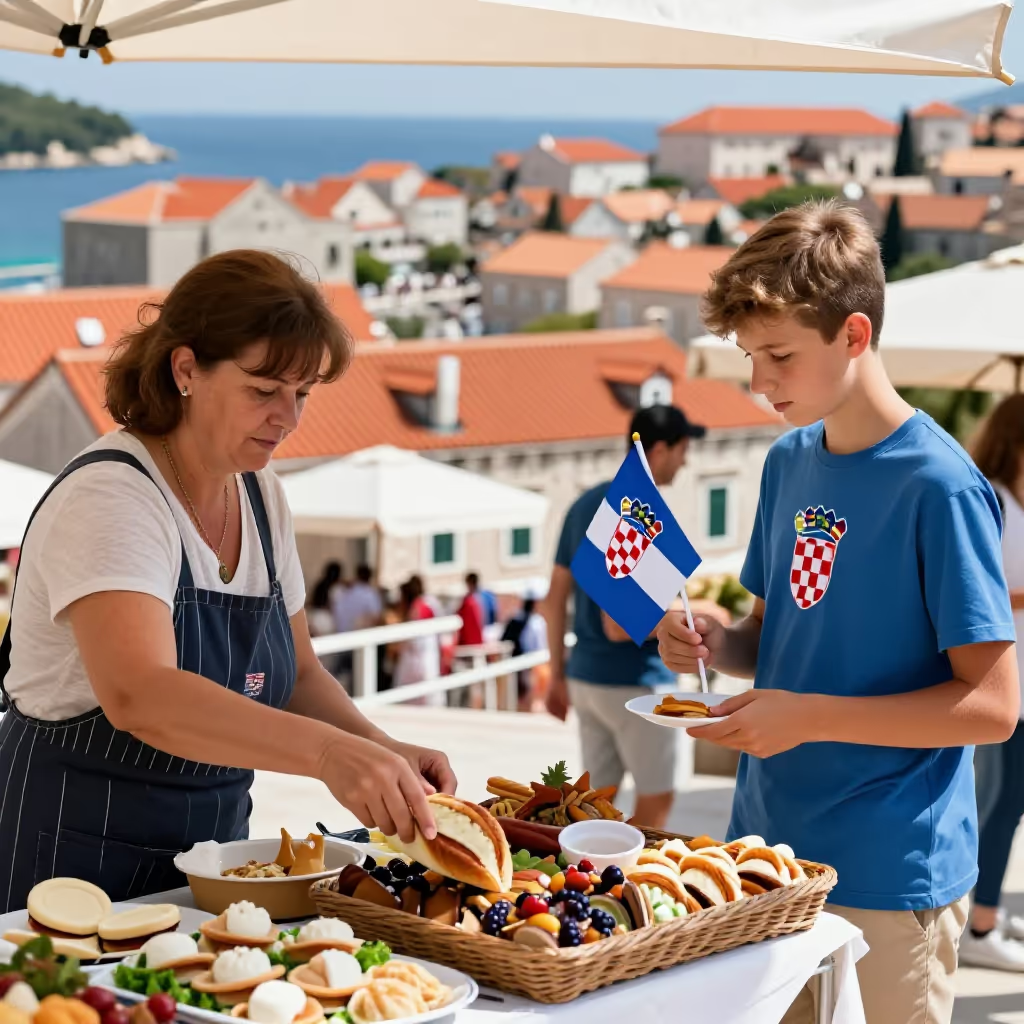
The adjective is often used to describe things that are typical of Croatia. Common combinations are 'die kroatische Küste' (the Croatian coast), 'kroatische Inseln' (Croatian islands), or 'die kroatische Küche' (Croatian cuisine).
Im Restaurant gibt es viele kroatische Spezialitäten.
The restaurant has many Croatian specialties.