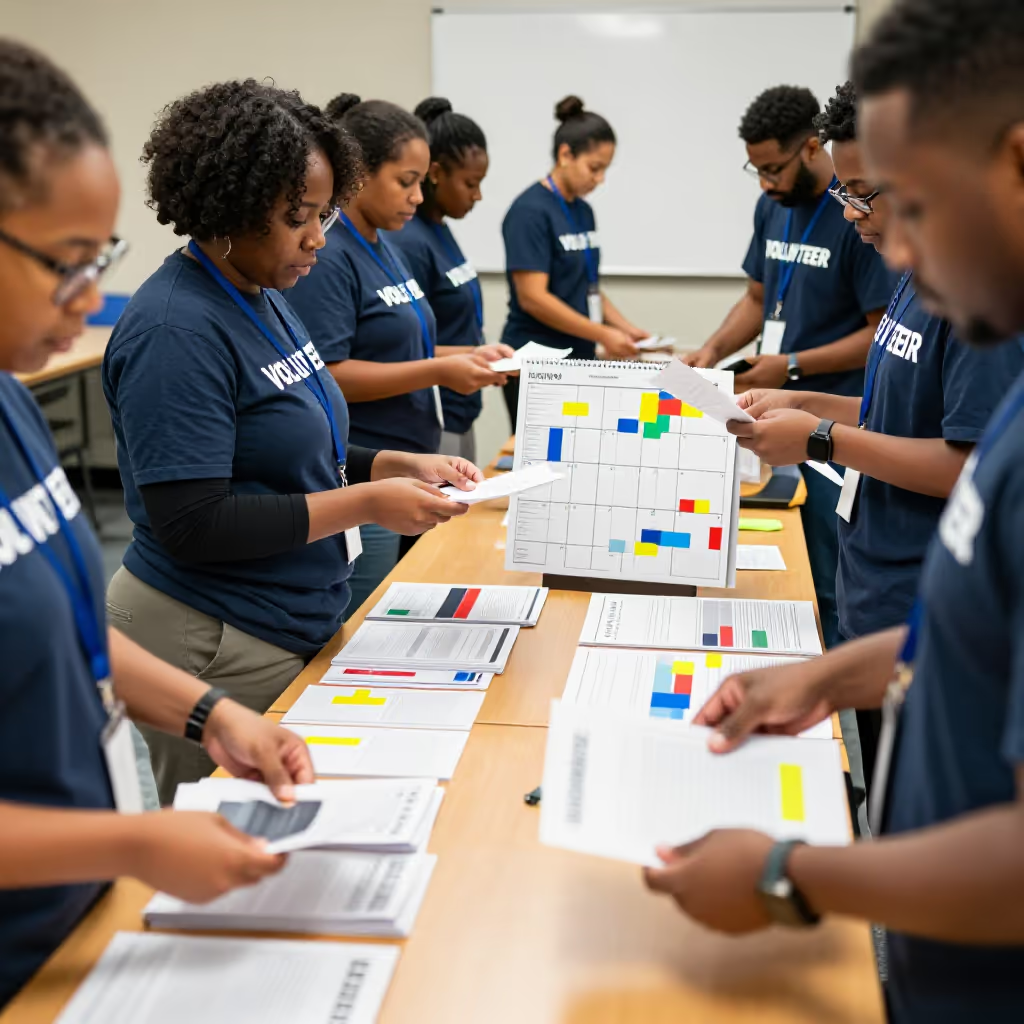
In a figurative sense, an energetic fight for or against an idea or cause, pursued with great commitment.
example
Die Aktivistin führte einen persönlichen Kreuzzug gegen Plastikmüll.
The activist led a personal crusade against plastic waste.
Usage tips
Compound word
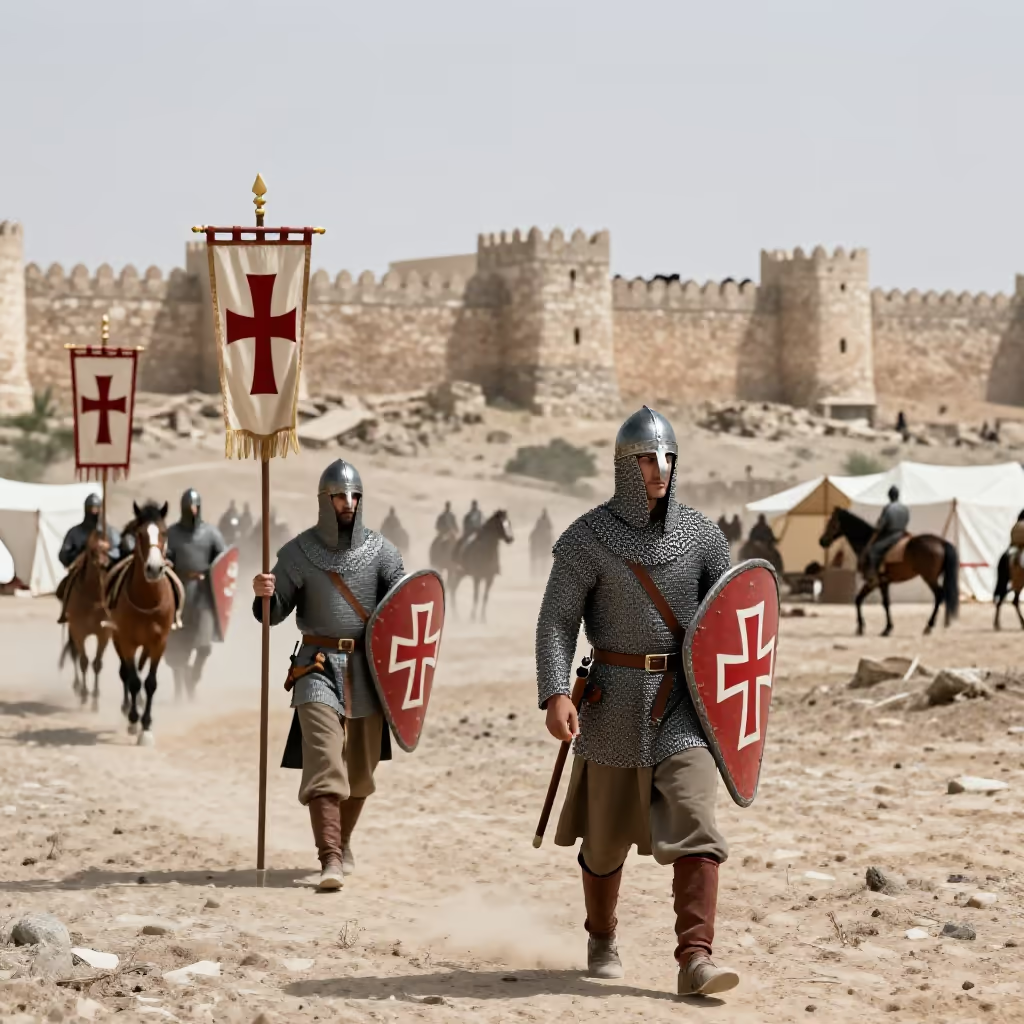
The word is made up of 'Kreuz' (cross) and 'Zug' (campaign/march). In the past, a 'Zug' could mean, among other things, a military campaign or movement. The historical meaning therefore refers to a 'campaign under the sign of the cross'.
EXAMPLE
Die Ritter bereiteten sich auf den langen Zug ins Heilige Land vor.
The knights prepared for the long march to the Holy Land.
Context clue
You can tell from context whether the historical or figurative meaning is intended. If it is about the Middle Ages, religion, or Jerusalem, it is the historical meaning. If people are talking about politics, personal goals, or activism, it is the figurative one.
EXAMPLE
Im Geschichtsunterricht lernen wir über die Kreuzzüge des Mittelalters.
In history class, we learn about the Crusades of the Middle Ages.
Sentence structure and usage
In the figurative meaning, 'Kreuzzug' (crusade) is often used with the verb 'führen' (to lead/wage) and a preposition. You lead a crusade 'für' (for) a good cause or 'gegen' (against) a problem.
EXAMPLE
Die Bürgerinitiative führt einen Kreuzzug gegen den Bau der neuen Autobahn.
The citizens' initiative is waging a crusade against the construction of the new highway.
Typical collocations
In a historical context, 'Kreuzzug' (Crusade) is often combined with ordinal numbers to name the different campaigns. For example, people speak of the 'Erster Kreuzzug' (First Crusade) or 'Dritter Kreuzzug' (Third Crusade).
EXAMPLE
Der Vierte Kreuzzug führte zur Plünderung von Konstantinopel.
The Fourth Crusade led to the sack of Constantinople.
Compare with
near_synonym
Kreuzzug vs Kampf
fight / struggle
'Kampf' and 'Kreuzzug' can both describe a strong effort for or against something. 'Kampf' is the more general word. It fits sports, politics, personal problems, or a goal that is difficult to achieve. 'Kreuzzug' is stronger and more figurative in its figurative sense. It sounds as if someone is fighting very energetically, almost with a mission, for a cause. For that reason, 'Kreuzzug' often feels more emotional or judgmental than 'Kampf'. For ordinary difficulties, 'Kampf' is more natural; 'Kreuzzug' is more suitable when someone is very determined to stand up for an idea.
Kreuzzug
Die Journalistin führt einen Kreuzzug gegen falsche Informationen im Internet.
The journalist is leading a crusade against false information on the internet.
Kampf
Der Kampf gegen die Krankheit hat viel Geduld gebraucht.
The struggle against the illness required a lot of patience.