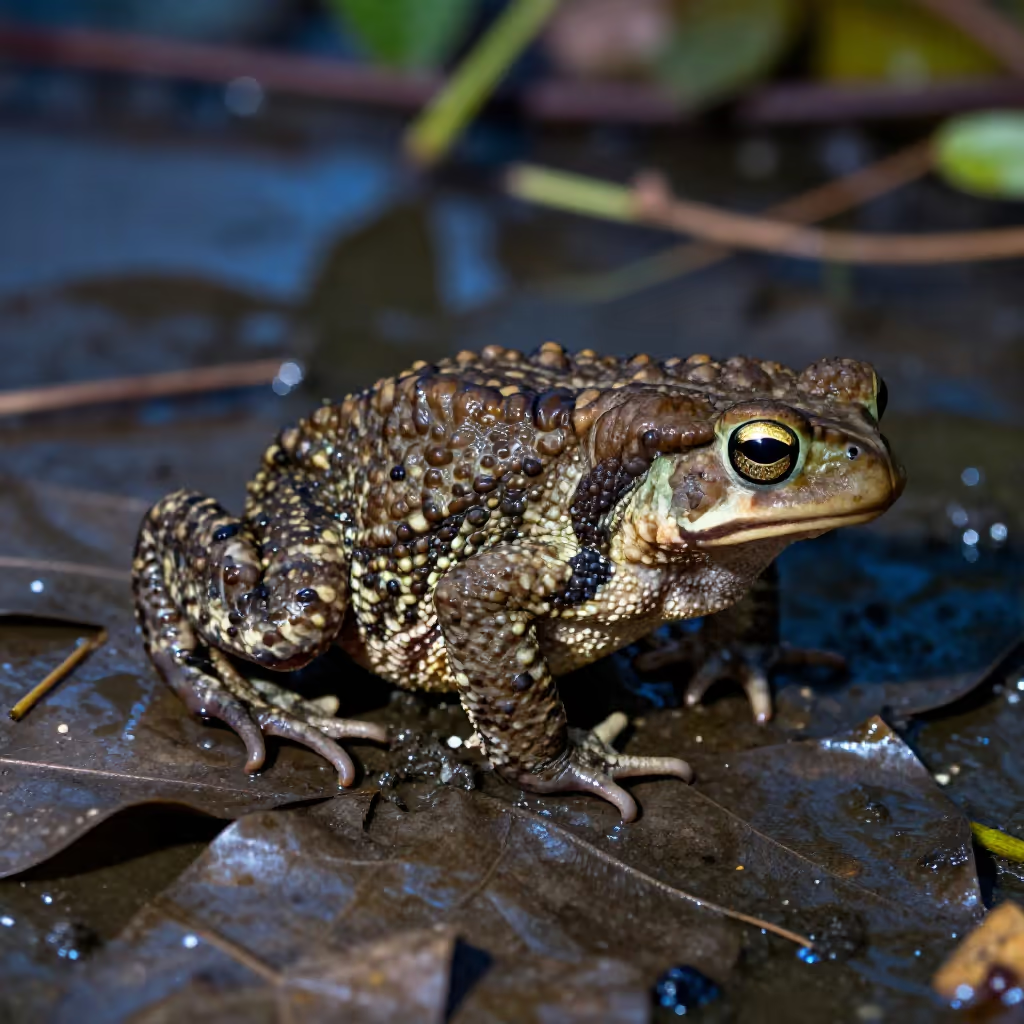
An amphibian that resembles a frog but usually has drier, warty skin and tends to move by walking or with short hops.
example
Nach dem Regen saß eine dicke Kröte auf dem feuchten Gartenweg.
After the rain, a fat toad was sitting on the damp garden path.

Usage tips
Distinguishing the meanings
You can easily recognize the meaning from context. The animal meaning often stands on its own. The idiom 'eine Kröte schlucken' (to swallow a bitter pill) is a fixed unit. The colloquial meaning 'Geld' (money) is almost always used in the plural ('Kröten').
EXAMPLE
Im Teich hinter dem Haus leben viele Kröten.
Many toads live in the pond behind the house.
Fixed expression
The idiom 'eine Kröte schlucken' (to swallow a bitter pill) is a fixed unit. It means that you have to accept something very unpleasant in order to achieve a goal. The verb 'schlucken' (to swallow) is a fixed part of it.
EXAMPLE
Er musste die Kröte schlucken und sich für einen Fehler entschuldigen, den er nicht gemacht hatte.
He had to swallow the bitter pill and apologize for a mistake he hadn't made.
Colloquial use
When 'Kröten' (cash/money) stands for money, it is always colloquial. This meaning is used almost exclusively in the plural. People say 'die nötigen Kröten haben' (to have the necessary cash) or 'ein paar Kröten verdienen' (to earn a few bucks).
EXAMPLE
Für die Reparatur fehlen mir im Moment die nötigen Kröten.
At the moment, I'm missing the necessary cash for the repair.
Compare with
synonym
Kröte vs Geld
money
'das Geld' and 'die Kröte' can both mean money. 'Geld' is the normal and neutral word for a means of payment or financial assets. 'Kröte' is used colloquially in this meaning, usually in the plural as 'Kröten'. It sounds casual and fits better in conversations with friends, not in formal situations. In official or serious contexts, 'Geld' is always more natural.
Kröte
Für das Konzert habe ich fast meine letzten Kröten ausgegeben.
I spent almost my last bit of cash on the concert.
Geld
Für die Reise lege ich jeden Monat etwas Geld zurück.