


sich krümmen
to bend over
To bend or twist one's own body, often as a reaction to pain, laughter, or discomfort.
EXAMPLE
Er krümmte sich vor Schmerzen am Boden.
He bent over in pain on the floor.
to bend / to curve
Loading your saved state.
to bend over
To bend or twist one's own body, often as a reaction to pain, laughter, or discomfort.
Er krümmte sich vor Schmerzen am Boden.
He bent over in pain on the floor.
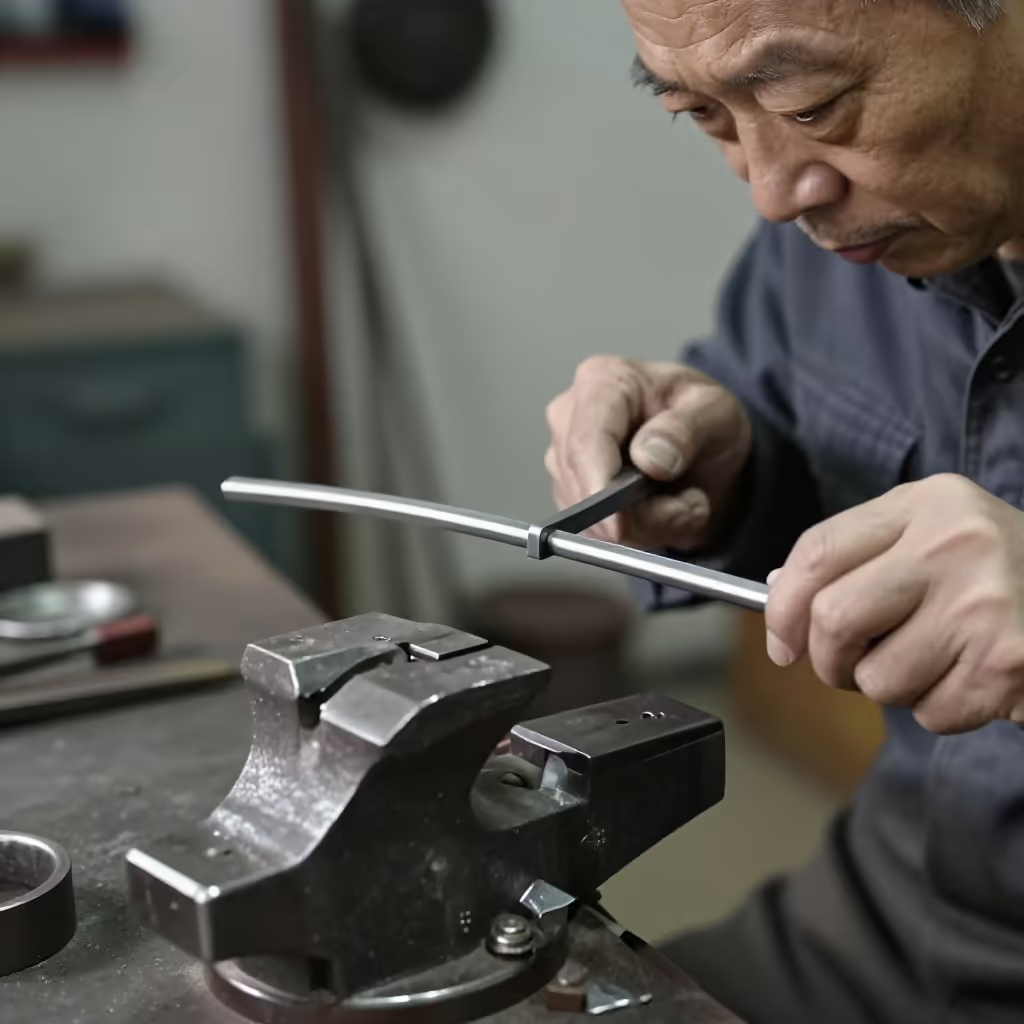
to bend
To make something straight take on a bent or curved shape.
Der starke Wind hat den jungen Baum gekrümmt.
The strong wind bent the young tree.

to warp
For an object or material to deform and become bent due to external influences such as heat or moisture.
Das Holzbrett hat sich in der Sonne gekrümmt.
The wooden board warped in the sun.

to not harm a hair on someone's head
To cause someone no harm at all or not injure them.
Ich verspreche dir, solange du bei mir bist, wird dir niemand ein Haar krümmen.
I promise you, as long as you're with me, no one will harm a hair on your head.
The verb 'krümmen' (to bend / to curve) is derived directly from the adjective 'krumm' (crooked / bent). It describes the action of making something crooked or becoming crooked.
Ein krummer Ast lag auf dem Weg.
A crooked branch was lying on the path.
This verb is often used reflexively ('sich krümmen') when the subject bends itself. If it is used transitively ('etwas krümmen'), the subject bends another object.
Die Katze krümmte sich genüsslich in der Sonne.
The cat stretched and curved its body contentedly in the sun.
The reflexive form 'sich krümmen' refers to living beings when it is about reactions such as pain or laughter. When it refers to objects, it describes deformation caused by external influences such as heat or pressure.
Das Kind krümmte sich vor Lachen über den Witz.
The child bent over with laughter at the joke.
When a person bends over, it often happens as a reaction to a strong feeling. Typical triggers are expressed with the preposition 'vor' + dative: 'sich vor Schmerzen krümmen' (to bend over in pain) or 'sich vor Lachen krümmen' (to double over with laughter).
Nach dem Sturz krümmte sich der Radfahrer vor Schmerzen.
After the fall, the cyclist bent over in pain.
The expression 'jemandem kein Haar krümmen' (to not harm a hair on someone's head) is a fixed unit. The person being protected is always in the dative. The expression is used almost exclusively in the negative form.
Keine Sorge, der Hund ist ganz lieb, der wird dir kein Haar krümmen.
Don't worry, the dog is very sweet; he won't harm a hair on your head.
to bend
Sich beugen and sich krümmen can both describe a bent body posture. Sich beugen emphasizes the directed movement of the upper body forward or downward; sich krümmen emphasizes the curved shape of the whole body, often as a reaction to pain or discomfort.
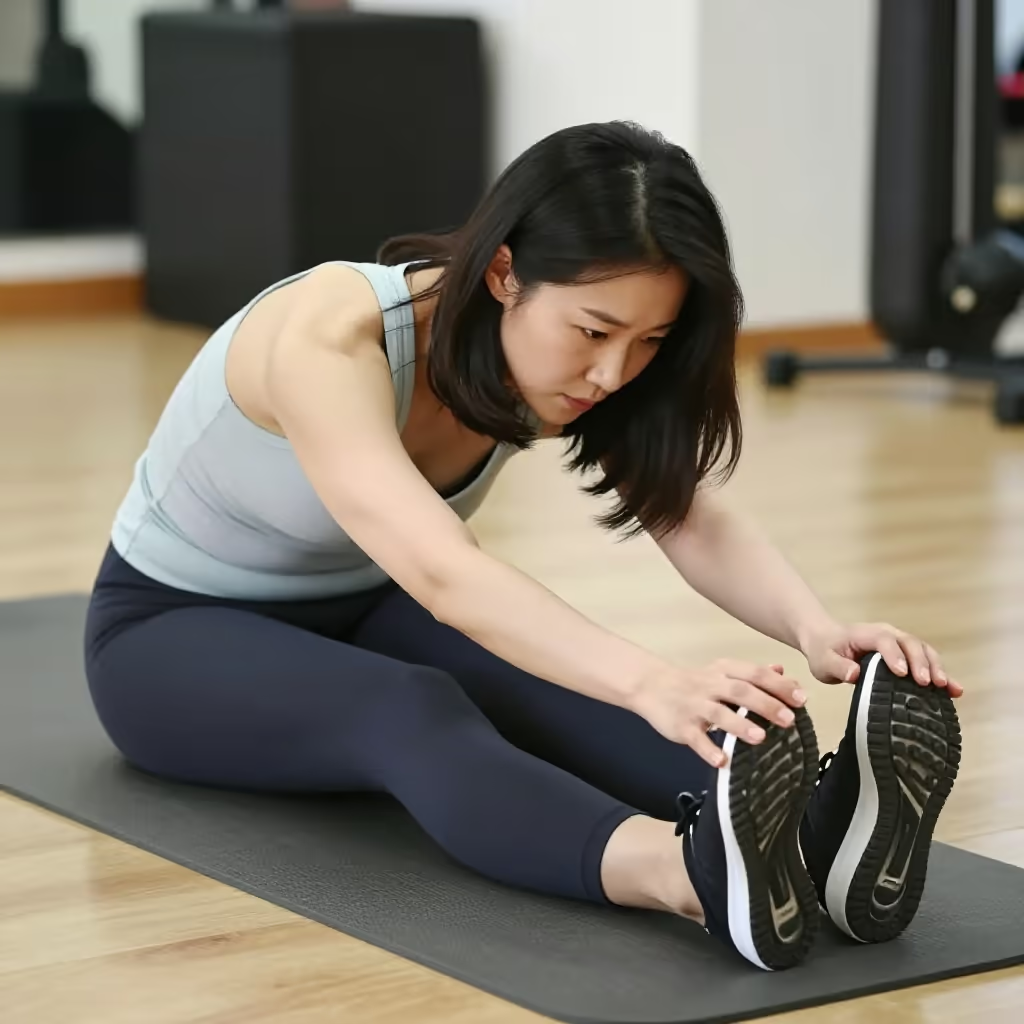
Wegen der starken Bauchschmerzen krümmt er seinen ganzen Körper.
Because of the severe stomach pain, he bends his whole body over.
Um durch die niedrige Tür zu gehen, beugt er den Oberkörper nach vorn.
To get through the low doorway, he bends his upper body forward.