

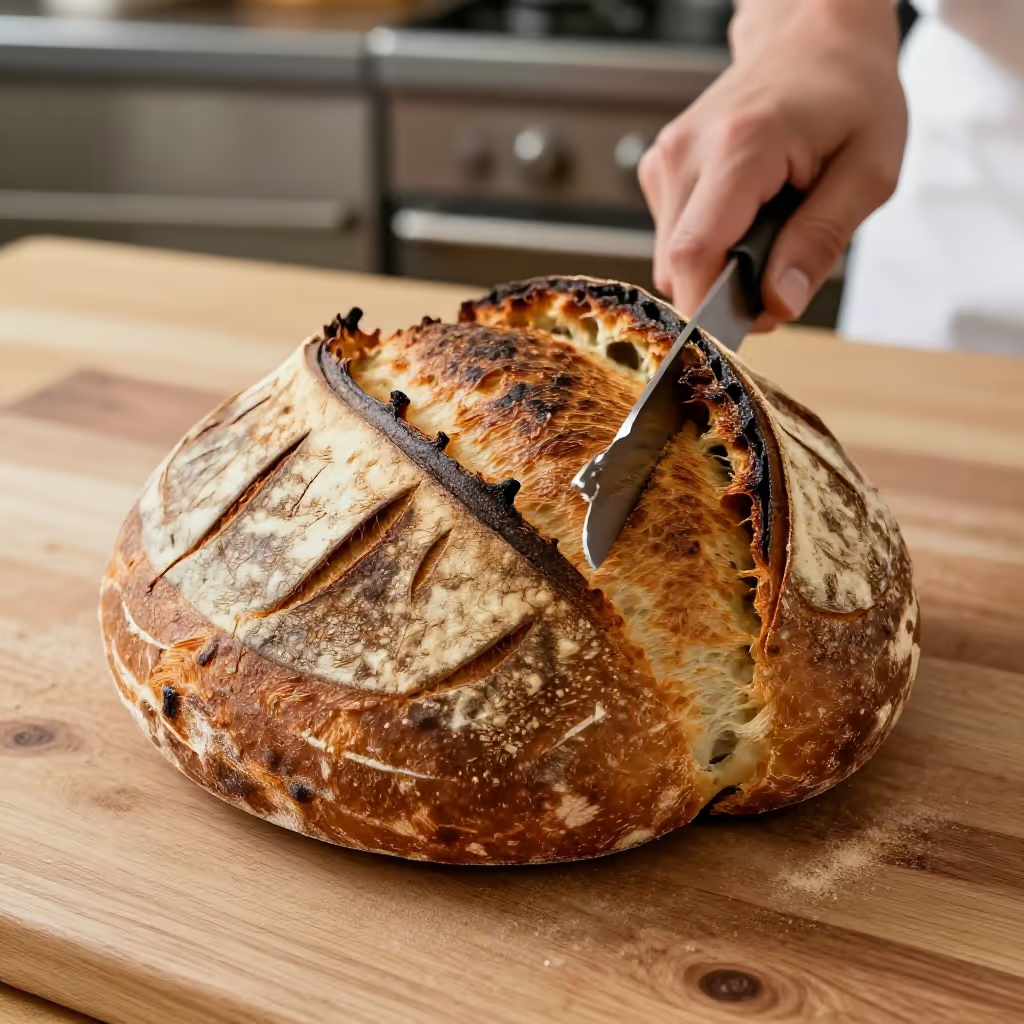
die Kruste
crust
The hard, often crispy outer layer of bread or other baked goods that forms during baking.
EXAMPLE
Die Kruste dieses frischen Brotes ist besonders lecker.
The crust of this fresh bread is especially delicious.
crust
Loading your saved state.
crust
The hard, often crispy outer layer of bread or other baked goods that forms during baking.
Die Kruste dieses frischen Brotes ist besonders lecker.
The crust of this fresh bread is especially delicious.
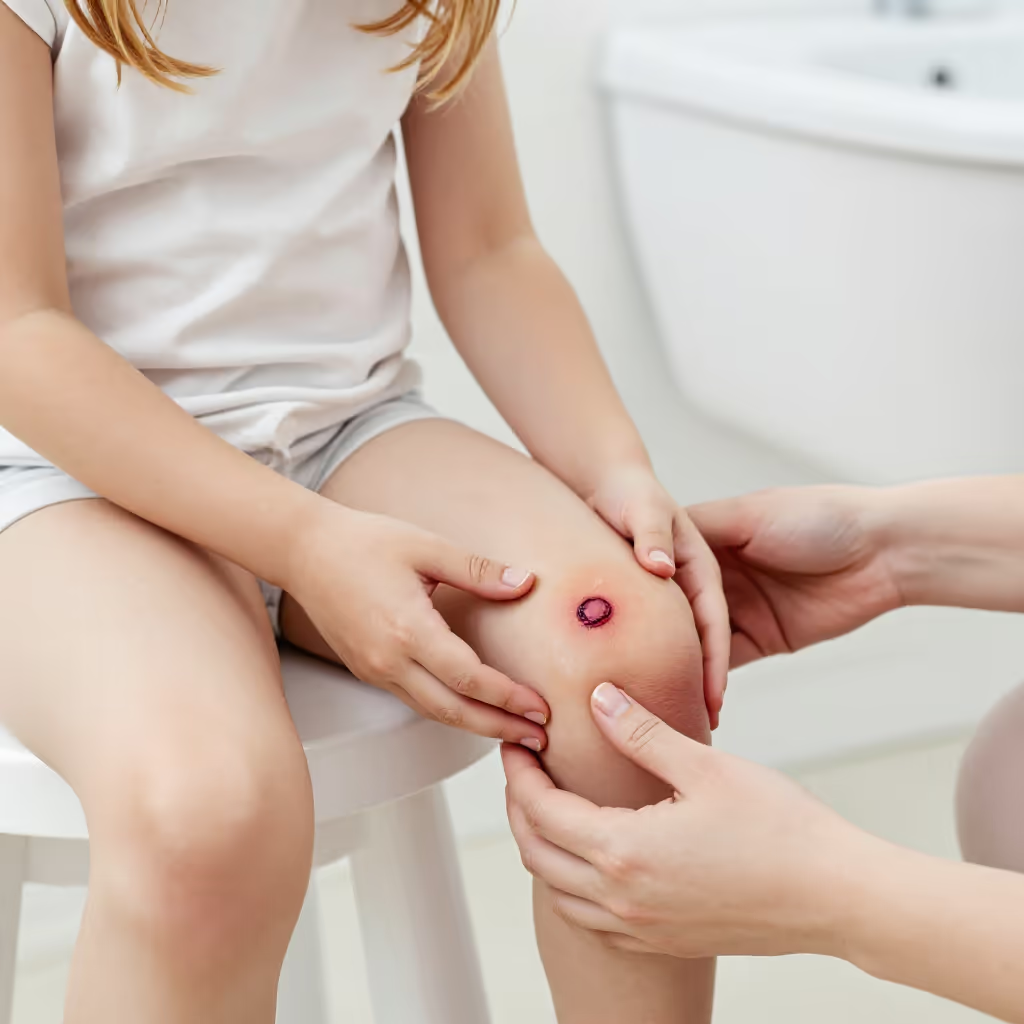
scab
A hard layer of clotted blood and wound fluid that forms over a healing wound.
Zupf nicht an der Kruste, sonst gibt es eine Narbe.
Don't pick at the scab, or you'll get a scar.
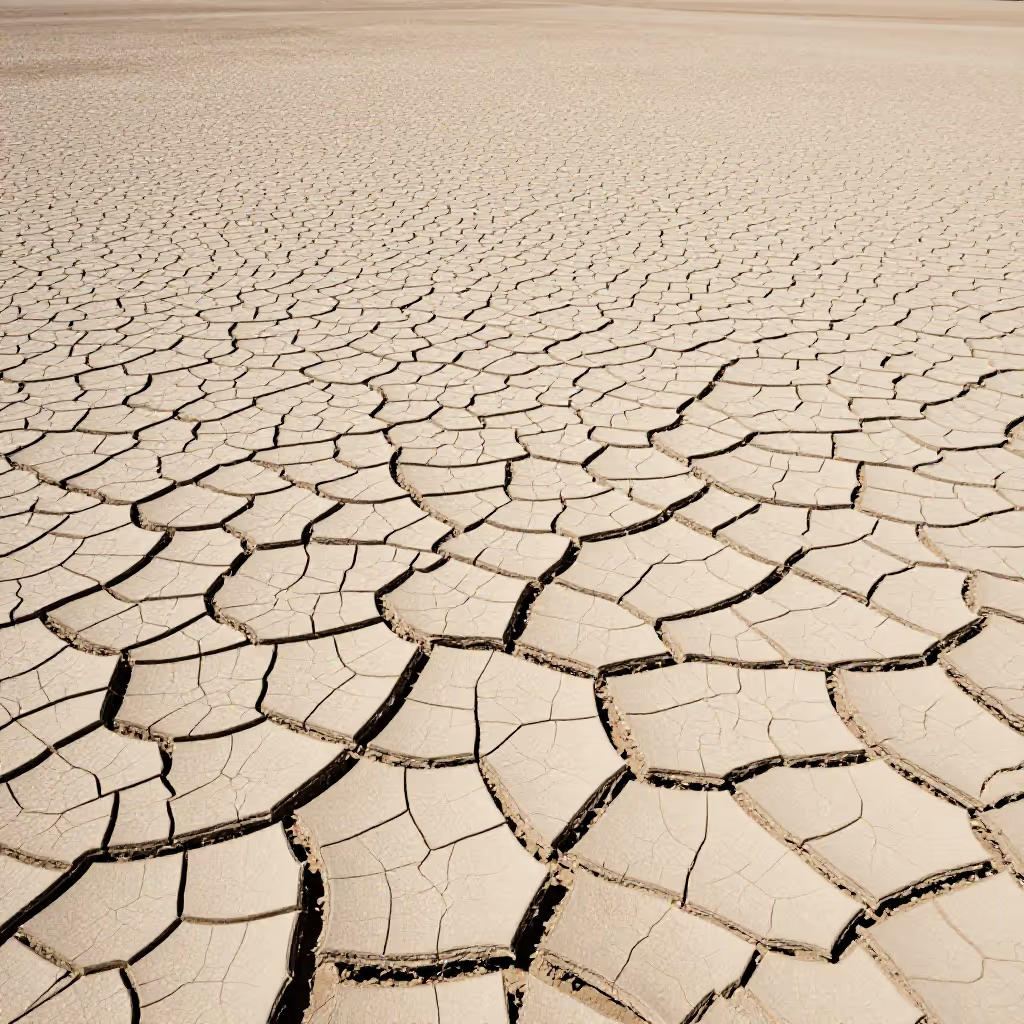
crust
A firm, hard surface layer on something, for example on the Earth (Earth's crust) or on a liquid.
Nach dem Regen bildete sich eine harte Kruste auf dem trockenen Ackerboden.
After the rain, a hard crust formed on the dry farmland.
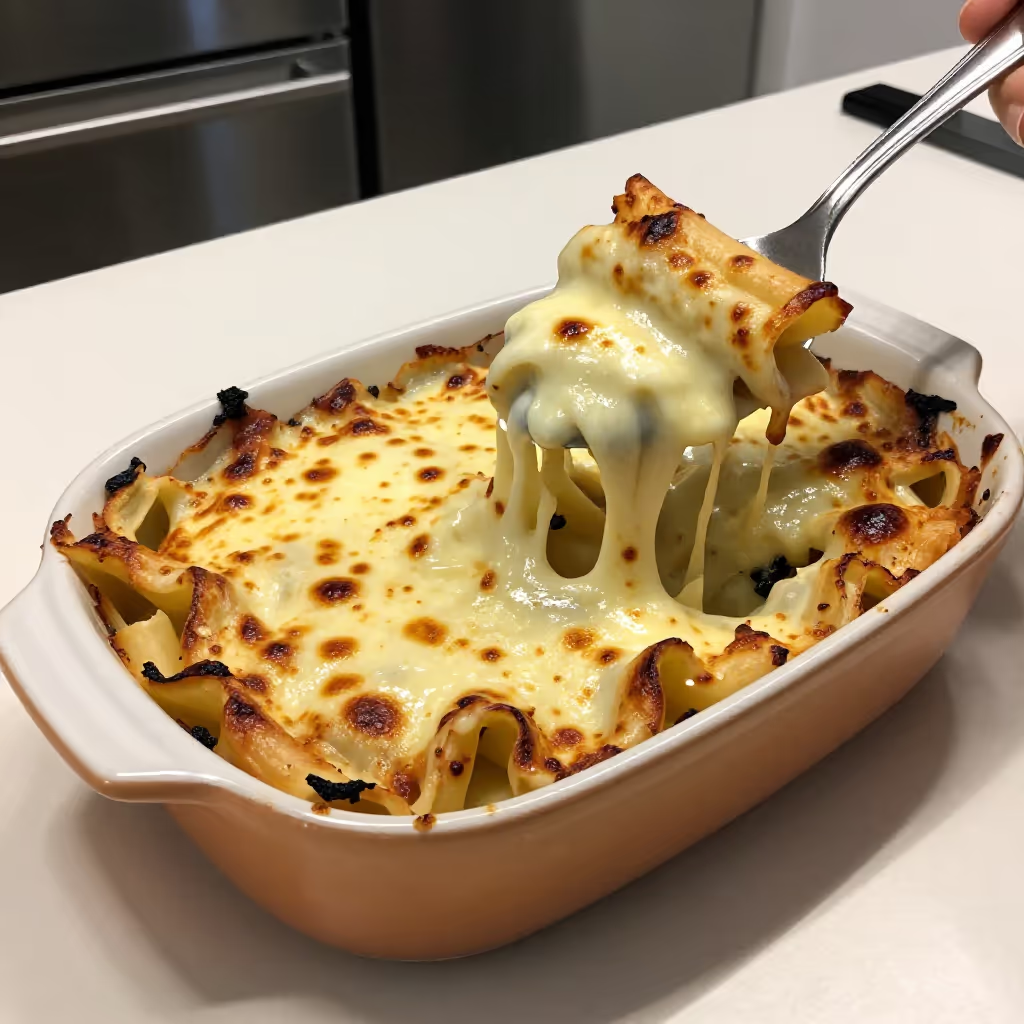
crust
The browned and crispy top layer of a baked dish, often made of cheese or breadcrumbs.
Der Kartoffelauflauf hat eine goldbraune Käse-Kruste.
The potato casserole has a golden-brown cheese crust.
The word 'Kruste' (crust/scab) has very different meanings. The context makes clear what is meant: at the bakery it is about bread, at the doctor's about a wound, and in geology about the Earth.
Die Kruste vom Brot ist besonders knusprig.
The crust of the bread is especially crispy.
When it is about bread or baked goods, the crust is often described with adjectives such as 'knusprig' (crispy), 'kross' (crusty/crispy), 'dunkel' (dark), or 'hart' (hard).
Ich mag Brot am liebsten, wenn es eine dicke, knusprige Kruste hat.
I like bread best when it has a thick, crispy crust.
In a medical context, a scab forms on a wound. A typical warning is not to scratch or pick at the scab, as this interferes with healing.
Der Arzt sagte, ich solle die Kruste auf dem Knie in Ruhe lassen.
The doctor said I should leave the scab on my knee alone.
In geography and geology, 'die Erdkruste' (the Earth's crust) is a fixed term for the outermost solid layer of our planet.
Die Erdkruste ist unter den Ozeanen dünner als unter den Kontinenten.
The Earth's crust is thinner under the oceans than under the continents.
With baked dishes such as casseroles, people often speak of a 'Käsekruste' (cheese crust) or a 'goldbraune Kruste' (golden-brown crust). For many people, it is the tastiest part of the meal.
Für eine perfekte Kruste streue ich am Ende geriebenen Parmesan über die Lasagne.
For a perfect crust, I sprinkle grated Parmesan over the lasagna at the end.
skin
On a liquid, Haut can refer to a thin, continuous layer. Kruste is appropriate when the surface layer has clearly become firm, hard, or brittle. The key factor is therefore mainly the nature of the layer.

Auf der alten Farbe hat sich eine harte Kruste gebildet.
A hard crust has formed on the old paint.
Auf der warmen Milch hat sich eine dünne Haut gebildet.
A thin skin has formed on the warm milk.