

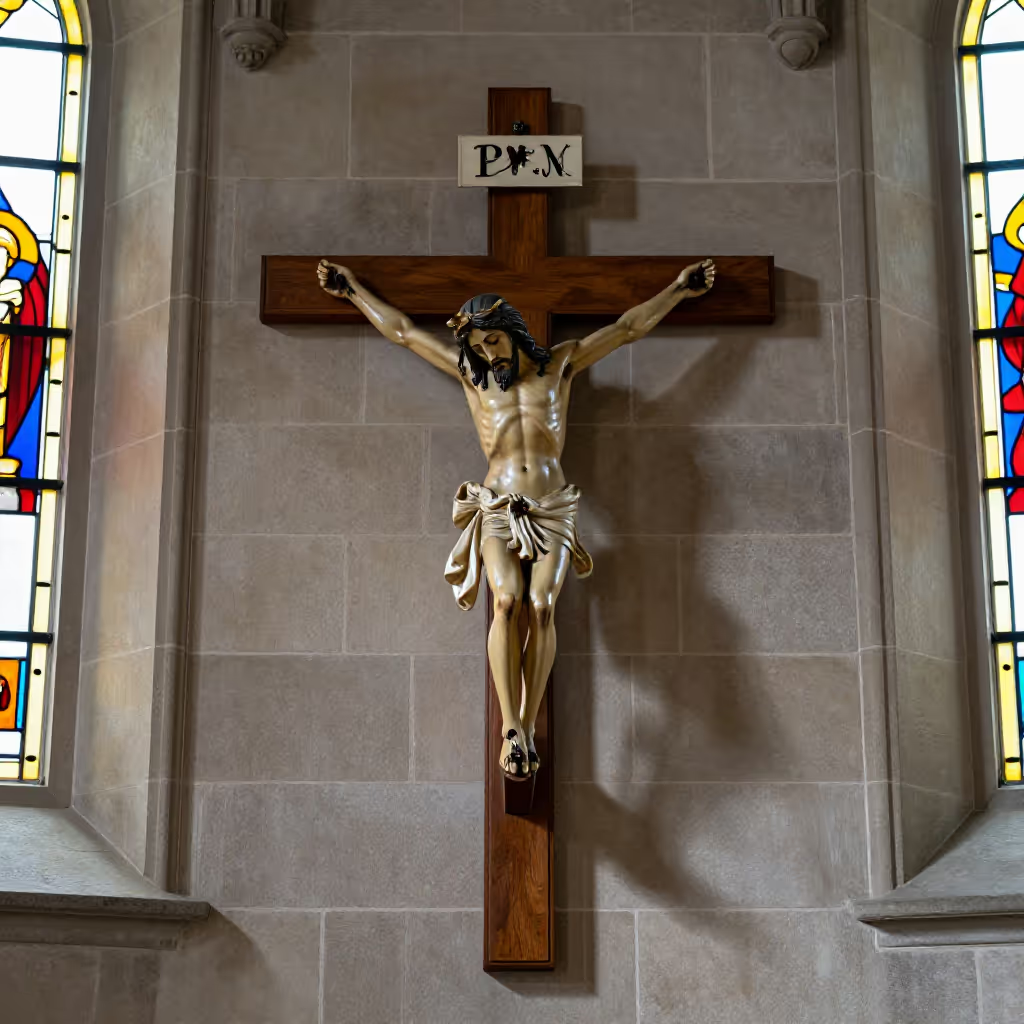
A cross to which the figure of the crucified Jesus Christ is attached. It is a central symbol of Christianity.
example
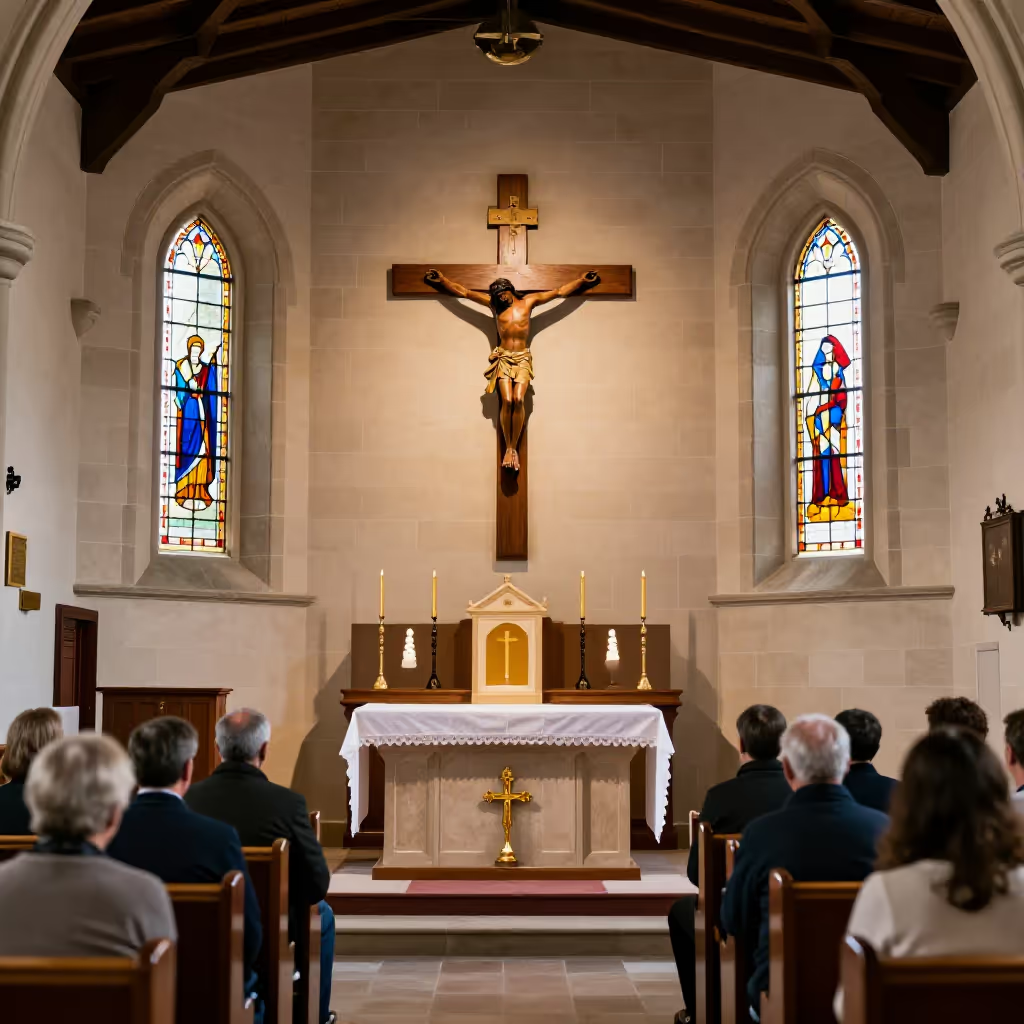
In vielen katholischen Kirchen hängt ein großes Kruzifix über dem Altar.
In many Catholic churches, a large crucifix hangs above the altar.
Usage tips
Word structure
The word 'Kruzifix' (crucifix) comes from Latin: 'cruci fixus' means 'fastened to the cross'. So the name directly describes what it is: a cross with the figure of the crucified Christ.
EXAMPLE
Das alte Kruzifix wurde sorgfältig restauriert.
The old crucifix was carefully restored.
Typical collocations
A crucifix is an object that is often placed somewhere or used as jewelry. Typical verbs are 'an der Wand hängen' (to hang on the wall), 'auf dem Altar stehen' (to stand on the altar), or 'als Kette tragen' (to wear as a necklace).
EXAMPLE
Über ihrem Bett hing ein kleines Kruzifix aus Holz.
A small wooden crucifix hung above her bed.
Cultural context
The crucifix is a central symbol especially in the Catholic and Orthodox churches. It can be found in churches, but also in schools, hospitals, and private homes in regions shaped by Catholicism.
EXAMPLE
In bayerischen Klassenzimmern hängt traditionell ein Kruzifix.
Traditionally, a crucifix hangs in Bavarian classrooms.
Compare with
near_synonym · confusable
Kruzifix vs Kreuz
cross
'das Kreuz' and 'das Kruzifix' both belong to the Christian context. 'das Kreuz' is the general symbol made of two lines and can also be used without a figure of Jesus. 'das Kruzifix' is more specific: it is a cross with the figure of the crucified Jesus on it. The words can be confused because every crucifix is also a cross. But not every cross is a crucifix. If the figure of Jesus is important, 'Kruzifix' is the more precise word.
Kruzifix
In der kleinen Kirche steht ein altes Kruzifix neben dem Altar.
In the small church, there is an old crucifix next to the altar.