

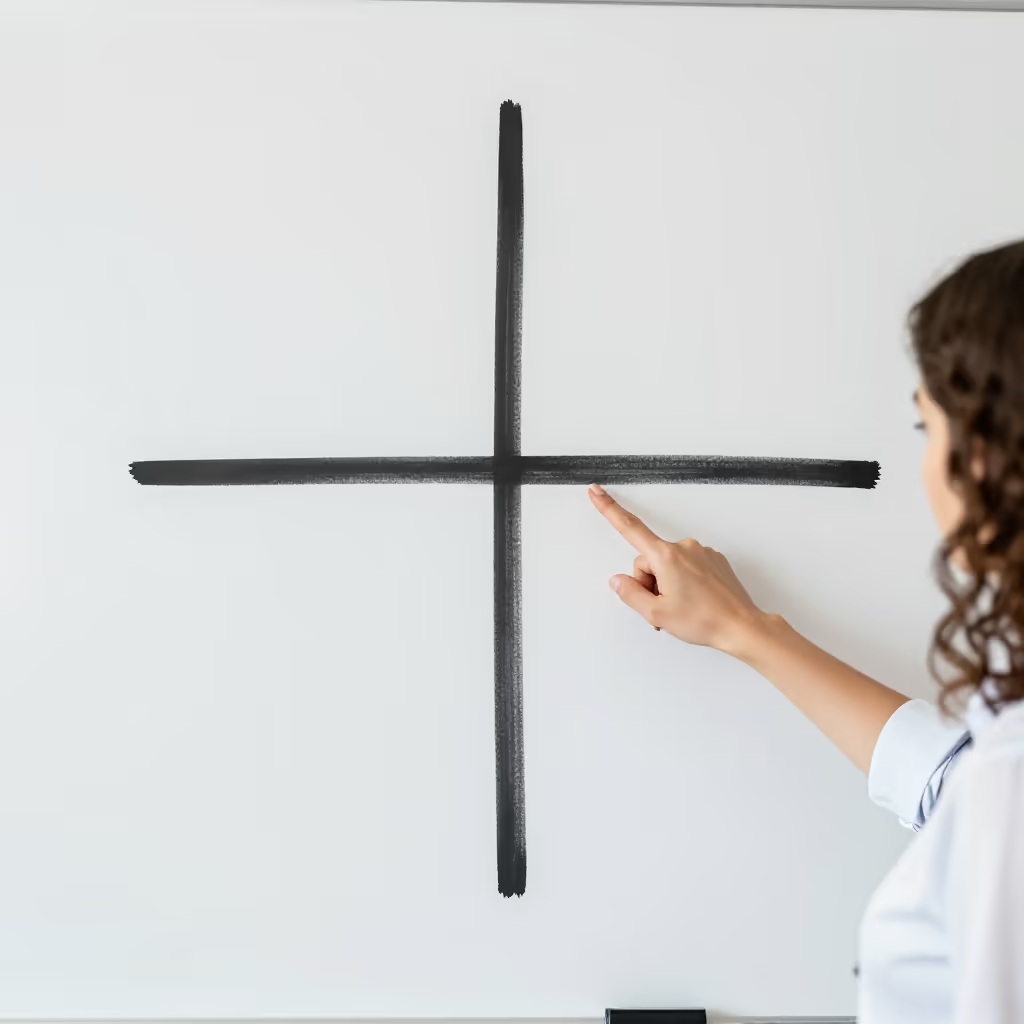
das Kreuz
cross
A geometric figure or sign consisting of two intersecting lines, usually at a right angle.
EXAMPLE
Bitte machen Sie an der gewünschten Stelle ein Kreuz.
Please put a cross in the desired place.
cross
Loading your saved state.
cross
A geometric figure or sign consisting of two intersecting lines, usually at a right angle.
Bitte machen Sie an der gewünschten Stelle ein Kreuz.
Please put a cross in the desired place.
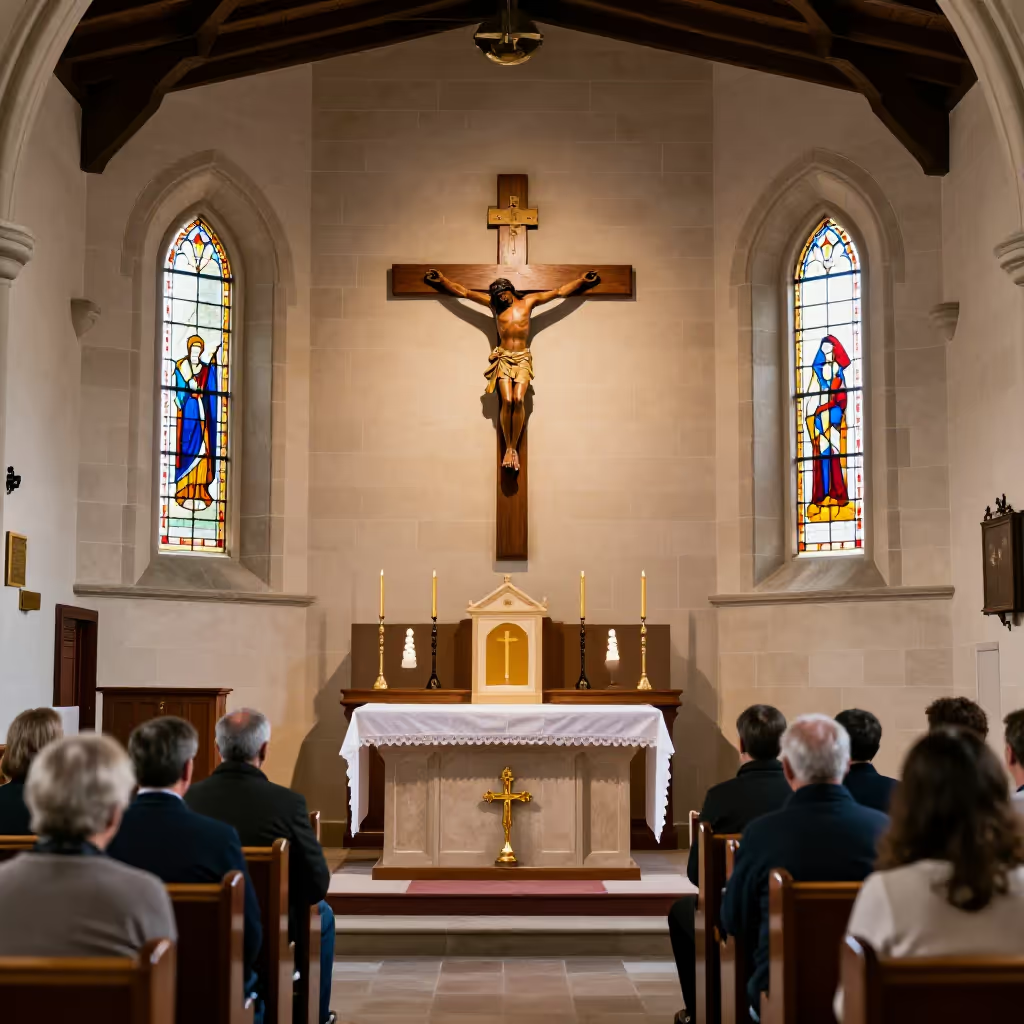
cross
The central symbol of Christianity, recalling the crucifixion of Jesus Christ.
Sie trug ein kleines goldenes Kreuz an einer Kette um den Hals.
She wore a small golden cross on a chain around her neck.
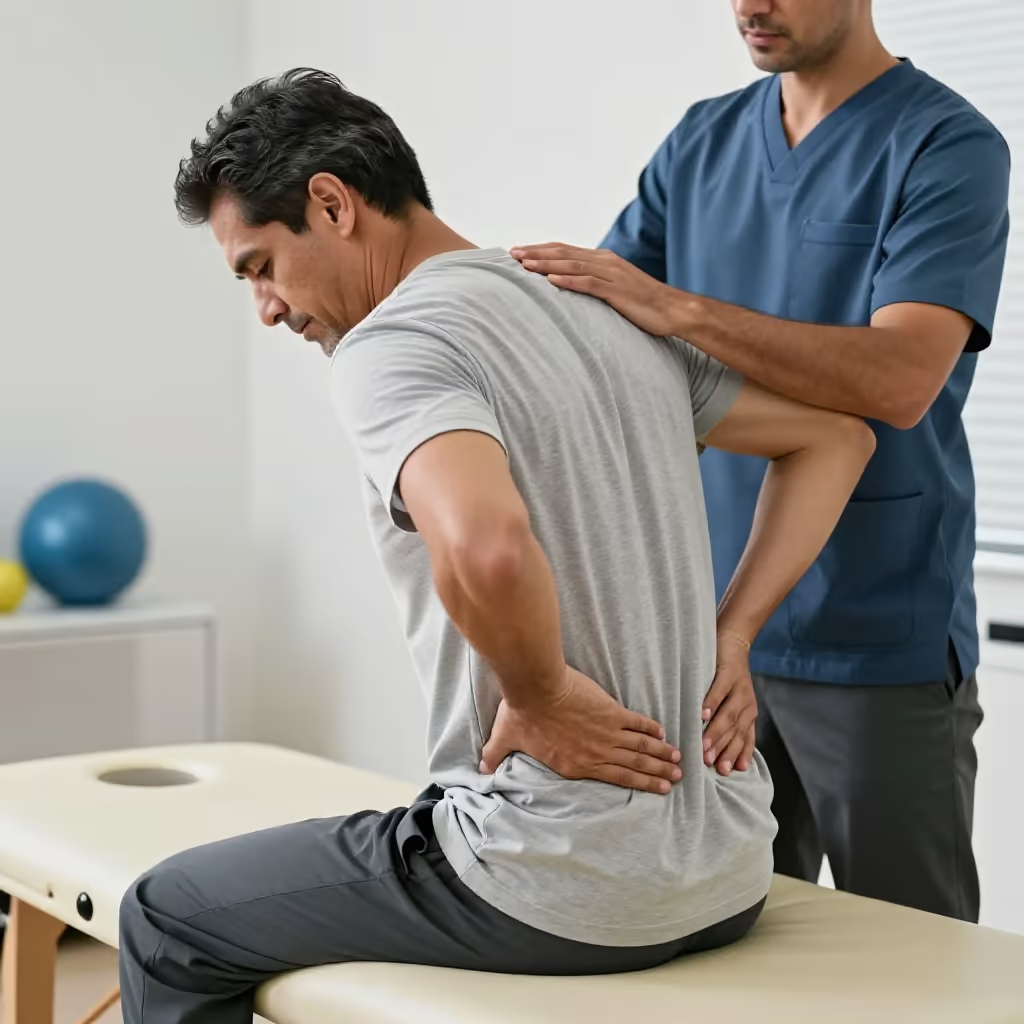
lower back
The lower area of a person's back, often in connection with pain or strain.
Vom vielen Sitzen tut mir das Kreuz weh.
My lower back hurts from sitting so much.

to bear one's cross
To have to endure a heavy burden, suffering, or hardship.
Seit dem Unfall hat er wirklich sein Kreuz zu tragen.
Since the accident, he has really had to bear his cross.
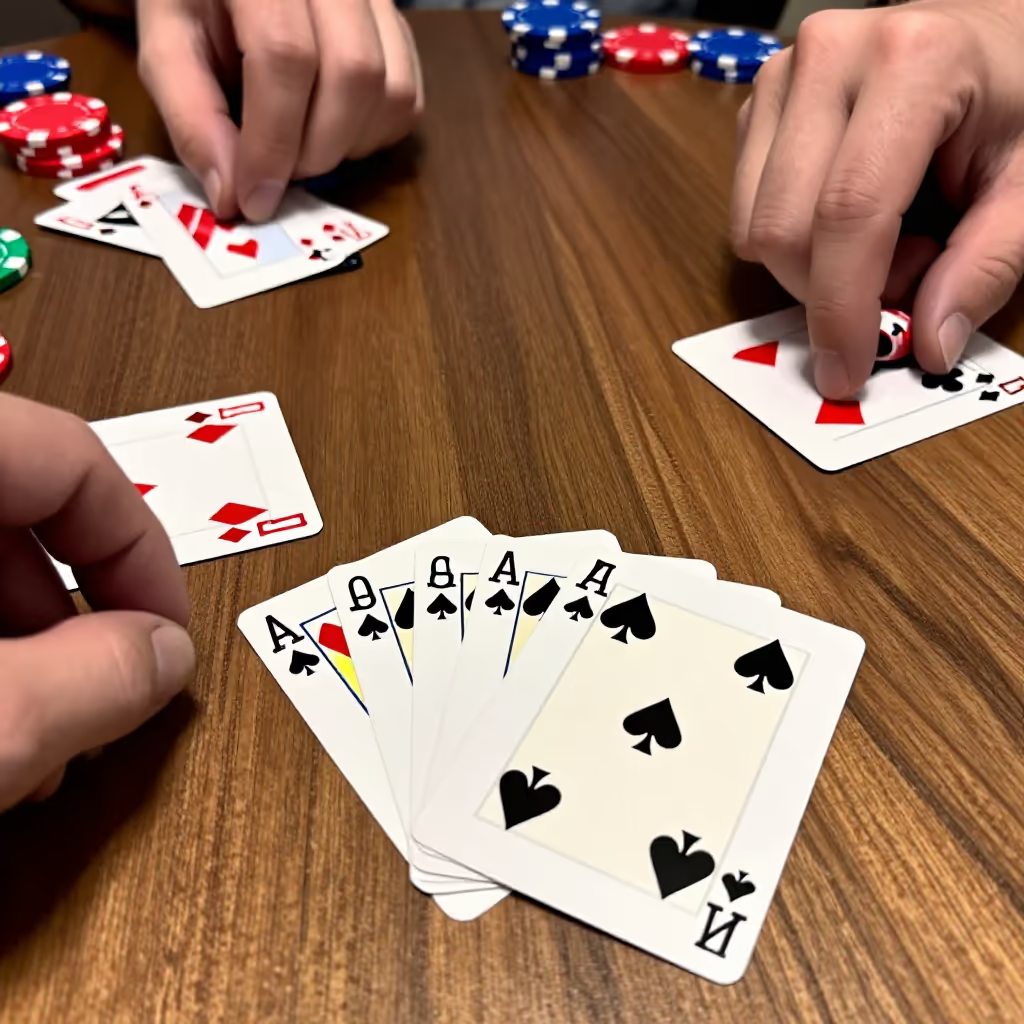
clubs
One of the four suits in the German and French card decks; it corresponds to clubs.
Ich habe noch den Kreuz-König auf der Hand.
I still have the king of clubs in my hand.
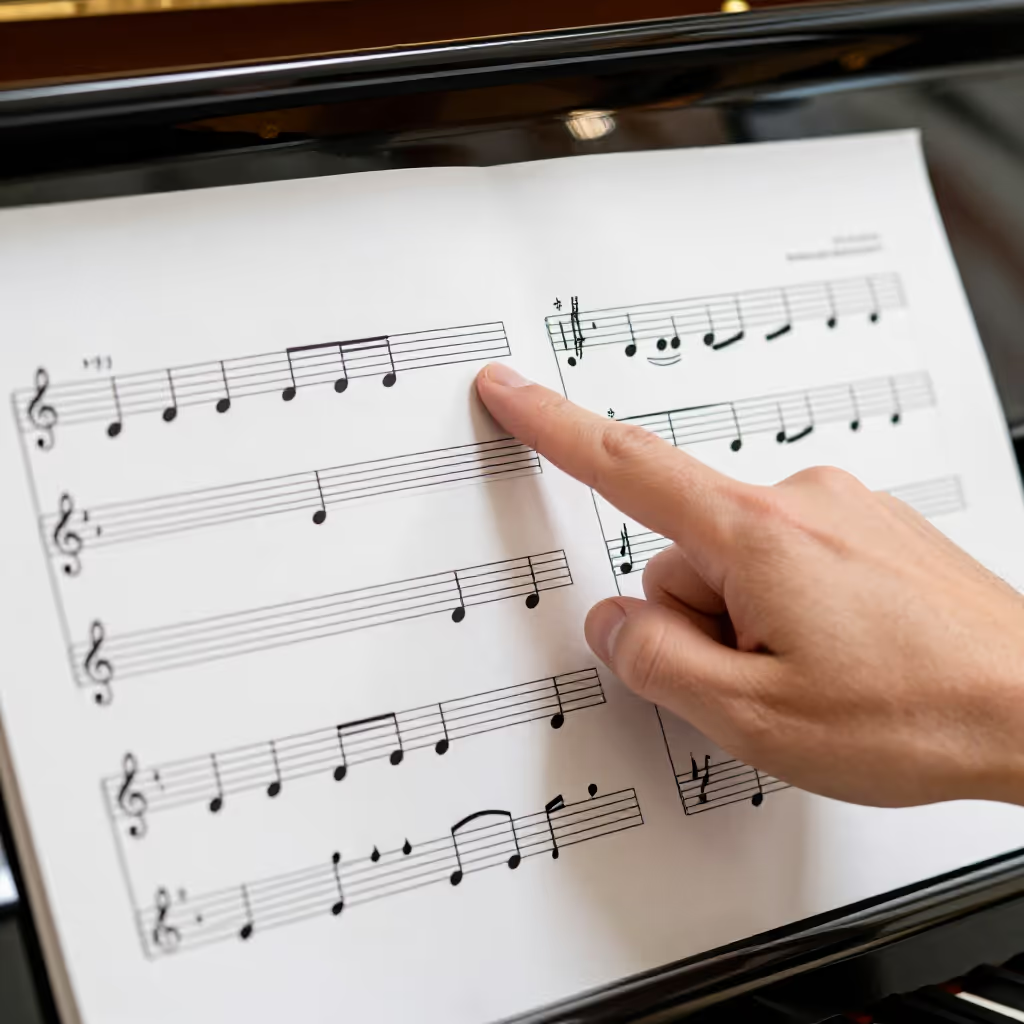
sharp
In music, the accidental (♯) that indicates that a note is raised by a semitone.
Die Tonart A-Dur hat drei Kreuze als Vorzeichen.
The key of A major has three sharps as accidentals.
'Das Kreuz' (cross) is related to the verb 'kreuzen' (to cross) and the noun 'die Kreuzung' (intersection). All of these words are based on the idea of intersecting lines.
Unsere Wege haben sich nach der Schule leider nie wieder gekreuzt.
Unfortunately, our paths never crossed again after school.
The many meanings of 'Kreuz' (cross) can be recognized well from context. If it is about religion, the symbol is meant. With pain, it means the back. On a form, it is a mark to tick or check.
Er hat seit Wochen Schmerzen im Kreuz.
He has had pain in his lower back for weeks.
The expression 'drei Kreuze machen' means that you are very happy and relieved when an unpleasant situation is finally over.
Als die Prüfung endlich vorbei war, habe ich drei Kreuze gemacht.
When the exam was finally over, I was incredibly relieved.
In the meaning 'Zeichen' (mark/sign), the verb 'machen' (to make) is almost always used. You 'macht ein Kreuz' on a ballot, in a form, or on a test.
Machen Sie bitte bei der richtigen Antwort ein Kreuz.
Please put a cross next to the correct answer.
When 'Kreuz' means the back, it is often connected with pain. Typical expressions are 'Probleme mit dem Kreuz haben' (to have back problems) or, colloquially, 'es im Kreuz haben' (to have lower back pain).
Seit ich im Garten gearbeitet habe, habe ich es im Kreuz.
Since I worked in the garden, I've had lower back pain.
In the expression 'sein Kreuz tragen' (to bear one's cross), the possessive pronoun is adapted to the person. So it is 'ich trage mein Kreuz' (I bear my cross), 'du trägst dein Kreuz' (you bear your cross), and so on.
Jeder Mensch muss im Leben sein eigenes Kreuz tragen.
Every person must bear their own cross in life.
back
Rücken refers to the entire rear part of the body between the neck and the buttocks. Kreuz, on the other hand, specifically refers to the lower back and is often used in connection with pain or strain. Rücken is suitable for general complaints, while Kreuz is usually used for discomfort in the lumbar region.

Nach der Gartenarbeit schmerzt besonders mein Kreuz.
After gardening, my lower back in particular hurts.
Nach der Gartenarbeit schmerzt mein Rücken vom Nacken bis zum Gesäß.
After gardening, my back hurts from my neck to my buttocks.