

kubanisch
Cuban
Relating to Cuba, its inhabitants, its culture, or language.
EXAMPLE
Er liebt kubanische Zigarren und hört gerne kubanische Musik.
He loves Cuban cigars and enjoys listening to Cuban music.
Cuban
Loading your saved state.
Cuban
Relating to Cuba, its inhabitants, its culture, or language.
Er liebt kubanische Zigarren und hört gerne kubanische Musik.
He loves Cuban cigars and enjoys listening to Cuban music.
The adjective 'kubanisch' (Cuban) is derived from the country name 'Kuba' (Cuba). The ending '-anisch' is a common way to form adjectives from geographical names.
Die amerikanische Botschaft befindet sich in Havanna.
The American embassy is located in Havana.
Adjectives derived from geographical names and ending in '-isch' are always written in lowercase in German. This is a common mistake among learners.
Wir essen heute Abend italienische Pizza.
We are eating Italian pizza tonight.
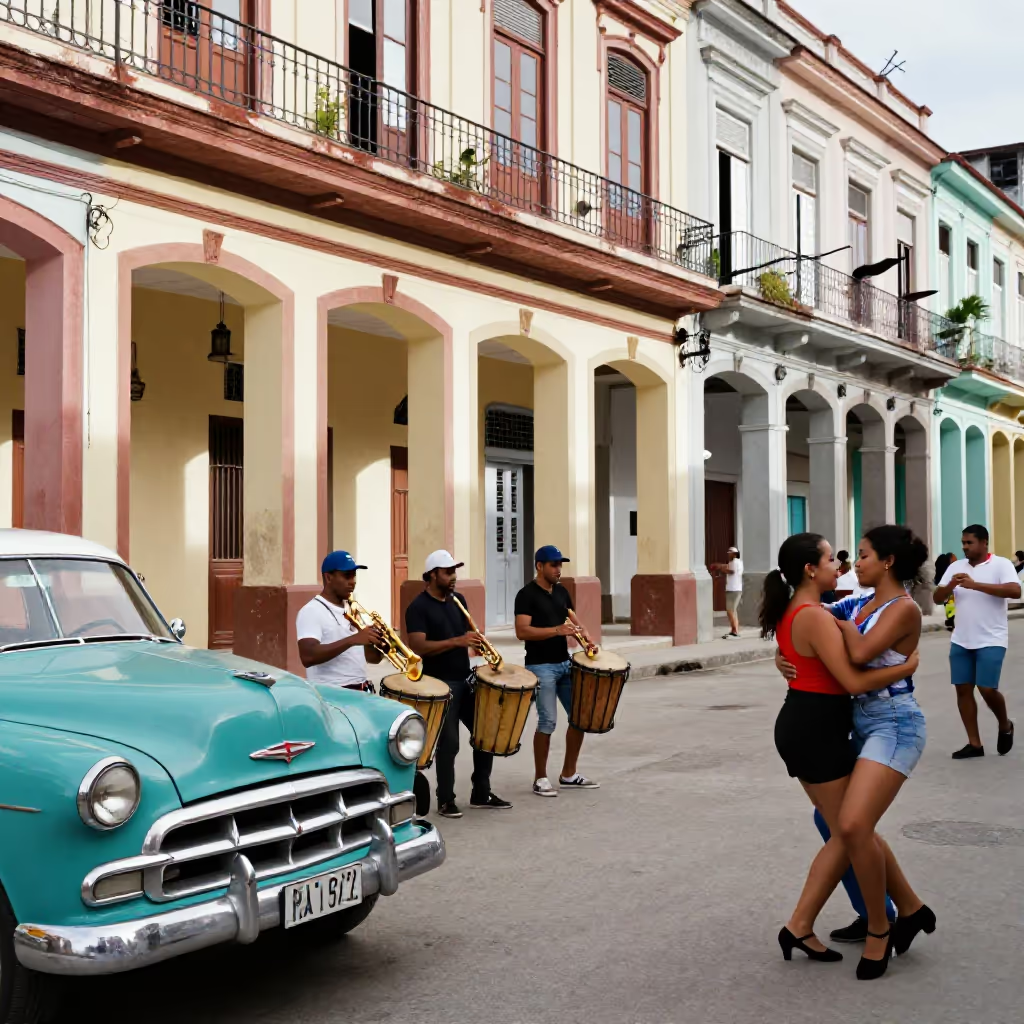
'Kubanisch' (Cuban) is often connected with culturally well-known products and terms. The most common combinations are 'kubanische Zigarren' (Cuban cigars), 'kubanischer Rum' (Cuban rum), and 'kubanische Musik' (Cuban music).
Im Urlaub haben wir jeden Abend kubanische Musik gehört.
On vacation, we listened to Cuban music every evening.