


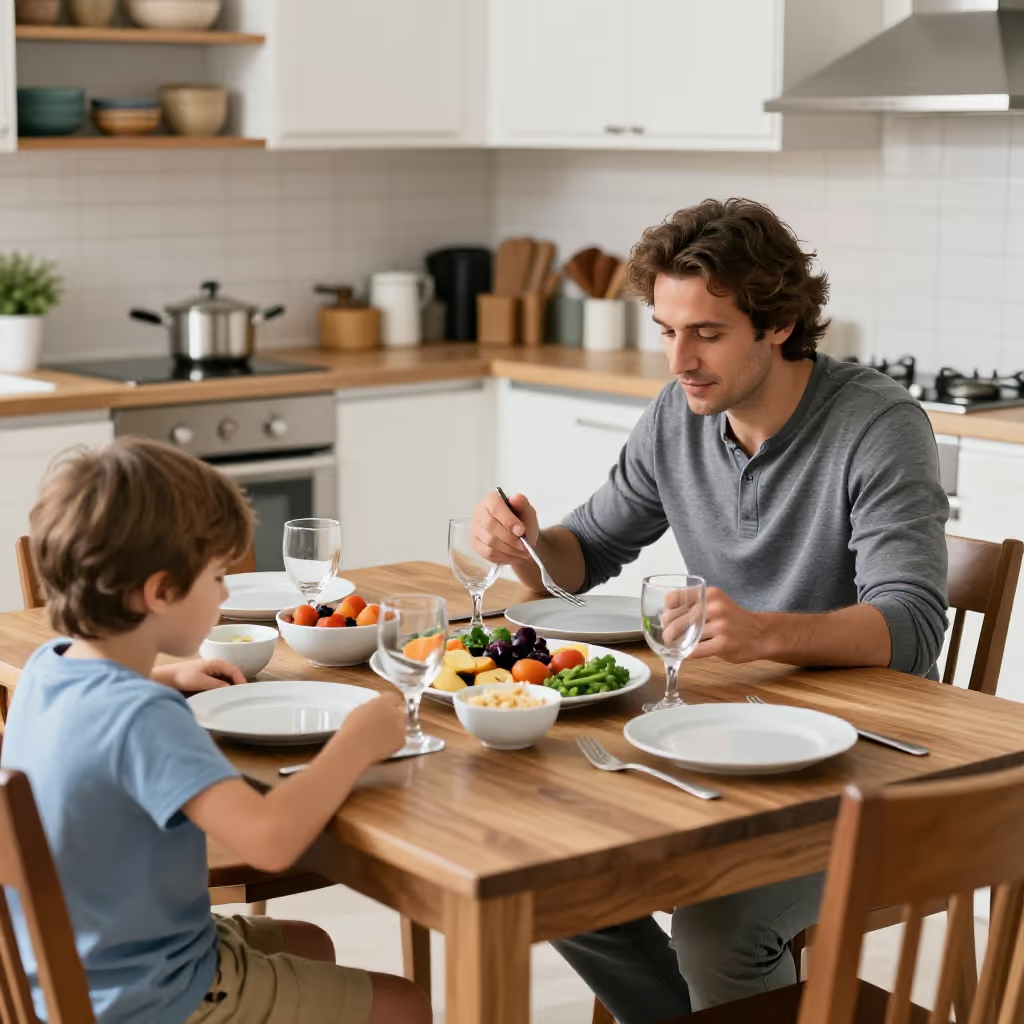
A table that stands in a kitchen and is used there for eating, preparing food, or as a general work surface.
example
Die ganze Familie versammelte sich zum Frühstück am Küchentisch.
The whole family gathered at the kitchen table for breakfast.
Usage tips
Compound word
This word is a clear example of a compound noun. It consists of 'Küche' (kitchen, in the form 'Küchen') and 'Tisch' (table). So the meaning is literally a table that stands in the kitchen.
EXAMPLE
Lass uns die Einkäufe auf dem Küchentisch abstellen.
Let's put the groceries on the kitchen table.
Place and direction
Pay attention to the prepositions and the case. When you are sitting at this table, you say 'am Küchentisch' (at the kitchen table, dative). When you move there, you say 'an den Küchentisch' (to the kitchen table, accusative).
EXAMPLE
Die Kinder machen ihre Hausaufgaben am Küchentisch.
The children do their homework at the kitchen table.
Typical activities
The kitchen table is often the central place in the home. Typical verbs used in this context are 'sitzen' (to sit), 'essen' (to eat), 'reden' (to talk), 'arbeiten' (to work), or 'spielen' (to play).
EXAMPLE
Wir haben bis spät in die Nacht am Küchentisch gesessen und geredet.
We sat and talked at the kitchen table until late into the night.
Compare with
near_synonym · confusable
Küchentisch vs Esstisch
dining table
'Esstisch' and 'Küchentisch' can both mean a table where people eat. The difference is the focus. An 'Esstisch' is mainly intended for meals; it can be in the dining room or in the kitchen. A 'Küchentisch' stands in the kitchen and can be used not only for eating, but also for cutting, preparing food, or putting things down. They can be confused when the table is in the kitchen and people also eat there. If the purpose is important, 'Esstisch' fits; if the location is important, 'Küchentisch' fits.