

die Kühle
coolness
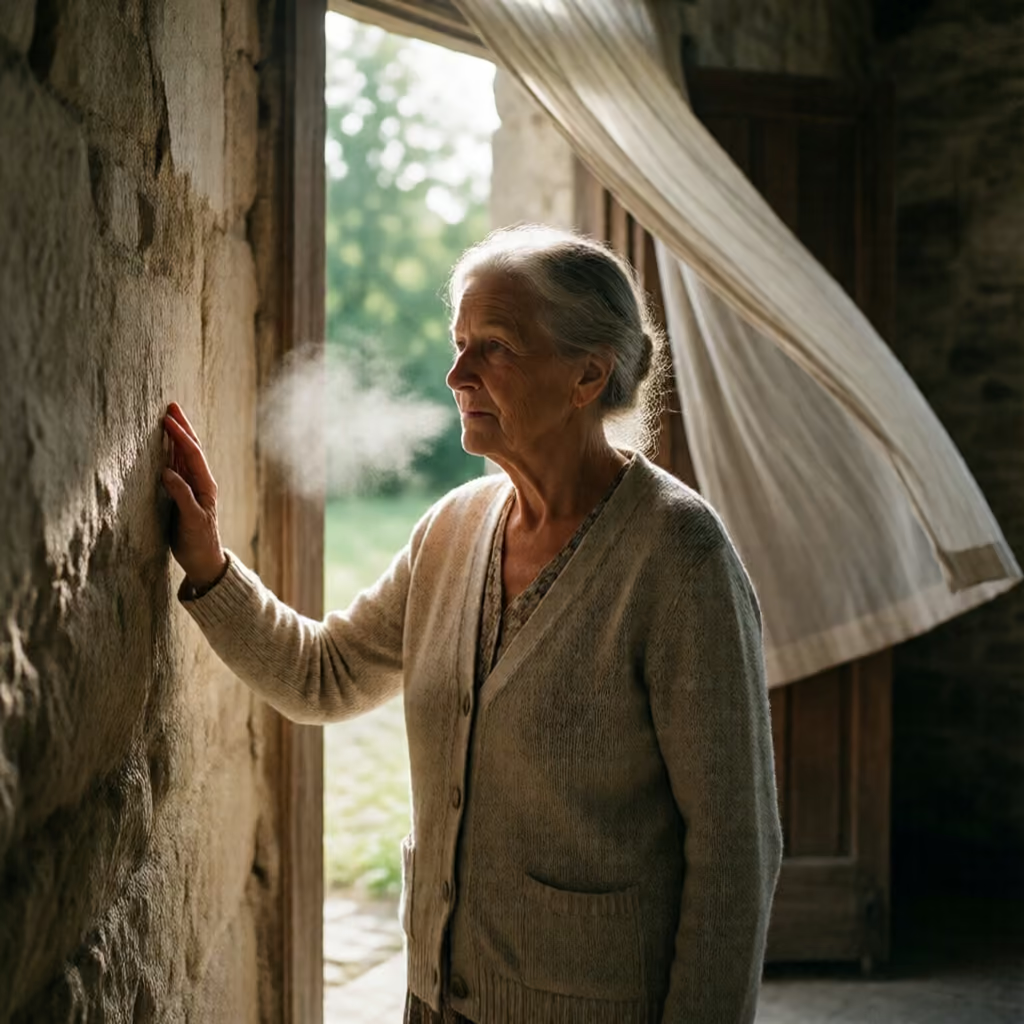
A slightly cold, often pleasantly fresh temperature of the air, a room, or an object.
EXAMPLE
In der alten Kirche herrschte eine angenehme Kühle.
There was a pleasant coolness in the old church.
coolness
die Kühle
Loading your saved state.
coolness
A slightly cold, often pleasantly fresh temperature of the air, a room, or an object.
In der alten Kirche herrschte eine angenehme Kühle.
There was a pleasant coolness in the old church.

coolness
An attitude or behavior that shows little emotion, warmth, or personal closeness.
Die Kühle, mit der sie seine Entschuldigung entgegennahm, verletzte ihn.
The coolness with which she accepted his apology hurt him.
| gender | feminine die |
|---|---|
| genitive | der Kühle |
| singular | plural | |
|---|---|---|
| nominative | die Kühle | – |
| accusative | die Kühle | – |
| dative | der Kühle | – |
| genitive | der Kühle | – |
The article changes with the case; it is shown in colour.
'Kühle' (coolness) is derived from the adjective 'kühl' (cool). This connection helps with both meanings: both the air and a person's behavior can be described as 'kühl' (cool).
Die Kühle im Keller war nach der langen Wanderung angenehm.
The coolness in the basement was pleasant after the long hike.
Seine Worte waren höflich, aber die Kühle in seiner Stimme war deutlich.
His words were polite, but the coolness in his voice was clear.
Common collocations include 'die Kühle genießen' (to enjoy the coolness) and 'in der Kühle sitzen' (to sit in the coolness). 'Des Morgens', 'des Abends', or 'der Nacht' can be used to indicate what time of day you experience the coolness.
Wir saßen auf dem Balkon und genossen die Kühle der Nacht.
We sat on the balcony and enjoyed the coolness of the night.
A typical pattern is 'mit Kühle auf etwas reagieren' (to react coolly to something). After 'mit', the dative is used; after 'auf', the accusative is used in this pattern.
Die Chefin reagierte mit spürbarer Kühle auf meinen Vorschlag.
The manager reacted with noticeable coolness to my suggestion.