

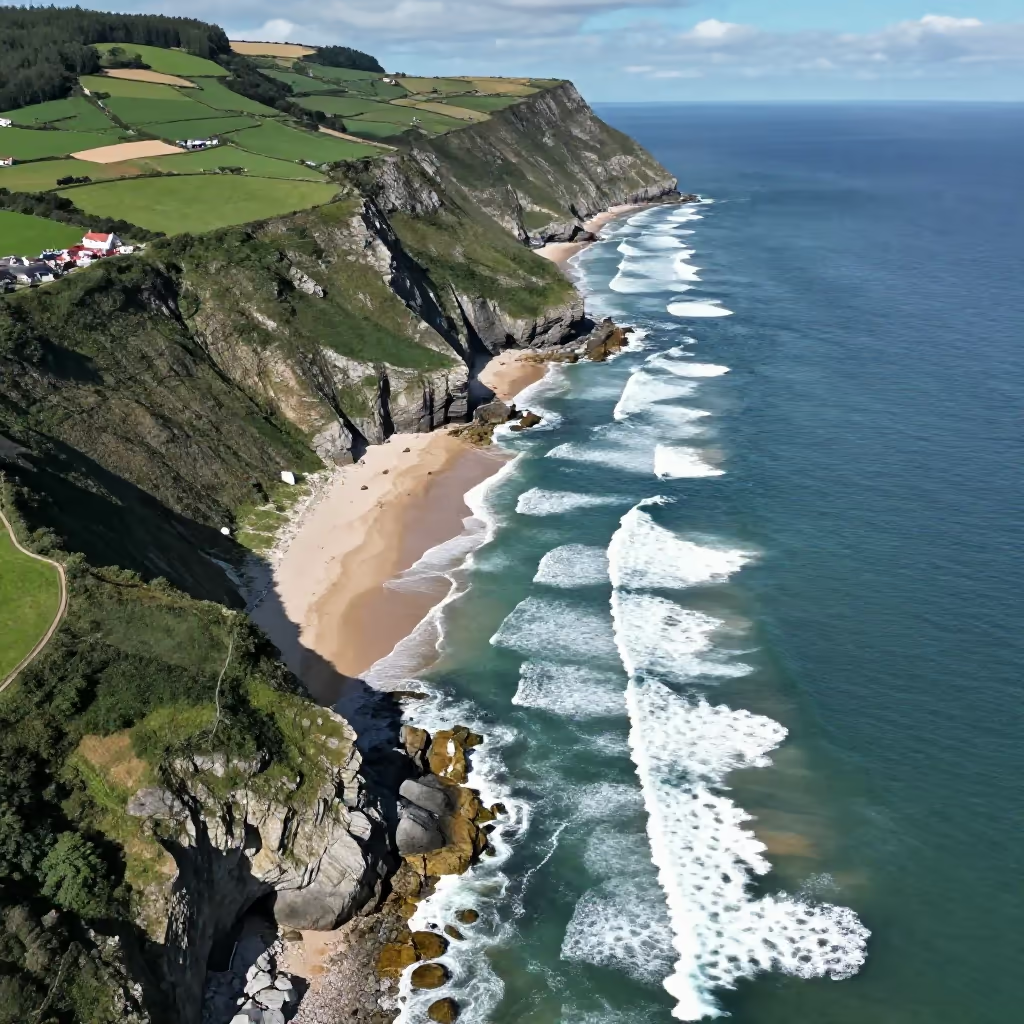
die Küste
coast
The strip of land where the mainland meets a sea, an ocean, or a very large lake.
EXAMPLE
Wir verbringen unseren Urlaub gerne an der Ostsee-Küste.
We like spending our vacation on the Baltic Sea coast.
coast
Loading your saved state.
coast
The strip of land where the mainland meets a sea, an ocean, or a very large lake.
Wir verbringen unseren Urlaub gerne an der Ostsee-Küste.
We like spending our vacation on the Baltic Sea coast.
With 'Küste' (coast), the preposition 'an' is used. To express movement, you use the accusative ('an die Küste fahren' — to go/travel to the coast). To describe a location, you use the dative ('an der Küste sein' — to be on/at the coast).
Nächstes Jahr fahren wir wieder an die Küste.
Next year we’re going to the coast again.
Common activities connected with the coast are 'an der Küste spazieren gehen' (to go for a walk along the coast), 'Urlaub an der Küste machen' (to vacation on the coast), or 'an der Küste entlang fahren' (to drive along the coast).
Am Abend gehen wir gern an der Küste entlang spazieren.
In the evening, we like going for a walk along the coast.
To describe a coast more precisely, adjectives such as 'steil' (steep), 'flach' (flat), 'felsig' (rocky), or 'sandig' (sandy) are often used.
Die Westküste Irlands ist bekannt für ihre steile und felsige Küste.
The west coast of Ireland is known for its steep and rocky coast.
beach
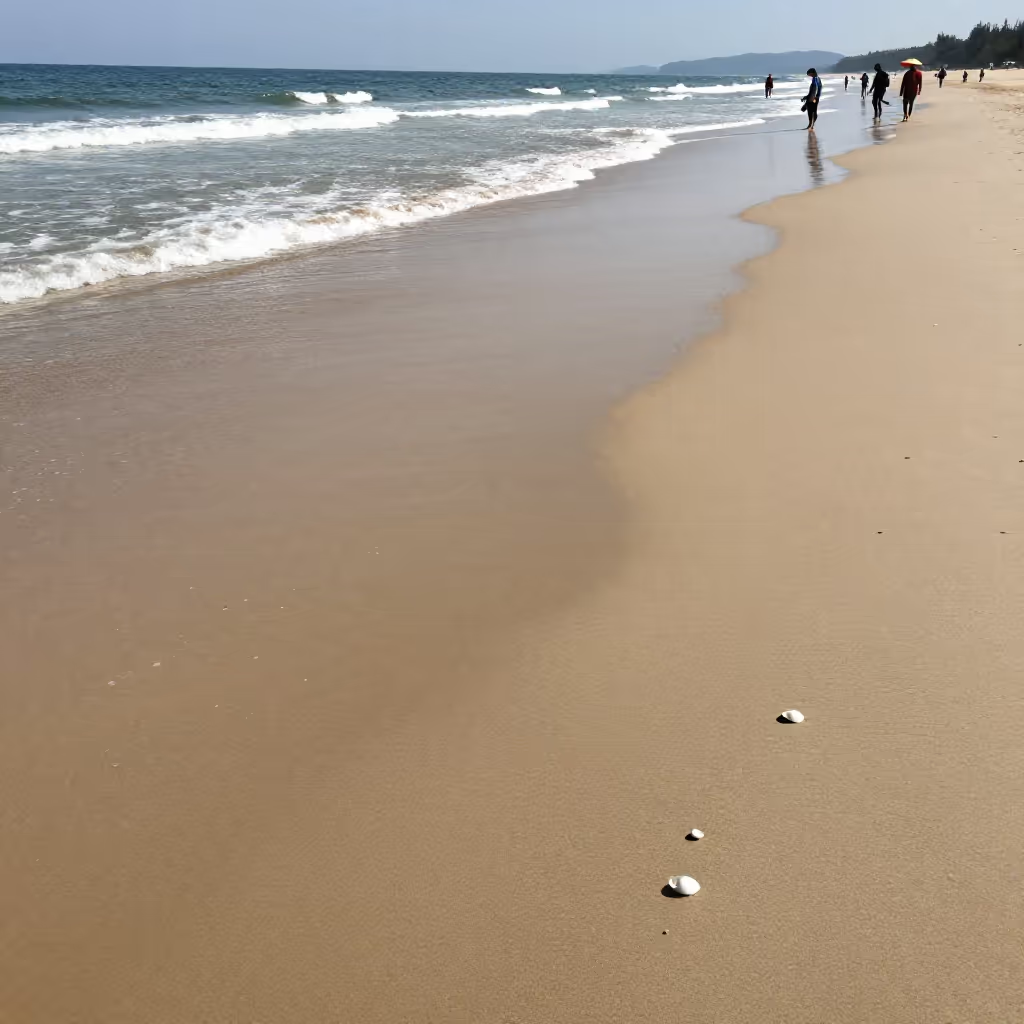
Der Strand is the specific, usually flat area of sand or pebbles directly beside the water. Die Küste refers to the larger area where the mainland meets the sea. You lie on the beach to swim and sunbathe; multiple places and landscapes can belong to the coast.
Wir verbringen die Ferien an der Küste und besuchen dort mehrere Orte.
We are spending our vacation on the coast and visiting several places there.
Wir verbringen den Nachmittag am flachen, sandigen Strand.
We are spending the afternoon on the flat, sandy beach.