

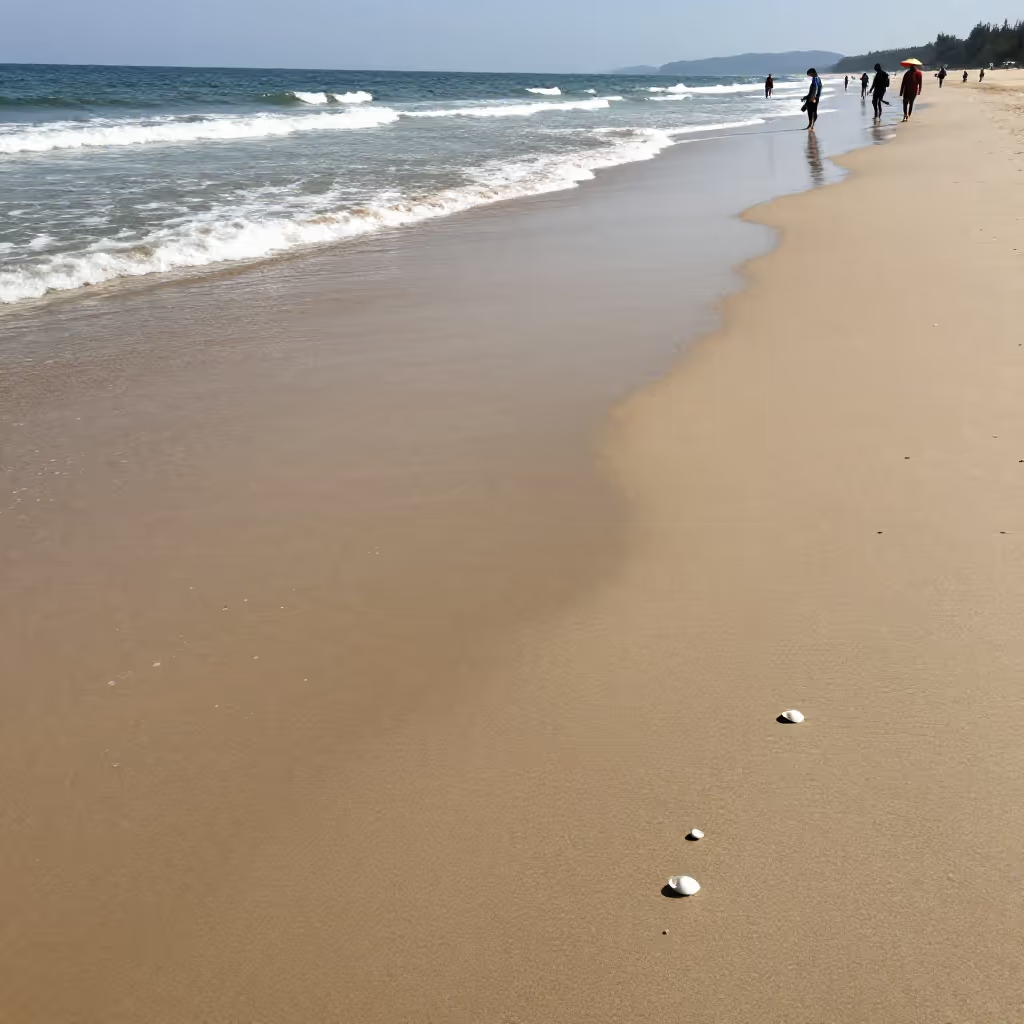
der Strand
beach
A flat strip of land, usually sandy or pebbly, along the shore of a sea, lake, or river.
Im Sommerurlaub liegen wir am liebsten den ganzen Tag am Strand.
On summer vacation, we like best to spend the whole day lying on the beach.
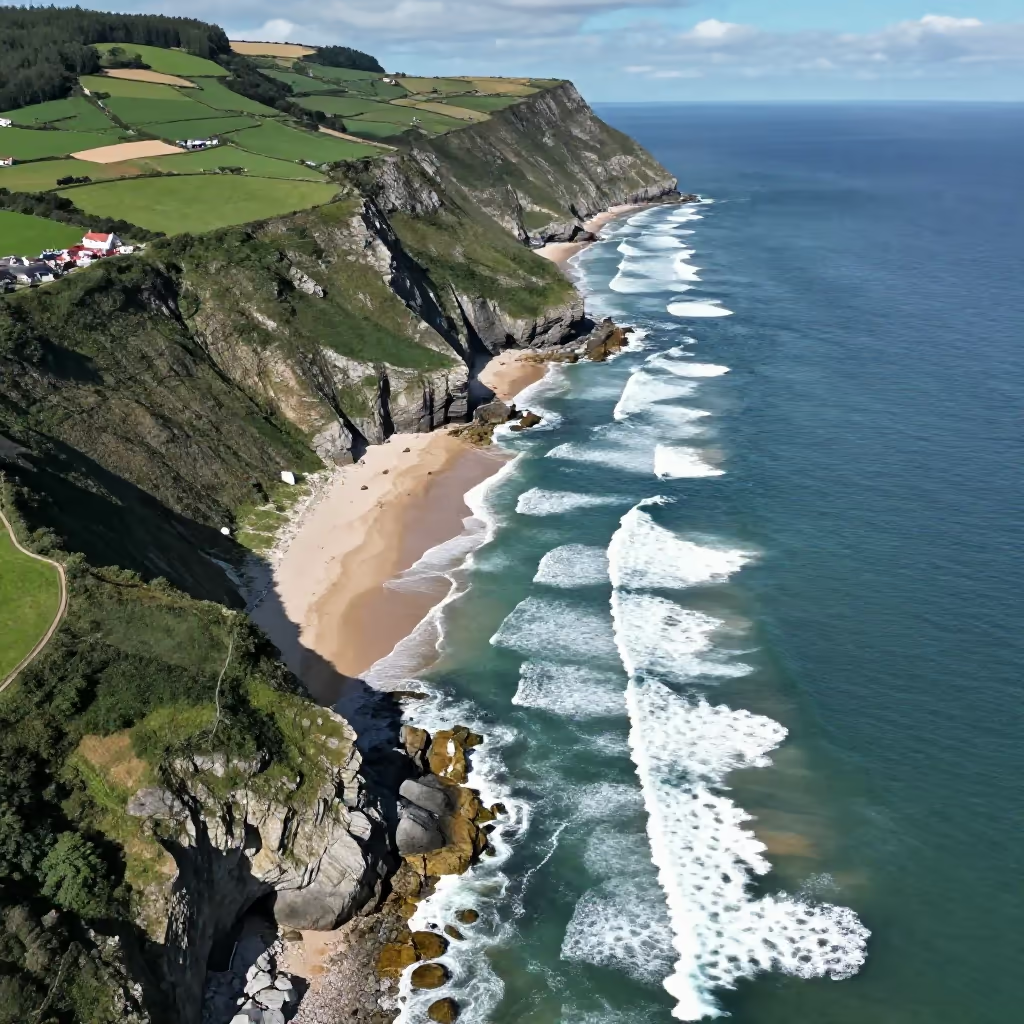
beach
Loading your saved state.

beach
A flat strip of land, usually sandy or pebbly, along the shore of a sea, lake, or river.
Im Sommerurlaub liegen wir am liebsten den ganzen Tag am Strand.
On summer vacation, we like best to spend the whole day lying on the beach.
'Strand' (beach) is a very productive word and forms the basis for many familiar nouns related to vacation and the sea, such as 'der Strandkorb' (beach chair), 'der Strandurlaub' (beach vacation), or 'die Strandbar' (beach bar).
Wir haben uns für den Nachmittag einen Strandkorb gemietet.
We rented a beach chair for the afternoon.
Pay attention to the preposition and case: 'am Strand' (on/at the beach, dative) describes a location, while 'an den Strand' (to the beach, accusative) expresses movement in a direction.
Wir treffen uns später am Strand.
We'll meet later at the beach.
Common activities associated with 'Strand' (beach) are 'am Strand liegen' (to lie on the beach), 'am Strand spazieren gehen' (to walk along the beach), or 'am Strand eine Sandburg bauen' (to build a sandcastle on the beach).
Die Kinder haben den ganzen Nachmittag am Strand gespielt.
The children played on the beach all afternoon.
coast
Der Strand is the specific, usually flat area of sand or pebbles directly beside the water. Die Küste refers to the larger area where the mainland meets the sea. You lie on the beach to swim and sunbathe; multiple places and landscapes can belong to the coast.

Wir verbringen den Nachmittag am flachen, sandigen Strand.
We are spending the afternoon on the flat, sandy beach.
Wir verbringen die Ferien an der Küste und besuchen dort mehrere Orte.
We are spending our vacation on the coast and visiting several places there.