

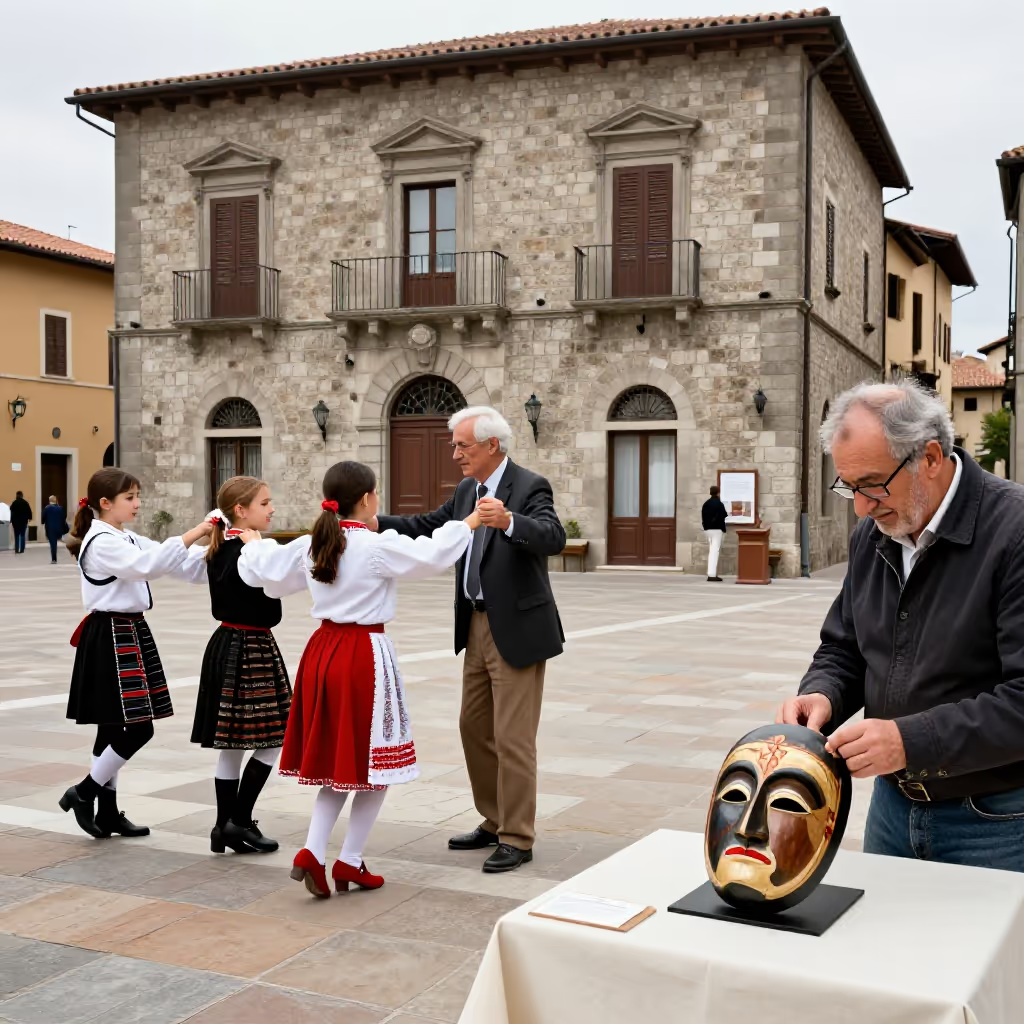
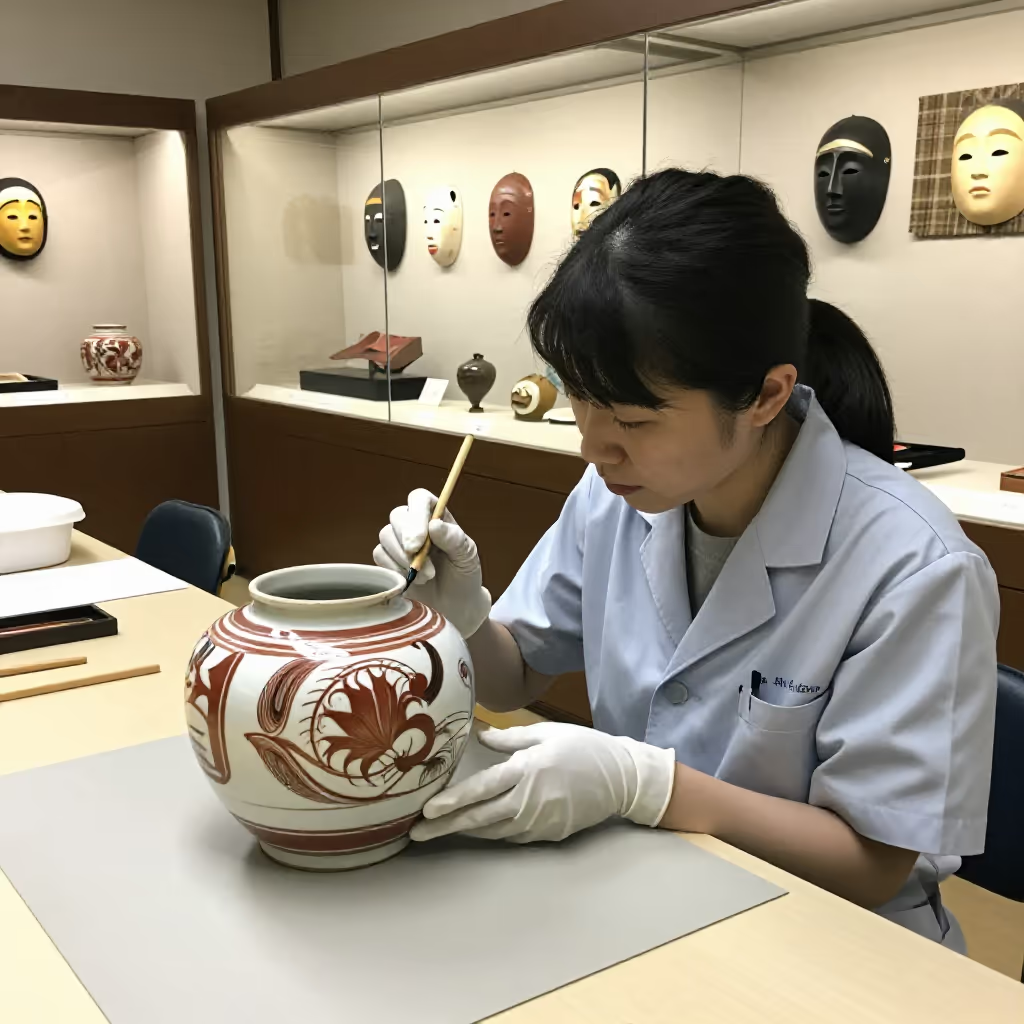
The tangible (e.g., buildings, works of art) or intangible (e.g., customs, languages) heritage of a society that has been inherited from earlier generations and is considered valuable to preserve for the future.
example
Die Altstadt von Bamberg gehört als herausragendes Beispiel für eine frühmittelalterliche Stadt zum UNESCO-Weltkulturerbe.
The old town of Bamberg is part of the UNESCO World Heritage as an outstanding example of an early medieval town.
Usage tips
Compound word
The word is a compound of 'die Kultur' (culture) and 'das Erbe' (heritage). So it literally describes what a culture inherits from earlier generations and preserves.
EXAMPLE
Der Schutz des nationalen Kulturerbes ist eine wichtige staatliche Aufgabe.
The protection of the national cultural heritage is an important responsibility of the state.
Typical collocations
Common phrases are 'zum Kulturerbe gehören' (to be part of the cultural heritage) or 'etwas als Kulturerbe schützen' (to protect something as cultural heritage). A very fixed expression is also 'UNESCO-Weltkulturerbe' (UNESCO World Heritage).
EXAMPLE
Die historischen Speicher der Stadt gehören zum Kulturerbe.
The city's historic warehouses are part of its cultural heritage.
Tangible & intangible assets
A distinction is often made between 'materiellem Kulturerbe' (tangible cultural heritage, e.g., buildings, works of art) and 'immateriellem Kulturerbe' (intangible cultural heritage, e.g., customs, dances, languages).
EXAMPLE
Auch traditionelle Handwerkstechniken sind ein Teil des immateriellen Kulturerbes.
Traditional craft techniques are also part of the intangible cultural heritage.
Compare with
near_synonym · confusable
Kulturerbe vs Tradition
tradition
'die Tradition' and 'das Kulturerbe' both have to do with things that come from the past and are passed on. A tradition is usually a specific custom or habit, for example a festival or a way of celebrating. Cultural heritage is broader and often more official: it also includes buildings, works of art, languages, or customs that are important to a society. They can be confused because traditions can be part of cultural heritage. For a single custom, 'Tradition' sounds more natural. For something that an entire culture wants to preserve, 'Kulturerbe' fits better.
Kulturerbe
Die Stadt schützt die alten Häuser, weil sie zum Kulturerbe der Region gehören.
The city protects the old houses because they are part of the region's cultural heritage.
Tradition
Zum Geburtstag singt die Familie immer dasselbe Lied, denn das ist eine alte Tradition.
On birthdays, the family always sings the same song because it is an old tradition.