

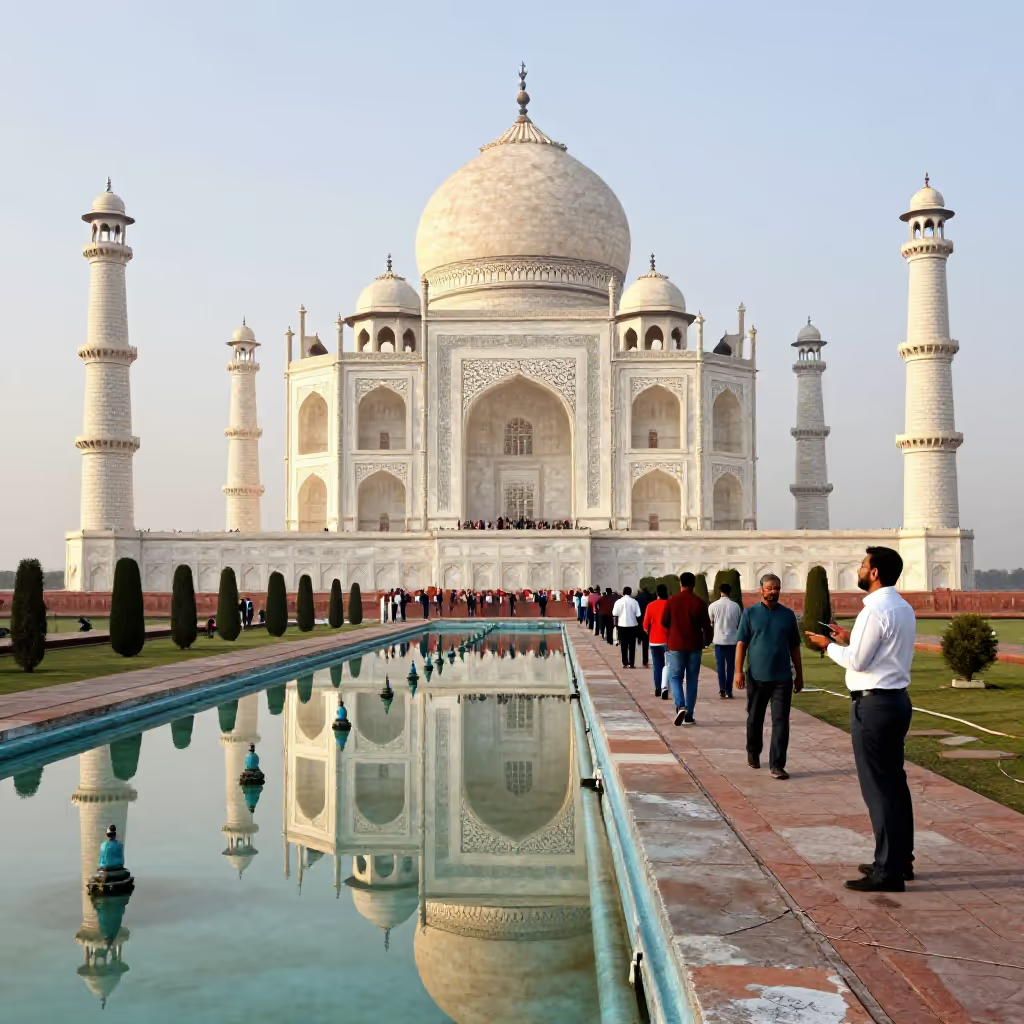
A site, such as a building, a city, or a natural landscape, that UNESCO classifies as especially worthy of protection because of its unique cultural or natural significance for all of humanity. A distinction is made between world cultural heritage and world natural heritage.
example
Die Altstadt von Bamberg wurde 1993 in die Liste des UNESCO-Welterbes aufgenommen.
The old town of Bamberg was added to the UNESCO World Heritage List in 1993.
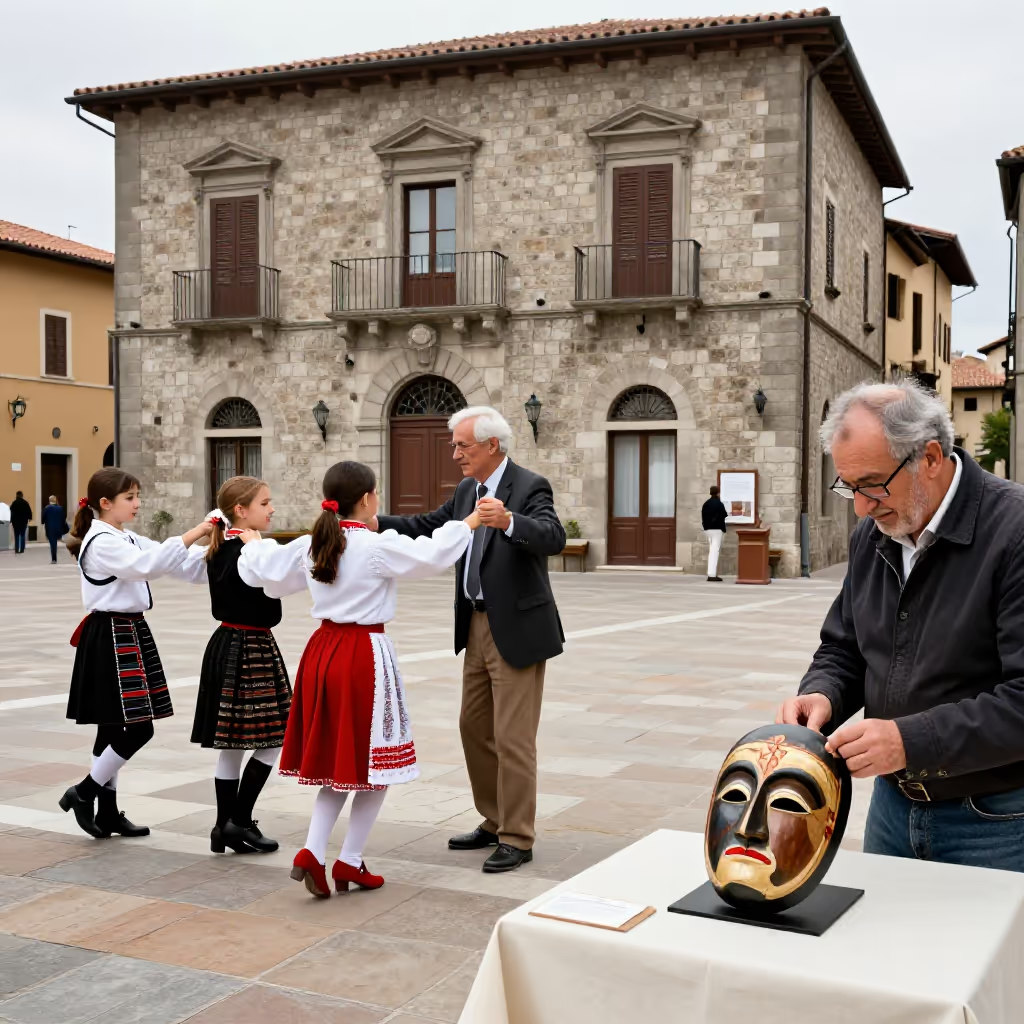
Usage tips
Word composition
The word is made up of 'Welt' (world) and 'Erbe' (heritage). It therefore refers to something that is regarded as heritage for the entire world.
EXAMPLE
Der Schutz des Welterbes ist eine globale Aufgabe.
The protection of world heritage is a global task.
Typical combinations
Common verbs in this context are 'zum Welterbe gehören' (to be part of world heritage), 'etwas zum Welterbe erklären' (to declare something world heritage), or 'auf der Liste des Welterbes stehen' (to be on the World Heritage List).
EXAMPLE
Der Kölner Dom gehört seit 1996 zum UNESCO-Welterbe.
Cologne Cathedral has been part of the UNESCO World Heritage since 1996.
Cultural context
The term 'Welterbe' (world heritage) is inseparably connected with UNESCO, an organization of the United Nations. It is used almost exclusively for sites that are on the official UNESCO list.
EXAMPLE
Die UNESCO entscheidet darüber, was als Welterbe anerkannt wird.
UNESCO decides what is recognized as world heritage.
Two main categories
The word 'Welterbe' (world heritage) is often an umbrella term. Texts frequently distinguish between 'Weltkulturerbe' (world cultural heritage; sites created by humans) and 'Weltnaturerbe' (world natural heritage; natural landscapes).
EXAMPLE
Die Pyramiden sind Weltkulturerbe, der Grand Canyon ist Weltnaturerbe.
The pyramids are world cultural heritage; the Grand Canyon is world natural heritage.
Compare with
near_synonym · confusable
Welterbe vs Weltkulturerbe
World Heritage Site
'Weltkulturerbe' and 'Welterbe' are both connected to UNESCO sites that are especially worthy of protection. 'Welterbe' is the broader term: it includes culturally important places, but also natural sites. 'Weltkulturerbe' is more specific when the topic is culture, for example old cities, buildings, or monuments. Learners may confuse the words because many well-known places relate to both in the broader sense. If you do not know whether culture or nature is meant, 'Welterbe' often fits better. If it is clearly a cultural place, 'Weltkulturerbe' is more precise.
Welterbe
Auf der Reise besuchen wir mehrere Orte, die zum Welterbe der UNESCO gehören.
On the trip, we visit several places that are part of UNESCO world heritage.
Weltkulturerbe
Die Altstadt von Bamberg gehört zum Weltkulturerbe.
The old town of Bamberg is part of the World Cultural Heritage.