


der Läufer
runner
A person who runs, especially as a sport or leisure activity.
EXAMPLE
Beim diesjährigen Marathon waren über zehntausend Läufer am Start.
At this year's marathon, over ten thousand runners were at the starting line.
runner / runner rug / bishop
Loading your saved state.
runner
A person who runs, especially as a sport or leisure activity.
Beim diesjährigen Marathon waren über zehntausend Läufer am Start.
At this year's marathon, over ten thousand runners were at the starting line.
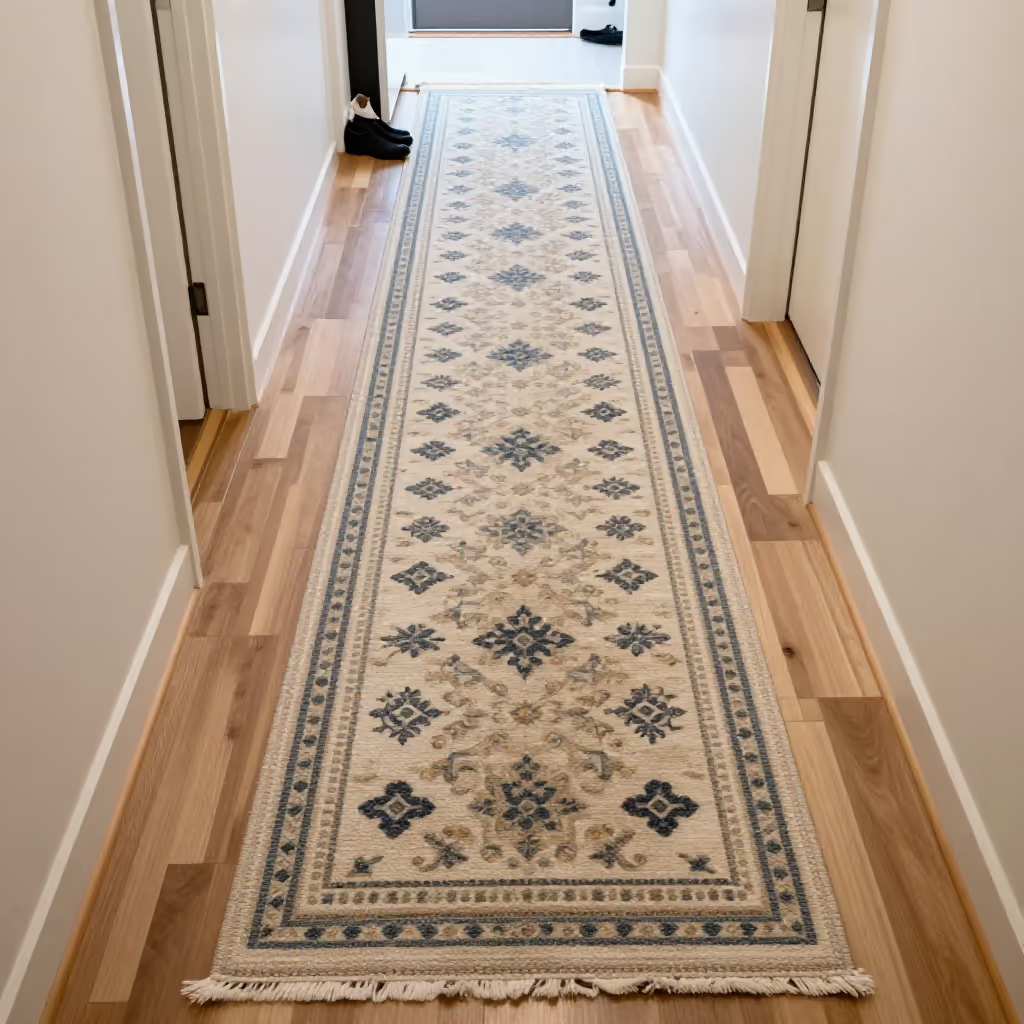
runner rug
A long, narrow carpet typically used in hallways or on stairs.
Im langen Korridor lag ein schöner, alter Läufer.
There was a beautiful old runner rug in the long corridor.

bishop
A chess piece that can move diagonally across any number of free squares.
Mit seinem Läufer bedrohte er den gegnerischen König.
With his bishop, he threatened the opposing king.

runner
In botany, a long above-ground shoot of a plant from which new, independent plants can grow; a stolon.
Erdbeerpflanzen bilden Läufer, um sich schnell zu vermehren.
Strawberry plants form runners in order to reproduce quickly.
All meanings of 'Läufer' derive from the verb 'laufen' (to run/walk). The ending '-er' indicates a person or thing that performs the action of the verb. The basic idea is always movement along a line or surface.
Die Kinder laufen schnell durch den Park.
The children run quickly through the park.
The meaning can only be understood from context. If it is about sports, it means a person. If it is about the home, such as a hallway or stairs, it means a carpet. In the context of chess, it is a game piece, and in the garden it is a plant shoot.
Der Läufer überquerte als Erster die Ziellinie.
The runner crossed the finish line first.
When a person is meant, 'Läufer' (runner) is often connected with sports or places. Typical combinations are 'Marathon-Läufer' (marathon runner), 'ein schneller Läufer' (a fast runner), or 'die Läufer am Start' (the runners at the starting line).
Am Sonntagmorgen treffen sich viele Läufer im Stadtpark.
On Sunday morning, many runners meet in the city park.
In the meaning of 'Teppich' (carpet), the word is often used with verbs such as 'legen' (to lay), 'auslegen' (to lay out), or 'reinigen' (to clean). Adjectives often describe the color or material, e.g. 'ein roter Läufer' (a red carpet / runner rug).
Für die Feier wurde ein roter Läufer ausgerollt.
A red carpet was rolled out for the celebration.
bishop
In chess, Bischof and Läufer refer to the same piece that moves diagonally. Läufer is the usual term in standard German, while Bischof may be understood mainly because of other language conventions or in comparison with other languages. In German explanations of chess, Läufer is therefore usually the appropriate term.
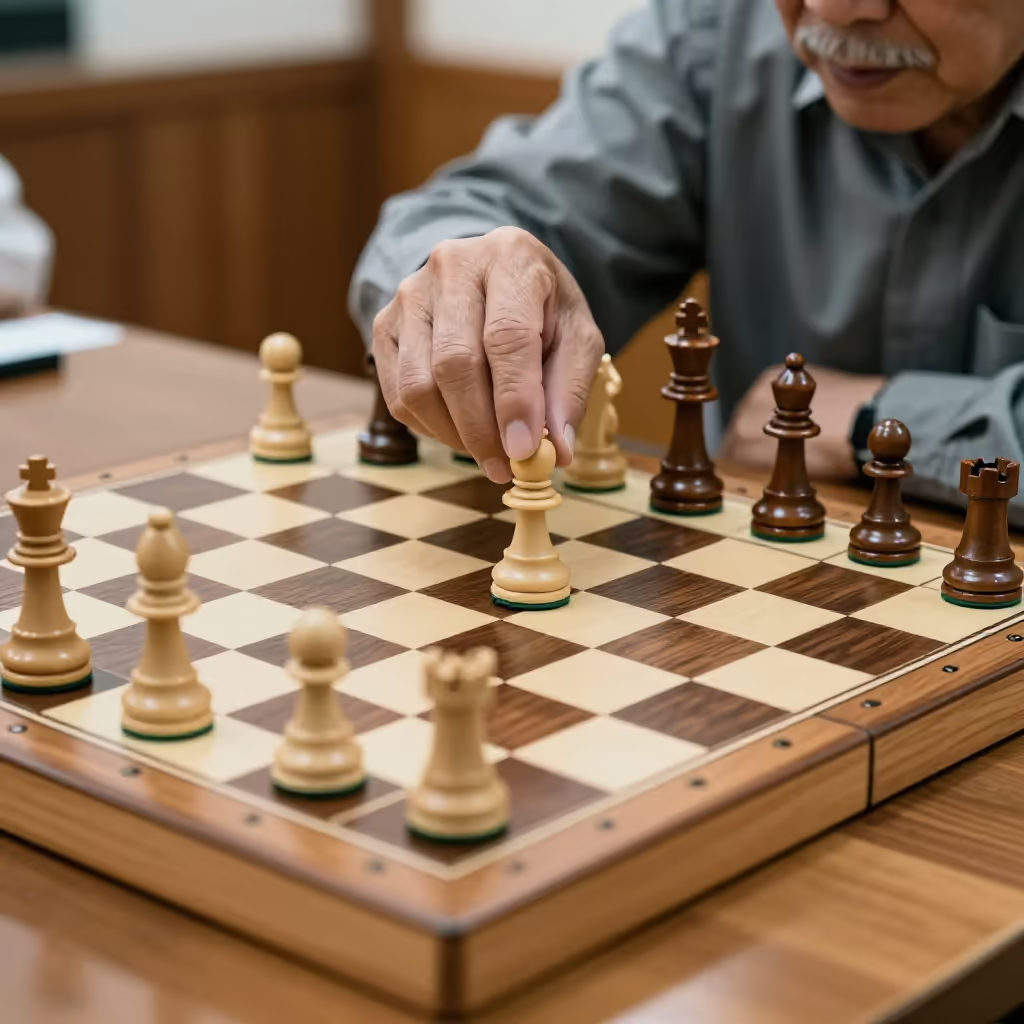
Der Läufer zieht von seinem weißen Feld aus diagonal über das Brett.
The bishop moves diagonally across the board from its white square.
In dieser Schachanleitung wird die diagonal ziehende Figur aus Gründen des Sprachvergleichs als Bischof bezeichnet.
In this chess guide, the diagonally moving piece is referred to as Bischof for purposes of comparing languages.