


die Mutti
mommy / mum
An affectionate, childlike, or family term for one's own mother.
„Mutti, kommst du heute Abend zu meinem Fußballspiel?“, fragte der kleine Junge.
"Mommy, are you coming to my soccer game tonight?" asked the little boy.

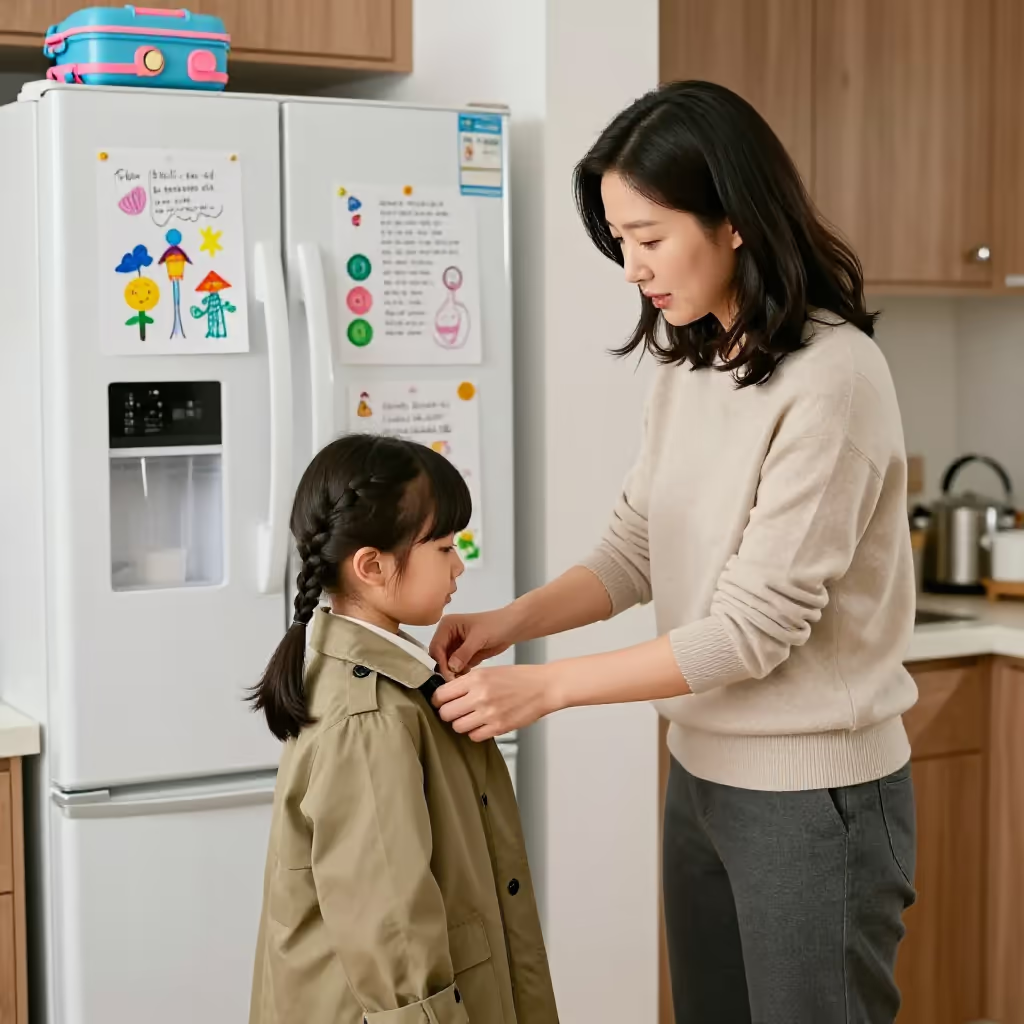
mommy / mum
Loading your saved state.
mommy / mum
An affectionate, childlike, or family term for one's own mother.
„Mutti, kommst du heute Abend zu meinem Fußballspiel?“, fragte der kleine Junge.
"Mommy, are you coming to my soccer game tonight?" asked the little boy.

'Mutti' (mommy / mum) is an affectionate form, or diminutive, of 'Mutter' (mother). The ending '-i' is often used in German to form familiar or childlike pet names, such as 'Vati' (daddy) from 'Vater' (father).
„Vati, kannst du mir helfen?“, fragte das Kind.
"Daddy, can you help me?" asked the child.
'Mutti' (mommy / mum) is a very personal and emotional form of address that is used mainly within the family or by children. It can be used as a form of address, as in 'Hallo Mutti!' (Hello, Mommy!), or in the third person, as in 'Meine Mutti kommt heute.' (My mommy is coming today).
Meine Mutti backt den besten Kuchen der Welt.
My mum bakes the best cake in the world.
The term 'Mutti' (mommy / mum) for a caring woman outside the family is colloquial and can also be slightly ironic. A typical expression is 'die Mutti vom Dienst' (the mother hen on duty), who takes care of everything and everyone.
Im Büro ist sie unsere Mutti vom Dienst, weil sie immer Pflaster dabei hat.
At the office, she is our mother hen because she always has band-aids with her.
Former German Chancellor Angela Merkel was often referred to as 'Mutti' (mommy / mum). This nickname alluded to her role as a caring and pragmatic leader of the nation.
Viele Bürger nannten die Kanzlerin einfach nur „Mutti“.
Many citizens simply called the chancellor 'Mutti'.
mother / nut
'die Mutter' and 'die Mutti' can refer to the same person. 'die Mutter' is neutral and fits everyday life, school, work, and official situations. 'die Mutti' sounds very familiar, affectionate, or childlike. It is often used by children or within the family. Outside the family, 'Mutti' can quickly sound too personal or not quite appropriate, while 'Mutter' always remains more factual.

Am Montag malt das Kind ein Bild für seine Mutti.
On Monday, the child paints a picture for his mommy.
Julia besucht heute ihre Mutter im Krankenhaus.
Julia is visiting her mother in the hospital today.